Before You Listen
Episode Setup
- Topic in one line: the physiology of exercise prescription including the three energy systems (phosphagen ATP-PCr for 0-15 seconds, anaerobic glycolytic for 15 seconds to 2 minutes, oxidative aerobic beyond 2 minutes), VO2max as the gold standard of cardiorespiratory fitness governed by the Fick equation (VO2 equals cardiac output multiplied by the arteriovenous oxygen difference), the metabolic equivalent (1 MET equals 3.5 mL O2/kg/min), the rate-pressure product (heart rate multiplied by systolic blood pressure) as the clinical surrogate for myocardial oxygen demand, the Karvonen heart rate reserve formula, the Borg 6-20 rating of perceived exertion (RPE) scale with the moderate target of 11-14 (preferred over heart rate in beta-blocker, atrial fibrillation, pacemaker, and cardiac transplant patients), the FITT principle (Frequency, Intensity, Time, Type), the American College of Sports Medicine (ACSM) aerobic targets (150 minutes per week of moderate or 75 minutes per week of vigorous activity), the hemodynamic responses to aerobic versus resistance exercise, the aerobic and anaerobic thresholds (~2 mmol/L and ~4 mmol/L lactate), the cardiovascular and skeletal-muscle adaptations to training, the detraining timelines, and overtraining syndrome.
- Prerequisites: familiarity with cardiac output (heart rate multiplied by stroke volume), the muscle fiber types from BASIC-02, and the basic difference between aerobic and anaerobic metabolism.
- Runtime: approximately 1 hour 8 minutes.
Vignette. A 52-year-old man with controlled hypertension on metoprolol succinate 50 mg daily completes a baseline graded exercise test that stops at 8 metabolic equivalents (METs) for fatigue without ischemic changes. His resting heart rate is 60 beats per minute on the medication, his measured maximum heart rate on the test is 150 beats per minute, and his clinic blood pressure is 124/78. He is referred to a supervised cardiac fitness program and asks for a target heart rate range for his aerobic exercise prescription.
Calculate his target heart rate range at 50 to 70 percent of heart rate reserve (HRR) using the Karvonen formula, and explain why the rating of perceived exertion (RPE) should also be tracked at every session.
(Answer at the end of this chapter)
Section 1: Energy Systems and the Bioenergetic Continuum
Bottom line: skeletal muscle regenerates adenosine triphosphate (ATP) through three sequential and overlapping energy systems. The phosphagen system (ATP-phosphocreatine, ATP-PCr) regenerates ATP from stored phosphocreatine through the creatine kinase reaction, requires no oxygen, produces no lactate, and dominates the first 0-15 seconds of all-out effort. The anaerobic glycolytic system breaks glucose to pyruvate to lactate in the cytosol without oxygen, yields 2 net ATP per glucose, and dominates 15 seconds to 2 minutes of high-intensity work. The oxidative aerobic system in the mitochondria yields 30-32 ATP per glucose through pyruvate dehydrogenase, the citric acid cycle, and the electron transport chain coupled to oxidative phosphorylation, and approximately 100 ATP per typical 16-carbon fatty acid, and dominates any effort lasting more than 2 minutes. Substrate selection shifts toward fat at lower intensities and toward carbohydrate at higher intensities.
Skeletal muscle uses three sequential and overlapping systems to regenerate adenosine triphosphate (ATP) at the rate demanded by the work. ATP is the only direct energy currency for muscle contraction. The systems differ only in how rapidly they can resupply ATP and how long they can sustain that supply.
The phosphagen system (ATP-phosphocreatine, ATP-PCr) is the fastest and shortest-duration system. Phosphocreatine donates a phosphate to adenosine diphosphate (ADP) to regenerate ATP through the creatine kinase reaction, and the cytoplasmic pool is depleted within approximately 10 to 15 seconds of all-out work. There is no oxygen requirement and no lactate production. The phosphagen system dominates the first 0 to 15 seconds of maximal effort: a 100-meter sprint, a single near-maximal lift, a vertical jump.
The anaerobic glycolytic system breaks glucose to pyruvate in the cytosol without oxygen, producing 2 net ATP per glucose, and the pyruvate is reduced to lactate when oxidative capacity is exceeded. Lactate accumulates in the muscle and bloodstream during high-intensity work and is the marker of glycolytic effort; lactate formation is not itself what lowers cytosolic pH, and fatigue is multifactorial. The glycolytic system dominates work durations of approximately 15 seconds to 2 minutes (a 400- to 800-meter run, a sustained heavy resistance set, an interval training repetition).
The oxidative aerobic system in the mitochondria generates 30 to 32 ATP per glucose by complete combustion of pyruvate through pyruvate dehydrogenase, the citric acid (Krebs) cycle, and the electron transport chain coupled to oxidative phosphorylation, and approximately 100 ATP per typical 16-carbon fatty acid, which enters the cycle by its own route rather than through pyruvate dehydrogenase. Oxygen is the obligatory final electron acceptor. The oxidative system dominates any effort lasting more than 2 minutes: jogging, cycling, swimming distance, hiking, and daily activity. Substrate selection shifts with intensity. Fat (free fatty acids, intramuscular triglycerides) supplies a larger fraction of energy at lower intensities, below approximately 50 percent VO2max, while carbohydrate (glycogen, blood glucose) supplies a progressively larger fraction at higher intensities.
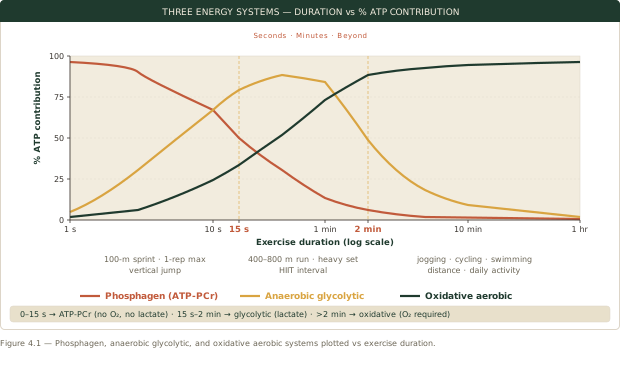
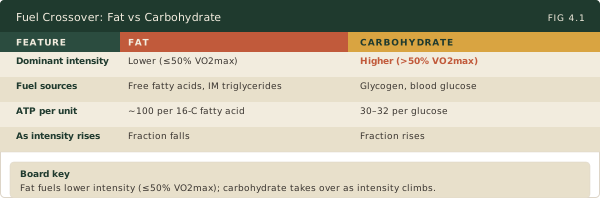
Mnemonic — “Seconds, minutes, beyond”
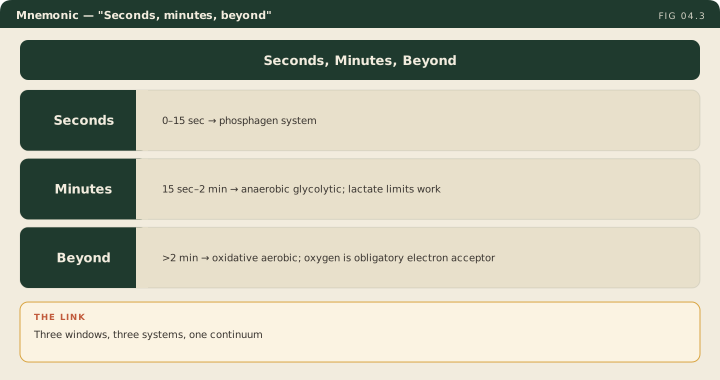
Map duration to dominant system. Seconds (0-15 seconds) is phosphagen. Minutes (15 seconds to 2 minutes) is anaerobic glycolytic with lactate as the byproduct that marks the work, though it is not the sole cause of fatigue. Beyond (>2 minutes) is oxidative aerobic with oxygen as the obligatory electron acceptor. Three windows, three systems, one continuum.
Glycolysis is your debit card. It’s still a very quick transaction and you have access to a larger pool of funds than just the cash in your pocket. But if you swipe that debit card too frantically, the bank starts hitting you with transaction fees.
— BASIC-04 podcast, ~11:30