Before You Listen
Episode Setup
- Topic in one line: Post-Acute Sequelae of SARS-CoV-2 (PASC, also called Long COVID); the multisystem symptom landscape (fatigue, brain fog, dyspnea, post-exertional malaise (PEM), postural orthostatic tachycardia syndrome (POTS), pain, anosmia/ageusia, mood and sleep disturbance, small fiber neuropathy); the single most important screening question, whether activity precipitates a delayed symptom flare, which diverges the rehabilitation algorithm into pacing and energy conservation (with PEM, mirroring myalgic encephalomyelitis/chronic fatigue syndrome (ME/CFS)) versus individualized activity progression (without PEM); POTS criteria (≥30 beats per minute (bpm) heart rate rise within 10 minutes of standing in adults, ≥40 bpm at ages 12 to 19, without orthostatic hypotension); nonpharmacologic management (2-3 liters fluid, explicit salt units, abdominal or waist-high compression) and pharmacologic options (midodrine, fludrocortisone, propranolol, ivabradine); cognitive rehabilitation for brain fog; and the multidisciplinary clinic model led by physical medicine and rehabilitation (PM&R).
- Prerequisites: the deconditioning, deep vein thrombosis (DVT), and orthostatic intolerance material from REHAB-09; pulmonary rehabilitation principles from MEDREH-02; the ME/CFS literature on exertion-related symptom worsening.
- Runtime: 46 minutes. The companion text reflects updated guidance; the recorded episode may contain older statements.
Vignette. A 35-year-old woman, previously a healthy software engineer who ran 30 miles per week, presents to your post-COVID clinic 3 months after a mild outpatient SARS-CoV-2 infection that was managed at home with rest and acetaminophen. Since then she reports profound fatigue, “brain fog” with word-finding difficulty and lost trains of thought, and exercise intolerance. The pattern she describes is striking: on Tuesday she attempts to walk an extra block to the grocery store; on Wednesday and Thursday she is bedbound with crushing fatigue, headache, and lightheadedness. She has tried “pushing through” twice and each attempt produced a 4-day relapse. On examination, her supine heart rate is 72 with blood pressure 118/74. After 5 minutes of quiet standing, her heart rate rises to 118 with blood pressure 116/76, and she feels lightheaded with neck and shoulder discomfort that eases when she lies down. Her pulmonary examination, chest radiograph, and resting electrocardiogram (ECG) are unremarkable.
What single screening question separates her from a deconditioned patient and dictates the rehabilitation algorithm; what autonomic syndrome does her standing test suggest and what would confirm it; what nonpharmacologic and pharmacologic management applies; and why does pacing rather than a graded exercise progression come first?
(Answer at the end of this chapter)
Section 1: Defining PASC, Pathophysiology, and the Multisystem Symptom Landscape
Bottom line: PASC (Long COVID) is a multisystem syndrome after SARS-CoV-2 infection. CDC (2026) requires at least 3 months; WHO (2021) requires onset usually by 3 months with symptoms lasting at least 2 months; NICE calls 4-12 weeks ongoing symptomatic COVID-19 and beyond 12 weeks post-COVID-19 syndrome. More than 200 symptoms have been reported. The commonly quoted prevalence figures are 10-30 percent overall, 30-50 percent after hospitalization and up to 70 percent after ICU care, drawn from early-pandemic cohorts. Reported risk associations are female sex, older age, obesity, diabetes, autoimmune disease and a greater number of acute symptoms. Severe acute illness raises risk but is not required. SARS-CoV-2 enters cells through the ACE2 receptor.
Post-Acute Sequelae of SARS-CoV-2 (PASC), commonly called Long COVID, is a multisystem syndrome of new, recurring, or persistent problems after SARS-CoV-2 infection. Three definitions are in use, and the boards may quote any of them, so name the source and the date:
- CDC (2026): an infection-associated chronic condition present for at least 3 months, which may improve, worsen, or persist.
- WHO post-COVID-19 condition (2021 Delphi): onset usually 3 months from the onset of COVID-19, with symptoms lasting at least 2 months and not explained by an alternative diagnosis. The symptoms need not all begin at infection or persist continuously.
- NICE NG188 (UK): acute COVID-19 up to 4 weeks; ongoing symptomatic COVID-19 at 4-12 weeks; post-COVID-19 syndrome beyond 12 weeks, unexplained by another diagnosis.
Two practical points follow. The older CDC 4-week wording is historical and is no longer the CDC definition. And clinical diagnosis rests on the history: a documented positive SARS-CoV-2 test is not required, and investigation of concerning symptoms should never wait for a duration threshold to elapse. NIH RECOVER criteria serve research, not clinical or examination, purposes. CDC, WHO, NICE.
Epidemiology. The figures usually quoted are 10-30 percent of all infected individuals, 30-50 percent after hospitalization, and up to 70 percent after ICU admission. These come from early-pandemic cohorts, and the number a study reports moves with its case definition, sampled population, follow-up interval, variant and vaccination era, so treat them as the historical quoted ranges rather than as one patient’s odds. Severe acute illness raises risk, but it is not required: disabling Long COVID follows mild outpatient infection. Reported risk associations include female sex, older age, obesity, diabetes, autoimmune disease, and a greater number of symptoms during the acute illness; their strength differs across cohorts.
Pathophysiology. SARS-CoV-2 enters human cells through the angiotensin-converting enzyme 2 (ACE2) receptor, with the viral spike protein as the binding agent. That entry mechanism is established. It does not by itself explain chronic multisystem symptoms, and the proposed contributors carry different levels of evidence: persistent viral antigen or tissue reservoirs, immune dysregulation and chronic inflammation (elevated interleukin-6 (IL-6), tumor necrosis factor-alpha (TNF-alpha), and interferon-gamma in studied cohorts), autoimmunity through molecular mimicry, endothelial and microvascular abnormalities, and autonomic nervous system disruption. A microclot hypothesis is not a diagnosis and is not an indication for anticoagulation.
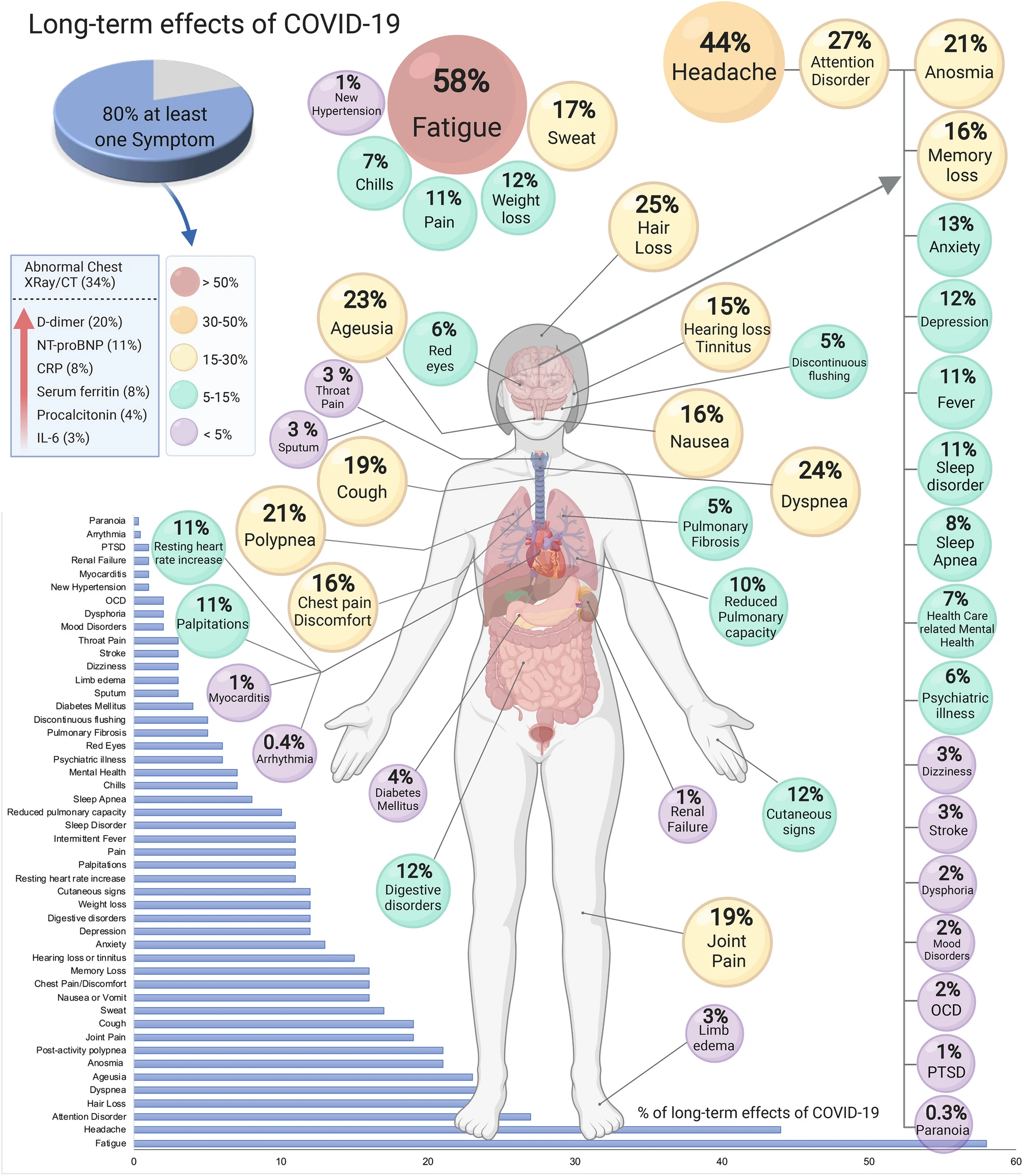
Source: Lopez-Leon S, Wegman-Ostrosky T, Perelman C, Sepulveda R, Rebolledo PA, Cuapio A, Villapol S, Scientific Reports 2021;11:16144, via Wikimedia Commons, CC BY 4.0. Original image.

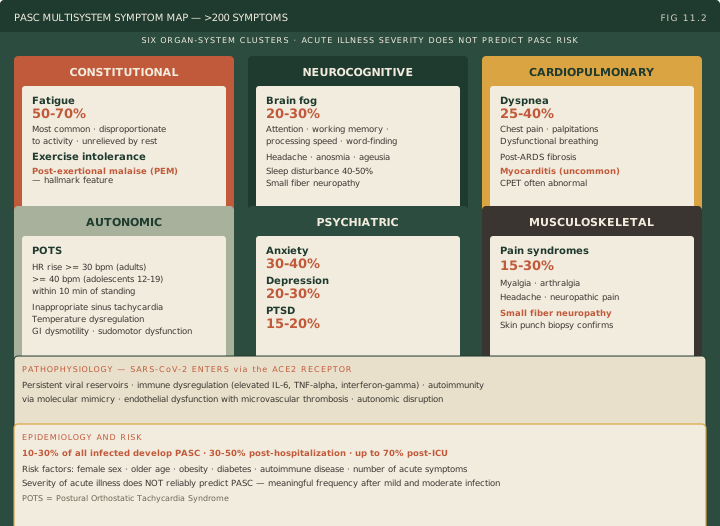
The symptom landscape spans more than 200 reported symptoms across organ systems. Frequencies differ so widely between cohorts that no single percentage applies, but the clinical picture is consistent.
- Fatigue is the most common presenting complaint: a profound exhaustion disproportionate to activity, unrelieved by rest, and qualitatively different from any pre-infection fatigue. Assess PEM and other contributors; a subset of patients meet formal ME/CFS criteria.
- Cognitive dysfunction (brain fog) is among the most functionally limiting symptoms and affects sustained attention, working memory, processing speed, executive function, and word-finding. Subjective and measured impairment do not always agree, and a normal screening score does not invalidate real functional difficulty.
- Dyspnea and exercise intolerance occur with entirely normal pulmonary function tests and chest imaging in a substantial proportion. Assess structural disease, breathing pattern, cardiac and autonomic causes, and deconditioning. Selected invasive-CPET cohorts have shown impaired peripheral oxygen extraction (Singh et al.) or chronotropic incompetence (Durstenfeld et al.); neither finding is present in every patient, and cardiopulmonary exercise testing is a selective investigation because it can provoke PEM.
- Autonomic dysfunction presents as orthostatic intolerance, palpitations, temperature dysregulation, altered sweating, and gastrointestinal dysmotility. Identify the specific syndrome rather than labeling every tachycardia POTS.
- Pain syndromes include myalgia, arthralgia, headache, and neuropathic pain. Small fiber neuropathy, confirmed on skin punch biopsy, explains burning pain and autonomic symptoms in a subset.
- Anosmia and ageusia, sleep disturbance, and mood symptoms (anxiety, depression, post-traumatic stress) are common and compound disability. Their presence does not make PASC a psychological diagnosis.
High Yield — Defining PASC
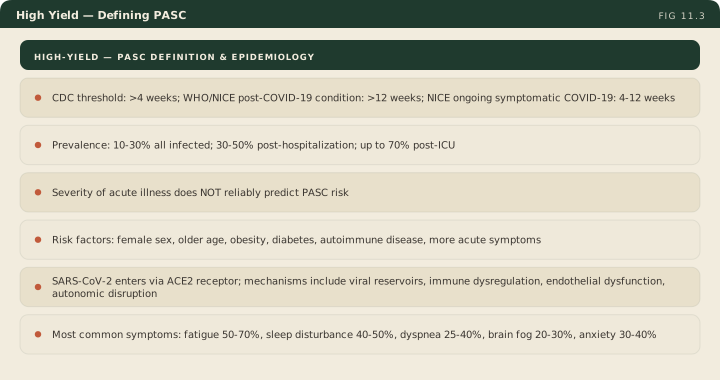
- CDC 2026: at least 3 months. WHO 2021: onset usually by 3 months, symptoms lasting at least 2 months. NICE: ongoing symptomatic COVID-19 4-12 weeks, post-COVID-19 syndrome beyond 12 weeks. Always name the source and date.
- A positive test is not required for clinical diagnosis, and assessment does not wait for a duration threshold.
- Quoted prevalence: 10-30 percent overall, 30-50 percent after hospitalization, up to 70 percent after ICU, from early-pandemic cohorts. Read any prevalence figure with its denominator, era, and follow-up.
- Mild acute infection does not exclude Long COVID. Greater acute severity increases risk.
- Risk associations: female sex, older age, obesity, diabetes, autoimmune disease, more acute symptoms.
- Entry is via ACE2. Persistent antigen, immune dysregulation, autoimmunity, endothelial abnormality, and autonomic disruption are proposed contributors, and a mechanistic hypothesis is not a treatment indication.
- More than 200 symptoms reported across organ systems.
Mnemonic — “ACE2, the door SARS-CoV-2 walks through”
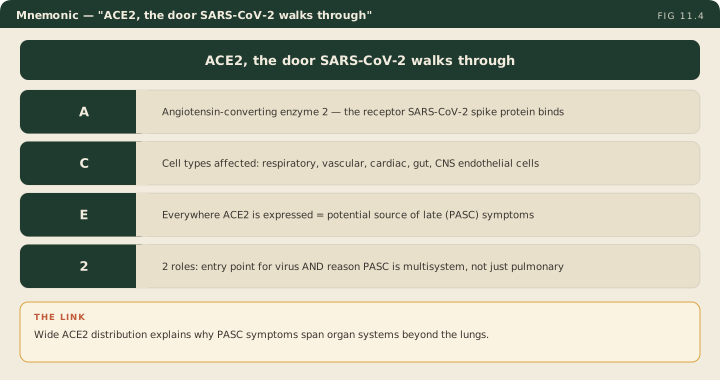
The spike protein of SARS-CoV-2 binds the angiotensin-converting enzyme 2 (ACE2) receptor on respiratory, vascular, cardiac, gut, and central nervous system endothelial cells. That distribution is why the acute illness is multisystem. Receptor distribution alone does not prove the cause of each late symptom.
Yeah, it’s like the virus possesses a master key, and unfortunately that key, the ACE2 receptor, works on doors in almost every major organ in the human body.
— MEDREH-11 podcast, ~8:11