PO · EP 12 · PEDIATRICS
Before You Listen
- Prerequisites: lower-extremity amputation levels (Syme through transfemoral) from Episode 2; transtibial and transfemoral prosthetic basics from Episodes 4 and 5; the K-level functional classification (K0 non-ambulatory through K4 high-activity); the Risser sign (0-5 grading of iliac crest apophysis ossification) and Cobb angle from Episode 8 spinal orthoses; basic familiarity with developmental milestones (independent sitting at ~6 months, pulling to stand at 9-12 months) and the difference between disarticulation and through-bone (transosseous) amputation.
- Runtime: 1 hour 5 minutes 20 seconds.
- Topic in one line: the International Organization for Standardization / International Society for Prosthetics and Orthotics (ISO/ISPO) classification of congenital limb deficiencies (transverse versus longitudinal, terminal versus intercalary), fibular hemimelia as the most common congenital long-bone deficiency, proximal femoral focal deficiency (PFFD) classified by Aitken (A-D) and Paley (Types 1-4), the developmental fitting milestone table (upper-extremity prosthesis at 6 months when sitting begins, lower-extremity prosthesis at 9-12 months when pulling to stand begins, no articulating knee for transfemoral until ~3 years), terminal bony overgrowth as the uniquely pediatric stump complication that does not occur in adults and never in disarticulations, the Pavlik harness for developmental dysplasia of the hip (DDH), the Ponseti method for clubfoot (talipes equinovarus) with cavus first / equinus last and Denis Browne bar maintenance, abduction containment for Legg-Calve-Perthes, myelomeningocele orthotic prescription by neurologic level, and the BrAIST trial scoliosis bracing data with the >13 hours/day dose-response and 90-93% success.
Vignette. A 14-month-old child is brought to clinic with a left lower-extremity transverse deficiency at the knee level after a traumatic farm injury 4 months ago. The amputation was performed through the proximal tibial diaphysis at age 10 months. The residual limb has healed well. The child is pulling to stand at the coffee table and cruising along furniture but is not yet walking independently. The mother asks (1) when the child should be fitted with a prosthesis, (2) whether an articulating knee should be included in the first device, and (3) what unique stump complication you will be watching for over the next several years that would not occur in an adult amputee.
Identify the developmental milestone that determines fitting timing for this child, the appropriate first prosthetic design (with or without an articulating knee), and the name, characteristic location, age range, and pathophysiology of the unique pediatric stump complication you must monitor for.
(Answer at the end of this chapter)
Section 1: Congenital Limb Deficiencies — ISO/ISPO Classification, Fibular Hemimelia, and PFFD
Bottom line: the International Organization for Standardization / International Society for Prosthetics and Orthotics (ISO/ISPO) classification distinguishes transverse deficiencies (limb develops normally to a level then is entirely absent distal, resembling surgical amputation) from longitudinal deficiencies (a specific bone is partially or completely absent but distal structures may be present); transverse deficiencies are more common; fibular hemimelia is the most common congenital long-bone deficiency of the lower extremity; proximal femoral focal deficiency (PFFD) is classified by Aitken A-D (radiographic, A mildest with femoral head and acetabulum present) and by Paley Types 1-4 (treatment-oriented), with severe Aitken C/D managed by iliofemoral fusion, extension prosthesis, or rotationplasty (Van Nes procedure converting the ankle into a functional knee).
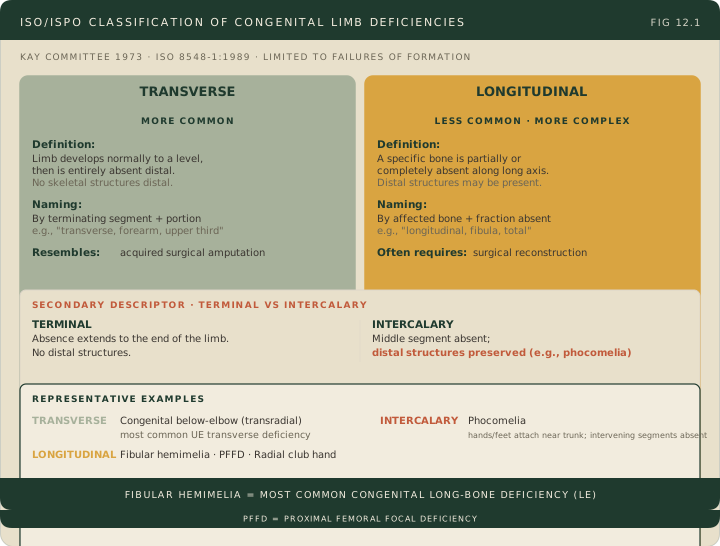
The ISO/ISPO classification of congenital limb deficiencies (Kay Committee 1973, formalized as ISO Standard 8548-1:1989) replaced older imprecise terminology with a standardized anatomical framework limited to failures of formation.
In a transverse deficiency, the limb develops normally to a level and is then entirely absent distal (resembling a surgical amputation). No skeletal structures exist beyond. Named by segment and portion involved (e.g., “transverse, forearm, upper third”). Transverse deficiencies are more common than longitudinal and are managed similarly to acquired amputations. The most frequent UE transverse deficiency is the congenital below-elbow (transradial) deficiency.
Two named surgical reconstructions for severe UE transverse and longitudinal deficiencies appear as board pearls. The Krukenberg procedure separates the residual radius and ulna of a transradial stump into two opposing pincers (radial and ulnar rays) that can grasp objects directly. It sacrifices prosthetic-fit cosmesis in exchange for preserved tactile sensation at the working surface, and is most useful for bilateral transradial limb deficiency where the patient cannot rely on a contralateral hand and where access to prosthetic technology is limited (international or low-resource settings, bilateral acquired amputation, blind patients who depend on tactile feedback). The Vilkki (or Vilkke) toe-to-hand transfer is a microvascular procedure that transfers a toe — most commonly the second toe — to the hand position in patients with congenital thumb agenesis or aphalangia, providing a functional pincer with preserved sensation, neurovascular continuity, and growth potential through epiphyseal preservation. Vilkki is the named alternative to pollicization (transposition of the index finger into the thumb position) when the index ray is also missing or hypoplastic.
In a longitudinal deficiency, a specific bone is partially or completely absent, yet distal structures may be present. Named by affected bone and fraction absent (“longitudinal, fibula, total”). More complex; distal anatomy may be present but malformed, often requiring surgery. Common: fibular hemimelia, proximal femoral focal deficiency, radial club hand.
Terminal versus intercalary is an additional layer. Terminal = absence to the end of the limb. Intercalary = middle segment absent with distal structures preserved; classic example phocomelia, where hands or feet attach near the trunk.
Fibular hemimelia (longitudinal fibular deficiency) is the most common congenital long-bone deficiency of the lower extremity, usually unilateral. Associated findings: shortening and anterolateral bowing of the tibia, absent lateral foot rays (4th-5th toes), ankle valgus, ball-and-socket ankle, tarsal coalition, femoral shortening, and limb length discrepancy (the primary functional problem).
Treatment is Syme amputation with prosthetic fitting versus limb reconstruction with lengthening, determined by predicted LLD at maturity. Syme amputation: ~2 procedures, ~$7,000, lower complication rate, reliable end-bearing limb. Limb lengthening: ~7 procedures, ~$27,000, higher complication rate, better native ankle if plantigrade foot is achieved. Modern SUPERankle reconstruction has improved limb-sparing outcomes. Even with length equalization, outcome is unsatisfactory if the foot cannot be made plantigrade.
Proximal femoral focal deficiency (PFFD), also called congenital femoral deficiency (CFD), spans mild shortening to complete absence of the proximal femur. Frequently co-occurs with fibular hemimelia.
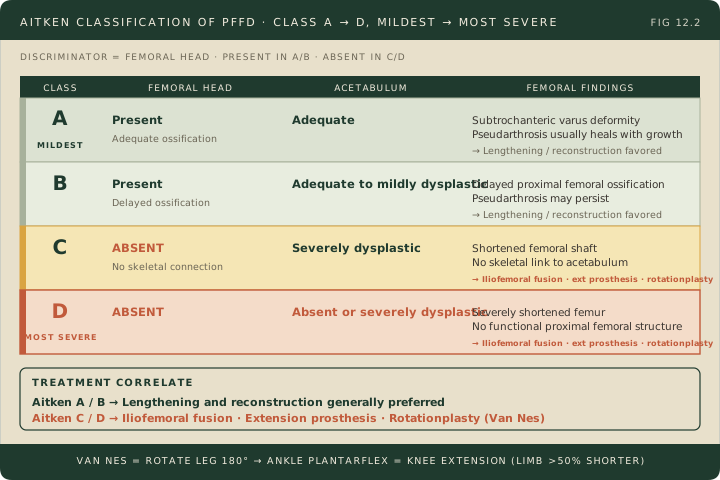
The Aitken classification (radiographic) has four classes. Class A (mildest): femoral head present, acetabulum adequate; subtrochanteric varus pseudarthrosis that heals with growth. Class B: femoral head present, acetabulum adequate to mildly dysplastic; delayed ossification. Class C: femoral head absent, acetabulum severely dysplastic. Class D (most severe): femoral head absent, acetabulum absent or severely dysplastic.
The Paley classification is treatment-oriented. Type 1: intact femur, mobile hip and knee. Type 2: mobile pseudarthrosis with femoral head present (2a femoral neck, 2b subtrochanteric; hip arthrography distinguishes them). Type 3: diaphyseal deficiency with mobile femoral head (3a knee ROM > 45°, 3b knee ROM < 45°). Type 4: distal deficiency with absent or fused knee.
Treatment by classification: Aitken A-B / Paley 1-2; lengthening and reconstruction preferred. Aitken C-D / Paley 3-4 — iliofemoral fusion, extension prosthesis, or rotationplasty (Van Nes procedure). In rotationplasty the lower leg is rotated 180 degrees so the ankle joint functions as a knee (plantar flexion = knee extension, dorsiflexion = knee flexion). The foot is fitted into a below-knee-style prosthesis. Rotationplasty is considered when the limb may be more than 50 percent shorter than the contralateral side.
High Yield — Congenital limb deficiency classification
- ISO/ISPO classification (Kay Committee 1973, ISO 8548-1:1989); limited to failures of formation; based on anatomy and imaging.
- Transverse = absent distal to a level, resembles amputation, more common; most common UE transverse = congenital below-elbow (transradial).
- Krukenberg procedure: split the radius and ulna into a pincer for bilateral transradial patients — preserves tactile sensation, useful in low-resource settings or in blind bilateral amputees.
- Vilkki (toe-to-hand) transfer: microvascular toe-to-hand transposition for congenital thumb agenesis when pollicization isn’t possible (e.g., absent index ray) — sensate, growth-capable, microsurgical reconstruction.
- Longitudinal = specific bone partially/completely absent, distal structures may be present; less common, more complex; examples = fibular hemimelia, PFFD, radial club hand.
- Terminal = absence to end of limb; intercalary = middle segment absent, distal preserved (e.g., phocomelia).
- Fibular hemimelia = most common congenital long-bone deficiency of the lower extremity; associations include tibial bowing, absent lateral rays (4th-5th), ankle valgus, ball-and-socket ankle, tarsal coalition, femoral shortening, LLD.
- Fibular hemimelia management: mild LLD → lengthening, shoe lifts, contralateral epiphysiodesis; severe → Syme amputation + prosthetic fitting (~2 procedures, ~$7,000) versus lengthening (~7 procedures, ~$27,000).
- PFFD = proximal femoral focal deficiency (now called congenital femoral deficiency); frequently co-occurs with fibular hemimelia.
- Aitken classification (A-D): radiographic; A = femoral head present, adequate acetabulum (mildest); D = both absent (most severe).
- Paley classification (1-4): treatment-oriented; Types 1-2 with mobile femoral head → reconstruction; Types 3-4 → iliofemoral fusion / extension prosthesis / rotationplasty.
- Rotationplasty (Van Nes) = lower leg rotated 180° so ankle functions as knee (plantar flexion = knee extension); for severe Aitken C/D when limb may be >50% shorter than contralateral.
Mnemonic — “TransVerse is like a Vacant amputation, Longitudinal Lingers”
Transverse = limb is vacated distal to a level → looks like a surgical amputation. Longitudinal = a bone lingers absent along the long axis but distal pieces may still be present. Aitken A = Anchored femoral head and Adequate acetabulum (mildest). Aitken D = Deeply Defective (femoral head and acetabulum both gone). Van Nes = Very Novel; turn the leg around so the ankle becomes the knee.
A transverse deficiency is like building a skyscraper. And you build floors one through five perfectly, but you just stop. There’s no floor six, no floor seven, no roof. But a longitudinal deficiency is like you’re building that same skyscraper and somehow you entirely forget to build the central elevator shaft on floor three.
— PO-12-b podcast, ~06:45