Before You Listen
Episode Setup
- Topic in one line: the high-yield pain syndromes the physiatrist evaluates daily, with classification-driven treatment for the four primary headache types (migraine, tension-type, cluster, indomethacin-responsive), the Budapest criteria and stage-based management of complex regional pain syndrome (CRPS), the post-amputation triad (phantom sensation, phantom limb pain, residual limb pain), myofascial trigger points and the energy crisis hypothesis, fibromyalgia diagnosis and central sensitization, and the World Health Organization (WHO) cancer pain ladder.
- Prerequisites: REHAB-01 (pain taxonomy, dorsal horn anatomy, central sensitization, gate control theory, and the analgesic pharmacology covered there); basic dermatomes; sympathetic chain anatomy at a survey level.
- Runtime: 2 hours.
Vignette. A 42-year-old right-handed woman is referred 6 weeks after a closed reduction and casting of a left distal radius fracture sustained in a fall. The cast was removed 2 weeks ago. She reports constant burning pain in the left hand and forearm rated 8 out of 10, exquisite tenderness so that she cannot tolerate her sleeve sliding over the skin, and a swollen, red, sweaty hand that feels warmer than the right. On exam the left hand has decreased range of motion at the wrist and fingers, hair is longer than on the contralateral side, and pinprick across the dorsum of the hand produces a delayed but explosive painful response that lingers after the stimulus is removed. Plain radiographs show patchy periarticular demineralization. The treating physician asks about diagnosis, the formal criteria, the imaging study most likely to support it, the first-line interventional block by extremity, and what could have been done at the time of fracture to prevent this presentation.
What pain syndrome best fits, what diagnostic framework applies, what stage is suggested, what interventional block addresses the upper-extremity sympathetic chain, and what evidence-based prophylaxis would have reduced her risk?
(Answer at the end of this chapter)
Section 1: The Four Primary Headaches and Cervicogenic Headache
Bottom line: migraine is unilateral, pulsating, moderate-to-severe, worsened by routine activity, with photophobia, phonophobia, or nausea, with cortical spreading depression of 2 to 5 millimeters per minute as the aura mechanism and trigeminovascular release of substance P, neurokinin A, and calcitonin gene-related peptide (CGRP) as the pain phase, treated with triptans (5-HT1B/1D agonists, contraindicated in coronary artery disease), prophylaxis with propranolol, amitriptyline, valproate, topiramate, or anti-CGRP monoclonal antibodies (erenumab, fremanezumab, galcanezumab); tension-type headache is bilateral, band-like, mild-to-moderate, no significant nausea, no aggravation by activity; cluster headache is excruciating unilateral periorbital pain lasting 15 to 180 minutes, male predominance 3:1, ipsilateral autonomic features (ptosis, miosis, lacrimation, rhinorrhea, conjunctival injection), with patients agitated and pacing, treated with 100 percent oxygen at 12 to 15 L/min plus subcutaneous sumatriptan and prophylactic verapamil; hemicrania continua and paroxysmal hemicrania respond completely to indomethacin, which differentiates them from cluster; cervicogenic headache is referred from cervical structures and treated with a greater occipital nerve (GON) block; medication overuse headache occurs at greater than 10-15 analgesic days per month.
Migraine is a neurologic disease, not just a bad headache. The clinical anchor is unilateral pulsating pain of moderate-to-severe intensity, worsened by routine physical activity such as climbing stairs, accompanied by at least one of nausea, vomiting, photophobia, or phonophobia. Migraine without aura (common migraine) accounts for approximately 80 percent of cases. Migraine with aura (classic migraine, 20 percent) features a fully reversible neurologic symptom developing gradually over 5 to 20 minutes and lasting less than 60 minutes; the gradual onset distinguishes aura from stroke or transient ischemic attack. The most common aura is visual (scintillating scotomata, fortification spectra). Less common auras include sensory (tingling that spreads gradually) and rarely speech or motor symptoms. Hemiplegic migraine is a rare subtype with reversible motor weakness, sporadic or familial (autosomal dominant calcium channel mutations).
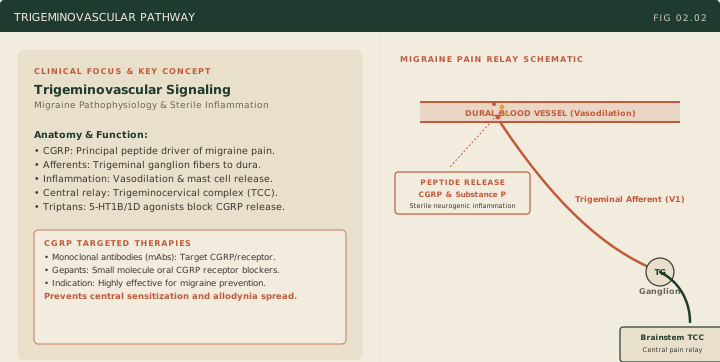
The pathophysiology of aura is cortical spreading depression, a wave of neuronal depolarization followed by suppression that propagates across the cortex at 2 to 5 millimeters per minute, beginning in the occipital cortex (visual aura) and potentially advancing anteriorly. The pain phase involves the trigeminovascular system: trigeminal afferents innervating meningeal vessels release substance P, neurokinin A, and calcitonin gene-related peptide (CGRP), producing sterile neurogenic inflammation. CGRP is a central mediator; jugular CGRP rises during attacks, intravenous CGRP triggers attacks in susceptible individuals, and CGRP-targeted therapies are now first-line for prevention.
Migraine treatment is stratified by attack severity. Abortive therapy: NSAIDs or acetaminophen for mild attacks; triptans (5-HT1B/1D agonists) for moderate-to-severe attacks. The 5-HT1B receptor on meningeal vessels produces vasoconstriction; the 5-HT1D receptor on trigeminal terminals inhibits neuropeptide release. Triptans are contraindicated in coronary artery disease, uncontrolled hypertension, cerebrovascular disease, and peripheral vascular disease because of vasoconstriction. Prophylactic therapy is indicated for more than 2-3 attacks per month: propranolol (most-studied beta-blocker), amitriptyline (especially with coexisting tension-type headache or insomnia), valproate (teratogenic; contraception required), topiramate (causes weight loss, paresthesias, and kidney stones; useful when weight gain is a concern), and the anti-CGRP monoclonal antibodies erenumab (CGRP receptor antagonist), fremanezumab, and galcanezumab (ligand antagonists), given monthly or quarterly.
The gepants are the oral, small-molecule half of the CGRP story, and they matter here for a specific reason: triptans are contraindicated in coronary and cerebrovascular disease, and the gepants are the abortive that fills that gap because they are not vasoconstrictors. The class:
- Ubrogepant (Ubrelvy) — acute treatment.
- Rimegepant (Nurtec ODT) — the unusual one, licensed for both acute treatment and prevention.
- Atogepant (Qulipta) — prevention.
- Zavegepant (Zavzpret) — acute, intranasal.
So when a stem gives a migraine patient with coronary artery disease and asks what to abort the attack with, the answer is a gepant (or the 5-HT1F agonist lasmiditan, which is likewise non-vasoconstrictive but carries driving restrictions from sedation), not a triptan. Medication overuse headache occurs when abortive medications are used more than 10-15 days per month and requires withdrawal of the offending agent.
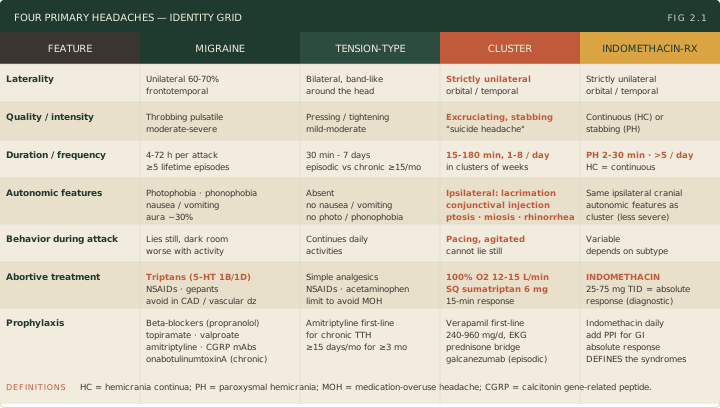
Tension-type headache is the most common primary headache and is the deliberate clinical mirror of migraine. The pain is bilateral, pressing or tightening like a band around the head, mild to moderate, with no significant nausea, and not aggravated by routine activity (patients can continue daily activities). Episodic tension-type headache is treated with simple analgesics. Chronic tension-type headache (15 or more days per month for at least 3 months) responds to amitriptyline as first-line prophylaxis. The pathophysiology involves pericranial myofascial tenderness and central sensitization in chronic cases.
Cluster headache is a trigeminal autonomic cephalalgia and the most severe primary headache; patients have described it as the worst pain imaginable. The pain is unilateral, periorbital and temporal, excruciating, often boring or drilling. Each attack lasts 15 to 180 minutes, much shorter than migraine. Attacks occur in clusters (1 to 8 per day for weeks to months, often at the same time each day, particularly during sleep) followed by remissions of months to years. Male-to-female ratio is approximately 3:1, the only primary headache with a clear male predominance. Ipsilateral autonomic features are diagnostic: ptosis, miosis, lacrimation, conjunctival injection, rhinorrhea, nasal congestion, forehead and facial sweating, eyelid edema. The combination of ptosis and miosis is a partial Horner syndrome from activation of the trigeminal-autonomic reflex (parasympathetic outflow via the superior salivatory nucleus and sphenopalatine ganglion) with hypothalamic activation as the primary driver.
A critical behavioral observation is that cluster patients are agitated and restless: pacing, rocking, banging the head against the wall, standing constantly. This is the opposite of migraine, where patients lie still in a dark, quiet room because movement worsens the pain. Acute treatment requires two simultaneous interventions: 100 percent oxygen at 12 to 15 L/min via non-rebreather mask and subcutaneous sumatriptan. Both have rapid onset; oral triptans are too slow for cluster’s brief attacks. Verapamil is the prophylactic of choice; lithium and corticosteroids are used for transitional prophylaxis. High-dose verapamil for cluster requires ECG monitoring for conduction abnormalities.
Indomethacin-responsive headaches are the high-yield cluster mimics. Hemicrania continua is a continuous unilateral headache with fluctuating intensity and ipsilateral autonomic features that never fully resolves. Paroxysmal hemicrania features attacks of severe unilateral pain lasting 2 to 30 minutes occurring multiple times per day with ipsilateral autonomic features. The attack duration overlaps with cluster, but paroxysmal hemicrania attacks are shorter and more frequent. The defining feature of both is an absolute, complete response to indomethacin, which is so reliable that it is a diagnostic criterion. Cluster headache does not respond to indomethacin; this is the single most-tested differentiator.
Cervicogenic headache is a secondary headache referred from cervical structures (facet joints, cervical disc, upper cervical muscles). Pain is unilateral, originating in the neck and radiating to frontal or temporal regions. Diagnosis is supported by provocation with neck movement or palpation. The greater occipital nerve (GON) block at the superior nuchal line targets the C2 dorsal ramus contribution and serves as both diagnostic and therapeutic intervention.
High Yield — Headaches
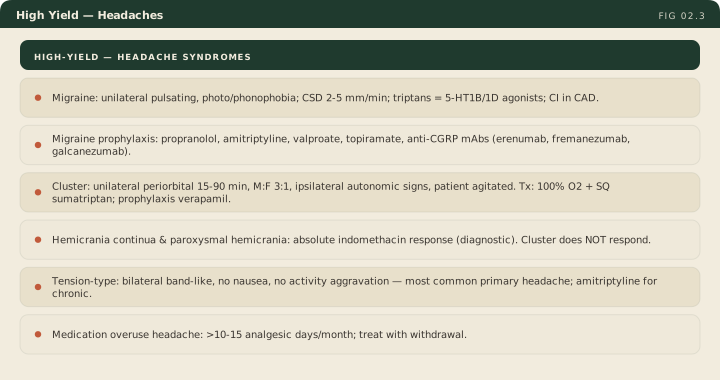
- Migraine: unilateral pulsating, photo/phonophobia, worsened by activity; CSD 2-5 mm/min; trigeminovascular release of substance P, neurokinin A, CGRP; triptans = 5-HT1B/1D agonists, contraindicated in coronary artery disease.
- Migraine prophylaxis: propranolol, amitriptyline, valproate, topiramate, anti-CGRP mAbs (erenumab, fremanezumab, galcanezumab), and the oral gepants atogepant/rimegepant.
- Gepants (ubrogepant, rimegepant, atogepant, zavegepant) are oral CGRP antagonists and are not vasoconstrictors — the abortive of choice when triptans are contraindicated by coronary or cerebrovascular disease.
- Tension-type: bilateral band-like, mild-moderate, no significant nausea, no aggravation by activity. Most common primary headache. Amitriptyline for chronic.
- Cluster: unilateral periorbital, 15-180 min, M:F 3:1, ipsilateral autonomic features (ptosis, miosis, lacrimation), patient agitated/pacing. Treat with 100% O2 (12-15 L/min) + subcutaneous sumatriptan; prophylaxis verapamil.
- Indomethacin-responsive: hemicrania continua + paroxysmal hemicrania = absolute response to indomethacin (diagnostic). Cluster does NOT respond.
- Cervicogenic: referred from cervical spine; GON block = diagnostic + therapeutic.
- Medication overuse headache: >10-15 analgesic days/month; treat by withdrawal.
Mnemonic — “Cluster Pacers, Migraine Lay-ers”
The behavior during attack distinguishes cluster from migraine across a clinic doorway. Cluster patients pace (agitated, restless, rocking, sometimes hitting their head against the wall). Migraine patients lay (still, dark, quiet, motion-phobic). Same severe unilateral headache, opposite behavior, opposite diagnosis. Layered onto cluster’s autonomic features (the partial Horner syndrome from trigeminal-autonomic reflex activation (modern model: hypothalamic origin, not cavernous sinus inflammation)) and the M:F ratio of 3:1, the recognition becomes automatic.
The internal carotid dilates. It squishes the sympathetic plexus against the bone, knocking out the sympathetic tone to the eye, leaving you with a small, constricted pupil and a droopy eyelid.
— REHAB-02 podcast, ~Part A ~19:24
So if we think about this like a nightclub, erenumab is the bouncer standing at the door blocking the entrance, the receptor. Fremanezumab and galcanezumab are out in the parking lot intercepting the VIPs, the ligands, before they even get to the door.
— REHAB-02 podcast, ~Part A ~12:47
If you think about the electrical grid of a city shutting down block by block, neighborhood by neighborhood, moving at that slow, steady pace of 2 to 5 millimeters per minute, you can visualize exactly why the symptoms creep in gradually over those 5 to 20 minutes, rather than hitting all at once like a flipped switch.
— REHAB-02 podcast, ~Part A ~6:10