Ultrasound · Hip
Proximal Hamstring (Ischial Tuberosity) Injection
hiphamstringischial tuberositytendinopathy
Treats
- Proximal hamstring tendinopathy
- Ischiogluteal bursitis
Contraindications
- Active local skin infection at entry site (absolute)
- Suspected septic bursa (absolute)
- Known allergy to local anesthetic, steroid, or antiseptic prep
- Therapeutic anticoagulation — review case-by-case
- Uncontrolled diabetes (relative)
- High-grade hamstring tendon tear (relative — favor regenerative injectate)
Pre-procedure checklist
- Confirm patient identity (two identifiers)
- Confirm procedure, side, and site — mark with patient awake
- Review allergies and anticoagulation
- Confirm informed consent
- Pre-scan: identify ischial tuberosity facets (conjoined tendon on inferomedial; semimembranosus on superolateral); locate sciatic nerve lateral to the tendon; Doppler inferior gluteal artery
- Time-out immediately before needle entry
Positioning
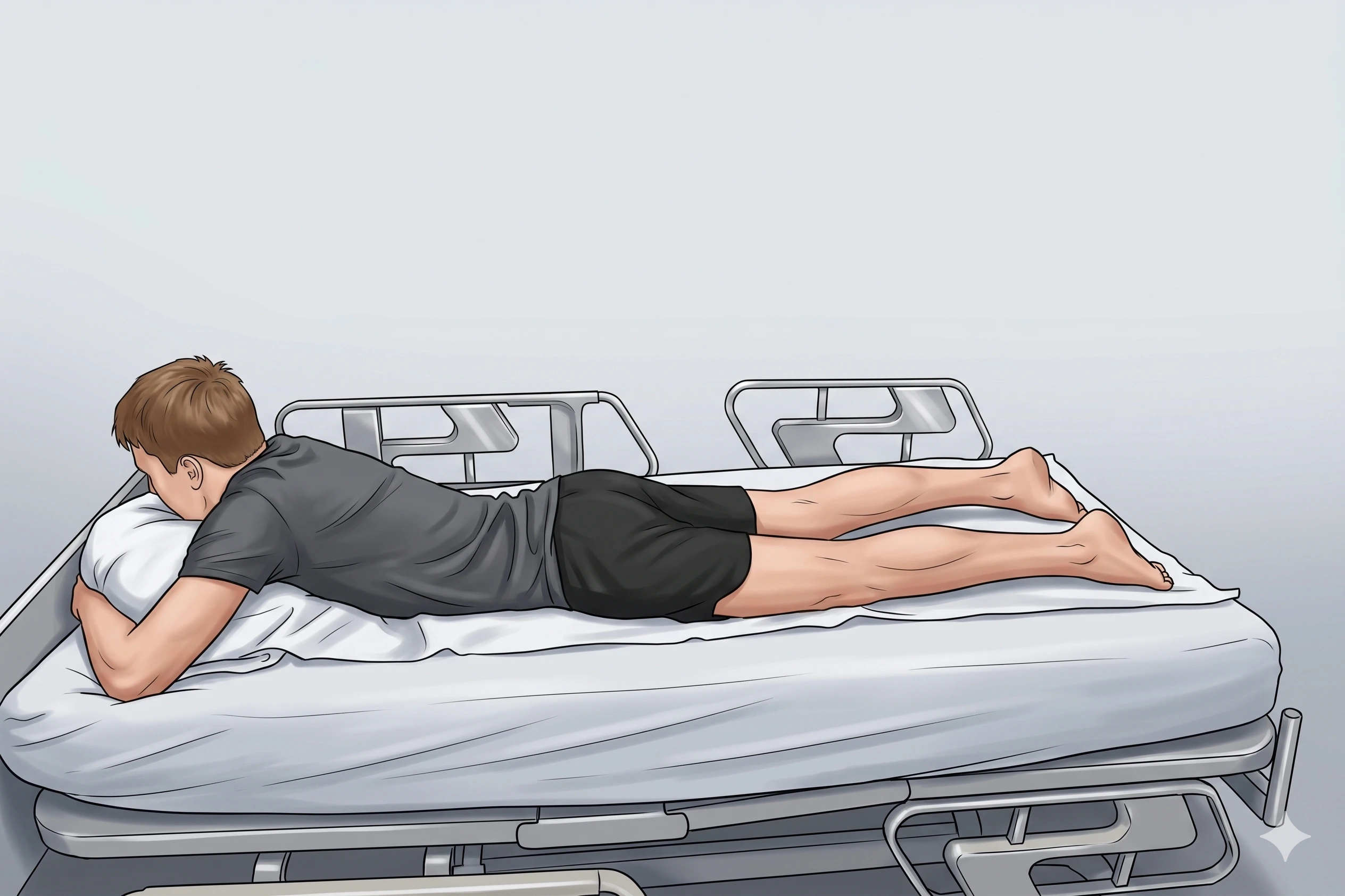
- Prone; leg slightly abducted and neutral
Probe
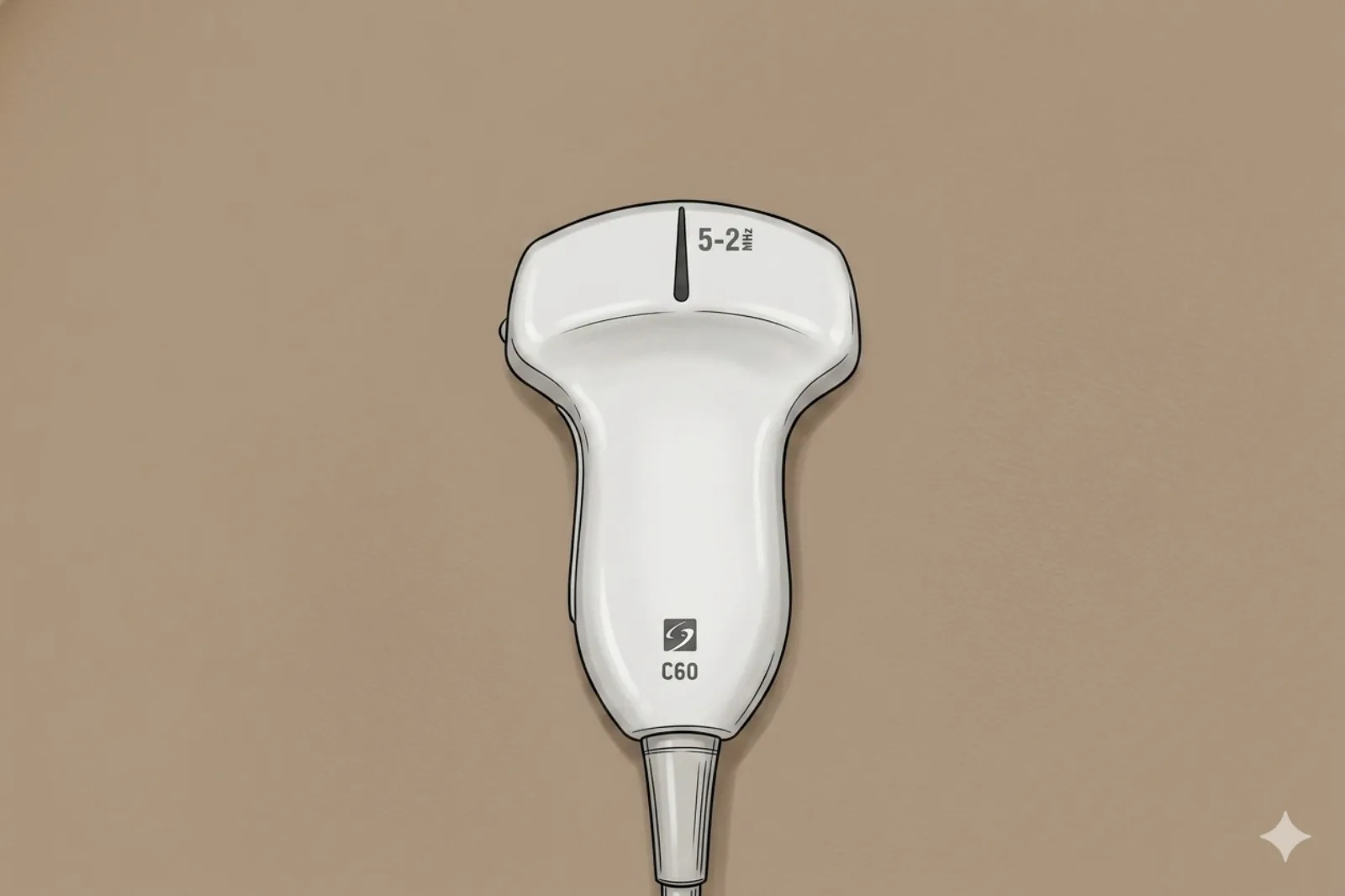
- Curvilinear probe (2-5 MHz) for depth
Landmarking — find the view
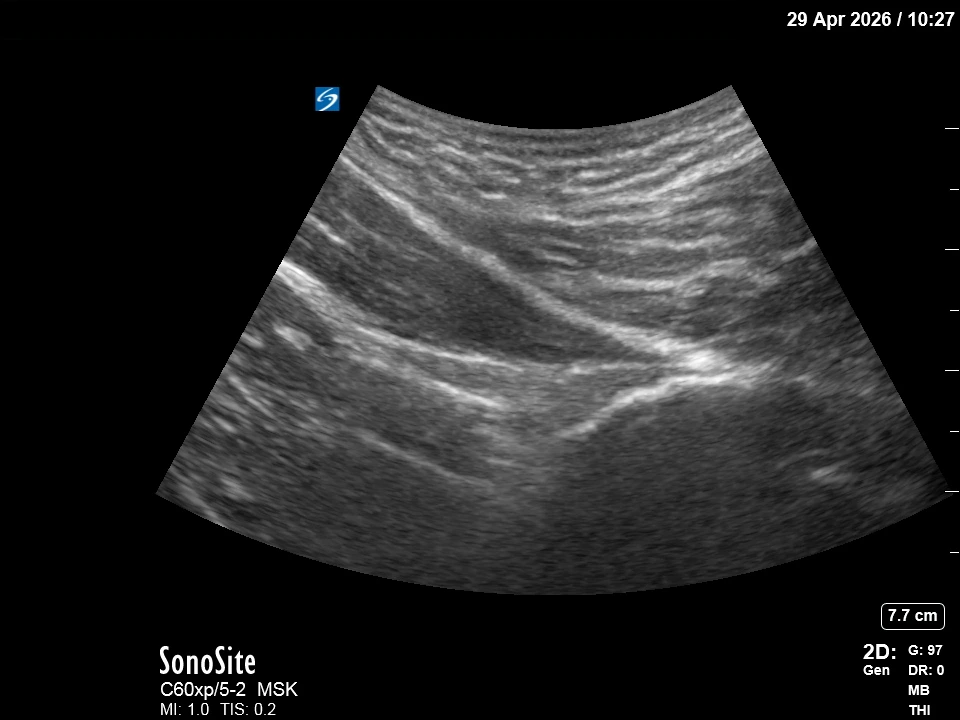
- Transverse over the gluteal fold to identify the bright curved ischial tuberosity.
- Identify the conjoined tendon (biceps femoris long head + semitendinosus) originating from the INFEROMEDIAL FACET of the ischial tuberosity, and the semimembranosus originating from the SUPEROLATERAL FACET as a separate tendon. Confirm which tendon is being targeted before injection.
- Locate the Sciatic Nerve lateral and posterior to the hamstring origin.
The correct ultrasound view
- Hyperechoic bony tuberosity with thick fibrillar tendon origin; Sciatic nerve clear laterally.
Needle corridor
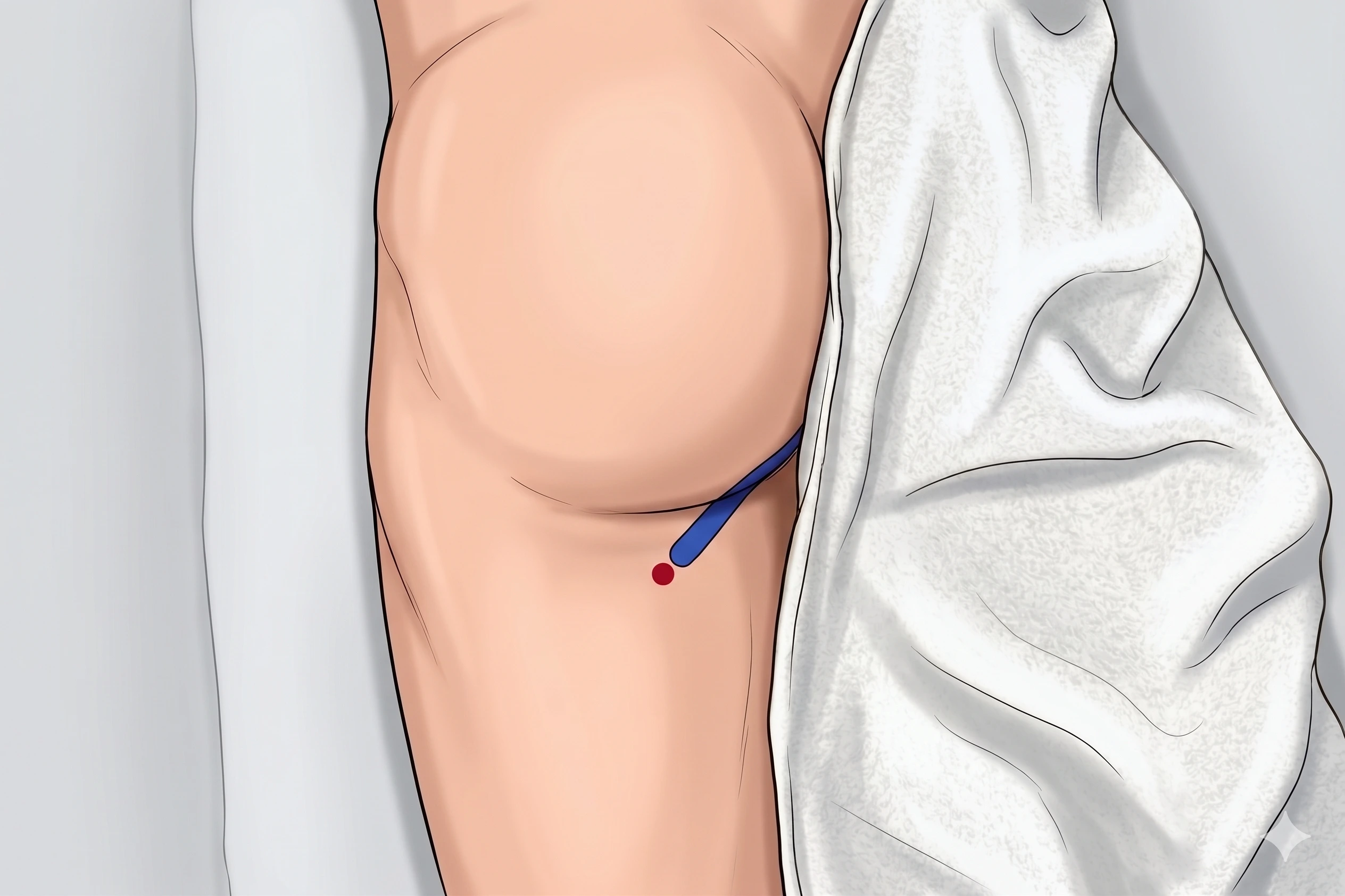
- In-plane medial-to-lateral OR caudal-to-cranial approach, keeping the sciatic nerve in view at all times and the needle tip MEDIAL to the nerve.
Avoid
- Sciatic nerve (lateral — always identify first and keep needle MEDIAL to it throughout)
- Inferior gluteal artery (Doppler survey)
- Inferior gluteal nerve (L5, S1, S2 — courses from the greater sciatic foramen to gluteus maximus; injury causes gluteus maximus weakness)
- Posterior femoral cutaneous nerve (S1-S3 — runs medial to the sciatic nerve at the ischial tuberosity level; injury causes posterior thigh numbness)
Steps
- 1Identify the sciatic nerve first and stay medial to it.
- 2Advance to the tendon origin or the bursa superficial to it.
- 3Inject 4-6 mL; confirm spread at the bone-tendon interface.
- 4STOP IMMEDIATELY if the patient reports electric, shooting, or paresthetic sensations down the leg.
Tips
- A longer spinal needle (22G 3.5") is often required for the gluteal depth.
- For true proximal hamstring TENDINOPATHY (not bursitis), corticosteroid is generally NOT recommended as first-line — PRP or hyperosmolar dextrose are preferred. Corticosteroid at a load-bearing tendon origin carries risk of further tendon degeneration and potential partial or complete rupture. If steroid is used, single low dose only (≤ 3 per year) and counsel the patient accordingly.
- If color Doppler shows the inferior gluteal artery in the planned path, abandon and re-plan.
Resident pearls
- The Sciatic Nerve is your 'No-Fly Zone' — always keep it in view and stay MEDIAL.
- The ischial tuberosity shadows heavily; use this shadow to orient your depth.
- Differentiating between tendinopathy and ischiogluteal bursitis is key for therapeutic effect.
- Conjoined tendon = inferomedial facet; semimembranosus = superolateral facet (separate tendon).
Supplies
- 10 mL Syringe
- 22G 3.5" Spinal Needle
- 18G Drawing Needle
- 1% Lidocaine (3-5 mL)
- Triamcinolone 40 mg OR Dexamethasone 4-10 mg
- Alcohol Swabs (vial tops)
- Betadine/Chloraprep
- Sterile Gloves
- Sterile 4x4 Gauze Pads
- Sterile Towels & Drapes
- Adhesive Bandage (Band-Aid)
- Washcloth/Towel (gel cleanup)
- Needle Disposal Safety Cap
- Sterile probe cover & gel
Post-procedure
- Apply a clean dressing; remove after 24 hours.
- Local anesthetic relief for 1-4 hours; steroid begins 24-72 hours.
- Steroid 'flare' in 2–10% — manage with ice and acetaminophen.
- Rest 24-48 hours; avoid prolonged sitting and heavy hamstring loading for 1 week.
- Return immediately for: spreading redness, swelling, fever, disproportionate pain, OR new leg weakness, foot drop, or sciatica.
- Diabetics: expect 50-100 mg/dL glucose rise for 3-5 days.
- Maximum 3 injections per site per year.