Before You Listen
Episode Setup
- Topic in one line: the whole endocrine and metabolic rehabilitation framework — the diabetes-rehabilitation package (pre-exercise glucose thresholds, the rule of fifteen, the insulin-independent glucose transporter type 4 (GLUT4) mechanism, and the American Diabetes Association (ADA) exercise prescription), the length-dependent axonal sensorimotor pattern of diabetic distal symmetric polyneuropathy with monofilament screening, the Wagner classification of diabetic foot ulcers, total contact casting (TCC) as the off-loading gold standard, and Charcot neuroarthropathy with its erythema-warmth-swelling-without-pain presentation; the contrast between hypothyroid myopathy (elevated creatine kinase (CK), “hung-up” delayed-relaxation deep tendon reflexes, carpal tunnel from myxedematous deposition) and hyperthyroid myopathy (normal CK, brisk reflexes, postural tremor); post-traumatic brain injury (TBI) anterior pituitary dysfunction (25 to 50 percent of moderate-severe TBI; growth hormone deficiency most common); secondary adrenal insufficiency with hyponatremia but no hyperkalemia because aldosterone is renin-angiotensin regulated; Cushing syndrome and steroid myopathy with the normal CK that separates them from inflammatory myopathy; immobilization hypercalcemia with stones-bones-groans-psychic moans and the saline-first, loop-second, bisphosphonate-definitive sequence with the absolute thiazide contraindication; vitamin D screening with 25-hydroxyvitamin D and the enzyme-inducing anticonvulsant trap; spinal cord injury (SCI) body composition with the adapted body mass index (BMI) cutoffs; Paget disease with elevated alkaline phosphatase and normal calcium; HIV polyneuropathy and the zidovudine-versus-HIV myopathy distinction; and Ehlers-Danlos syndrome (EDS) rehabilitation, where the focus is stabilization rather than flexibility.
- Prerequisites: the intensive care unit acquired weakness (ICU-AW) and critical illness polyneuropathy versus critical illness myopathy framework from MEDREH-12; opioid pharmacology and the bisphosphonate review from REHAB-01; and the standard pressure-injury and immobilization complication framework from REHAB-07 and REHAB-09.
- Runtime: 1 hour 13 minutes.
- Blueprint anchor: ABPMR Part I Section E, Medical Rehabilitation, a major section of the examination. This chapter closes the Medical Rehabilitation series, and nearly every topic in it carries either a numeric threshold or a paired lab-and-exam finding.
Vignette. A 58-year-old man with type 2 diabetes mellitus for 18 years (most recent hemoglobin A1c 9.2 percent), hypertension, and a remote stroke is admitted to inpatient rehabilitation following a left fifth-metatarsal partial amputation for an infected diabetic foot ulcer. On day 3 of rehabilitation, the therapy team reports that his right foot has become “red and swollen and warm” overnight; he is afebrile with vital signs at baseline. Skin temperature of the right foot is 4.8°C above the contralateral side. The foot is dramatically erythematous and edematous but the patient rates pain only 2 of 10. Plain radiographs show midfoot fragmentation at the tarsometatarsal joints without periosteal reaction. White blood cell count is 7.8 × 10⁹/L. Pre-therapy fingerstick glucose is 287 mg/dL with negative urine ketones; he had been allowed to participate in therapy that morning. On review of his home medications, he is on hydrochlorothiazide for hypertension and was started on phenytoin one year ago for post-stroke seizures.
What is the most likely diagnosis of his right foot finding and what is the immediate weight-bearing status; was the team correct to allow him to participate in therapy at a glucose of 287; how should management proceed if osteomyelitis cannot be excluded clinically; what is the appropriate diuretic-and-mobilization framework if he develops immobilization hypercalcemia; what specific vitamin D screening test should be ordered and why; and what is the long-term off-loading strategy after the acute phase resolves?
(Answer at the end of this chapter)
Section 1: Diabetes on the Rehabilitation Unit — Exercise Thresholds and the Rule of Fifteen
Bottom line: diabetes affects 25 to 30 percent of inpatient rehabilitation patients and impairs every domain that matters in rehab (wound healing, infection, neuropathy, perfusion, retinopathy). Exercise increases insulin sensitivity through insulin-independent glucose transporter type 4 (GLUT4) translocation in skeletal muscle, with glucose-lowering effects persisting up to 24 hours, creating a prolonged hypoglycemia window; bolus insulin should be reduced 20 to 50 percent before planned exercise. The three pre-exercise glucose thresholds (avoid exercise above 250 mg/dL with ketones, above 300 mg/dL without ketones, or below 100 mg/dL without carbohydrate supplementation) and the rule of fifteen for hypoglycemia treatment are the most heavily tested numbers in the chapter.
Diabetes mellitus affects approximately 25 to 30 percent of inpatient rehabilitation patients. It worsens virtually every rehabilitation domain: wound healing (hyperglycemia inhibits neutrophil function, collagen synthesis, and angiogenesis), infection risk (surgical site, urinary tract, pneumonia), peripheral neuropathy (mobility and balance), peripheral arterial disease (PAD) (exercise tolerance, perfusion), and retinopathy (therapy participation, fall risk). A diabetes diagnosis on the admission problem list reshapes every other rehabilitation prescription.
Exercise increases insulin sensitivity through insulin-independent GLUT4 translocation in skeletal muscle, lowering blood glucose with effects persisting up to 24 hours. That long tail creates a prolonged hypoglycemia window after a single therapy session. Bolus insulin should be reduced by 20 to 50 percent before planned exercise. For insulin pump users, temporary basal rate reduction starting 30 to 60 minutes before exercise is effective. Hypoglycemia risk is highest in patients on insulin or insulin secretagogues (sulfonylureas such as glyburide and glipizide). Patients should carry a fast-acting glucose source during exercise.
Pre-exercise glucose thresholds are board content and the numbers must be exact.
- Avoid exercise if glucose >250 mg/dL with ketones present (risk of diabetic ketoacidosis).
- Avoid exercise if glucose >300 mg/dL even without ketones (risk of worsening hyperglycemia through counterregulatory hormone release).
- Avoid exercise if glucose <100 mg/dL without pre-exercise carbohydrate supplementation (hypoglycemia risk).
These are the classic board thresholds. The current ADA position statement lowers the carbohydrate threshold to below 90 mg/dL for patients on insulin or a secretagogue; answer 100 mg/dL on the exam, and expect 90 mg/dL in current clinical guidance (MEDREH-05 uses the same pairing for post-transplant diabetes).
The board distractor flips ketones on or off. A glucose of 270 mg/dL without ketones is below the 300 threshold and the patient may participate. The same 270 mg/dL with positive ketones crosses the 250-with-ketones threshold and therapy is held until ketones clear and glucose drops below 250.
Hypoglycemia treatment uses the rule of fifteen: administer 15 g of fast-acting carbohydrate (glucose tablets, four ounces of fruit juice, regular soda), recheck blood glucose in 15 minutes, and repeat the same 15 g if glucose remains below 70 mg/dL. Patients on beta blockers may lose adrenergic warning signs (tremor, tachycardia) and present with neuroglycopenic symptoms only (confusion, behavior change), so a fingerstick must be checked at the first sign of altered behavior.
The American Diabetes Association (ADA) exercise prescription is a minimum of 150 minutes per week of moderate-intensity aerobic exercise at 50 to 70 percent of maximum heart rate, spread over at least three non-consecutive days with no more than two consecutive days without exercise, plus resistance training at least two days per week targeting all major muscle groups. The split structure matters because the GLUT4 effect decays over roughly 48 hours; longer gaps surrender the insulin-sensitivity gain.
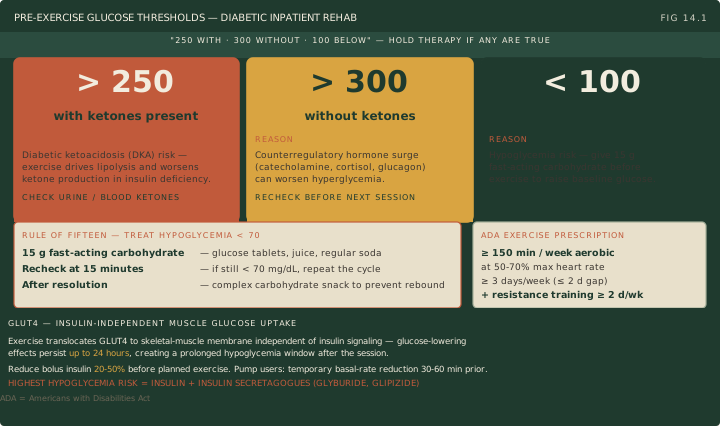
High Yield — Diabetes and exercise
- Exercise glucose thresholds: avoid if >250 with ketones, >300 without ketones, or <100 without carb supplementation.
- Exercise → insulin-independent GLUT4 translocation; glucose-lowering effect persists up to 24 hours; reduce bolus insulin 20 to 50 percent before planned exercise.
- Rule of fifteen: 15 g fast-acting carbohydrate, recheck at 15 minutes, repeat if <70 mg/dL.
- ADA prescription: ≥150 min/week aerobic at 50 to 70 percent max heart rate; resistance training ≥2 days/week.
- Beta blockers mask the adrenergic warning signs — check a fingerstick at the first behavioral change.
Mnemonic — “250 with, 300 without, 100 below”
The three exercise glucose thresholds in one line: above 250 with ketones, above 300 without ketones, or below 100 without a carbohydrate snack all hold therapy. Anything else proceeds.
You cannot answer that question until you know their ketone status. It is the defining variable.
— MEDREH-14 podcast, ~9:05
If the muscle cell is a nightclub, insulin acts as the bouncer at the front door. Glucose is waiting in line in the bloodstream, and insulin checks the ID and lets the glucose inside.
— MEDREH-14 podcast, ~4:26