Before You Listen
Episode Setup
- Topic in one line: the most mobile and most unstable joint in the body, organized by the four pillars the boards test relentlessly: glenohumeral (GH) range of motion (ROM) and the two-to-one scapulohumeral rhythm; the static and dynamic stabilizers (labrum, glenohumeral ligaments, rotator cuff (RC) “SITS” muscles); the Rockwood acromioclavicular (AC) joint classification; and the dichotomy between traumatic anterior instability (Bankart, Hill-Sachs, the TUBS phenotype) and atraumatic multidirectional instability (the AMBRI phenotype), capped by impingement syndrome with its Neer stages and Bigliani acromion morphology.
- Prerequisites: basic shoulder-girdle anatomy (clavicle, scapula, humerus), the brachial plexus cord-and-branch organization, and the principle that a shallow ball-and-socket joint trades stability for mobility.
- Runtime: 1 hour 1 minute.
Vignette. A 19-year-old quarterback is hit from the side during a sack while his throwing arm is fully cocked at 90 degrees of abduction and maximal external rotation. He feels a pop and the arm becomes immediately useless. In the emergency department the humeral head is reduced under conscious sedation. On follow-up two weeks later he reports a sense that the shoulder will “come out again” any time he reaches behind his head. On examination, with the arm passively abducted to 90 degrees and externally rotated, he tenses, arches, and grabs the examiner’s wrist; when the examiner places a posteriorly directed force on the front of the shoulder while keeping the arm in that position, the apprehension instantly resolves. Sensation over the lateral deltoid is intact. A West Point view shows a small bony fragment off the anterior-inferior glenoid rim, and a Stryker notch view shows a divot in the posterolateral humeral head.
Which structures are torn or fractured by the dislocation, what mnemonic captures this clinical picture, what are the two physical examination tests that just confirmed it, and what is the natural history of recurrence if the patient is treated conservatively rather than with a Bankart repair?
(Answer at the end of this chapter)
Section 1: Range of Motion, Glenohumeral Architecture, and Scapulohumeral Rhythm
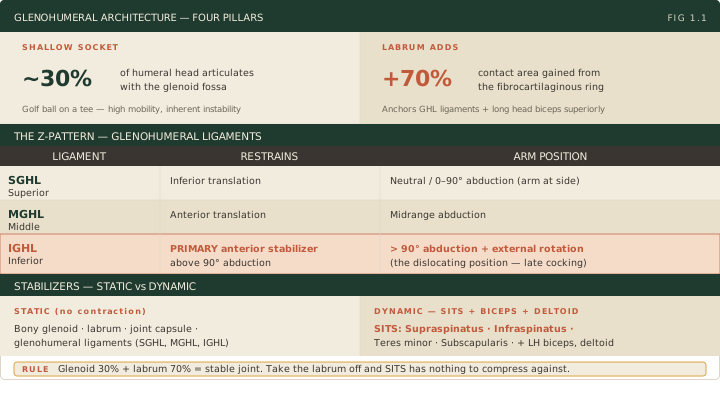
Bottom line: the glenohumeral (GH) joint articulates only about thirty percent of the humeral head with a shallow glenoid fossa, gaining its extraordinary range of motion (ROM) at the price of inherent instability; the labrum is the fibrocartilaginous ring that increases glenoid contact area by roughly seventy percent; and scapulohumeral rhythm is a fixed two-to-one ratio in which one hundred twenty degrees of GH motion plus sixty degrees of scapulothoracic motion produces the normal one hundred eighty degrees of total abduction.
The shoulder is the most mobile joint in the body, and the American Board of Physical Medicine and Rehabilitation (ABPMR) Part One examination expects every normal range-of-motion (ROM) value to be reproducible from memory. Normal shoulder flexion is 180°, extension 60°, abduction 180°, adduction 60°, and internal/external rotation each 90° (measured with the arm abducted to 90° in the scarecrow position). A clean numeric pattern anchors these values: 180, 60, 90.
A clinical nuance with abduction recurs on the boards. Full abduction to 180° requires the arm to be externally rotated (thumb up). When the thumb is pointed down (internally rotated), the greater tuberosity of the humerus mechanically impinges under the acromion and blocks motion at approximately 120°. This is normal bony architecture, not pathology, and a patient who reaches only 120° of abduction with the thumb down may simply need to externally rotate to clear the greater tuberosity.
The glenohumeral (GH) joint is a ball-and-socket synovial joint between the head of the humerus and the glenoid fossa of the scapula. The fossa is remarkably shallow, articulating with only about 30% of the humeral head at any given moment, like a golf ball balanced on a golf tee. This shallow architecture is exactly what permits the extraordinary ROM the upper extremity needs for reach, throw, and precision placement, but it comes at the steep cost of inherent instability. The shoulder depends entirely on its surrounding soft tissues to keep the humeral head centered.
The labrum is a fibrocartilaginous ring that encircles the rim of the glenoid fossa. Its primary mechanical role is to deepen the socket and to increase the contact area between glenoid and humeral head by approximately 70%. That 70% figure is heavily tested. The labrum also serves as the attachment point for the glenohumeral ligaments and for the long head of the biceps tendon superiorly, making it a critical anchor and the reason a labral tear destabilizes the joint biomechanically.
Static stabilizers (no muscle contraction needed) = bony glenoid + labrum + capsule + glenohumeral ligaments. Dynamic stabilizers = the four rotator cuff (RC) muscles (SITS: supraspinatus, infraspinatus, teres minor, subscapularis), plus long head biceps, deltoid, latissimus, and teres major.
The glenohumeral ligaments are capsular thickenings arrayed in a Z-pattern, each restraining a specific position. With the arm at the side, the superior GH ligament (SGHL), together with the rotator interval, is the primary restraint to inferior translation, and the subscapularis is the main anterior restraint. In midrange abduction (about 45°) the middle GH ligament (MGHL) becomes the main anterior restraint while the anterior band of the IGHL takes over inferior restraint (Turkel 1981; Warner 1992). The exam’s simplified rule is SGHL and MGHL for the lower range of abduction, IGHL for the abducted, externally rotated arm. The inferior GH ligament (IGHL) is the bottom band and the most clinically important, serving as the primary anterior stabilizer above 90° of abduction. That position is exactly where anterior dislocations occur during throwing or late cocking. When the IGHL fails, the head is free to translate anteriorly and dislocate.
Scapulohumeral rhythm describes coordinated motion between the GH joint and scapulothoracic articulation during elevation. The ratio is 2:1 (2° GH for every 1° scapulothoracic). For 180° of full abduction: 120° GH + 60° scapulothoracic. A frozen GH joint still permits ~60° via scapular motion alone. Disruption contributes to impingement: if the scapula fails to rotate upward, the acromion does not elevate and the subacromial space narrows prematurely.

Source: NIAMS (US National Institute of Arthritis and Musculoskeletal and Skin Diseases), “Shoulder joint”, via Wikimedia Commons, Public Domain (US Federal Government). https://commons.wikimedia.org/wiki/File:Shoulder_joint.svg
High Yield — Range, architecture, and rhythm
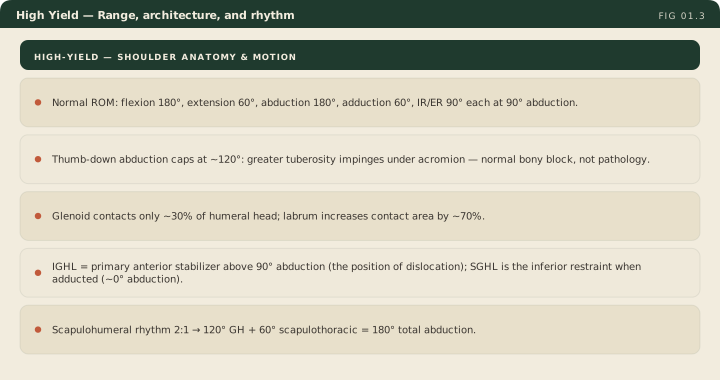
- Shoulder ROM: flexion 180°, extension 60°, abduction 180°, adduction 60°, internal/external rotation 90° each at 90° abduction.
- Thumb-down abduction caps at ~120° because the greater tuberosity impinges under the acromion (normal bony block, not pathology).
- Glenoid fossa articulates only ~30% of the humeral head; labrum increases contact area by ~70%.
- Static stabilizers = glenoid + labrum + capsule + glenohumeral ligaments. Dynamic stabilizers = rotator cuff (SITS) + long head biceps + deltoid + latissimus + teres major.
- Z-pattern ligaments: SGHL is the primary inferior restraint with the arm adducted (near 0° abduction); MGHL prevents anterior translation in midrange; IGHL is the primary anterior stabilizer above 90° abduction (the dislocating position).
- Scapulohumeral rhythm = 2:1: 120° GH + 60° scapulothoracic = 180° abduction.
Mnemonic — “SITS, then the strap”
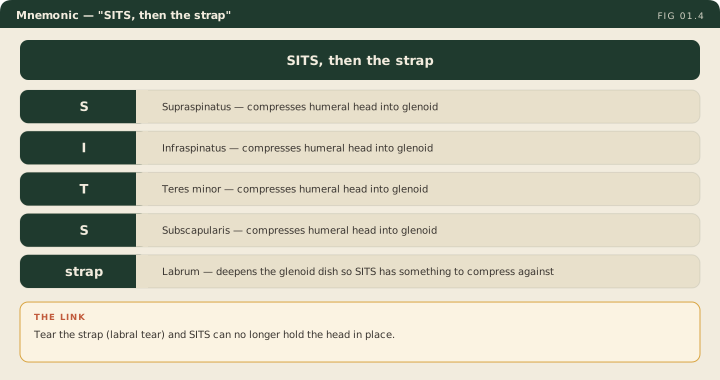
Supraspinatus, Infraspinatus, Teres minor, Subscapularis are the four cuff muscles that compress the head into the glenoid; the labrum is the strap that deepens the dish so SITS has something to compress against. Take the strap off (labral tear) and SITS no longer holds.
At any given resting moment, the bony glenoid fossa is only in contact with about 30% of the articular surface of the humeral head.
— MSK-01 podcast, ~4:55
Section 2: Shoulder Innervation and the Acromioclavicular Joint
Bottom line: shoulder muscle innervation is best memorized by movement pattern rather than by isolated muscle, with C5 to C6 dominating flexion and abduction and the entire posterior cord (axillary, thoracodorsal, lower subscapular, radial nerves) running shoulder extension; the acromioclavicular (AC) joint is stabilized horizontally by the AC ligaments and vertically by the coracoclavicular (CC) ligaments, and Rockwood Types I and II are conservative, Type III is conservative for most patients, and Types IV through VI are surgical.
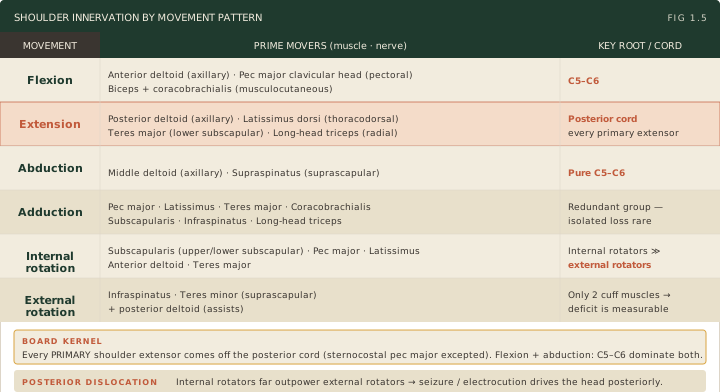
Shoulder muscle innervation is best learned by direction of motion. Flexion is dominated by C5-C6: anterior deltoid (axillary), pec major clavicular head (pectoral nerves), biceps and coracobrachialis (musculocutaneous). A C5-C6 radiculopathy devastates flexion. Extension is dominated by the posterior cord. Every primary extensor (posterior deltoid via axillary, latissimus via thoracodorsal, teres major via lower subscapular, long head triceps via radial) comes off the posterior cord; the one exception is the sternocostal head of pectoralis major, which brings a flexed arm back to neutral through the medial and lateral pectoral nerves. If a question asks about the cord for shoulder extension, the answer is posterior cord.
Abduction is pure C5-C6 via middle deltoid (axillary) and supraspinatus (suprascapular). The two fire together from the start and share the work throughout the arc, the deltoid’s share rising with elevation; neither alone initiates abduction, and an isolated palsy of either nerve weakens but does not abolish it (Howell 1986; Hecker 2021). The “first 30 degrees” of textbook lore is Inman’s scapular setting phase, a description of scapulothoracic motion rather than of which muscle is working. Adduction is performed by a large redundant group (pec major, lat, teres major, coracobrachialis, subscapularis, infraspinatus, long-head triceps), so isolated adduction loss is rare. Internal rotation is generated by subscapularis (upper/lower subscapular), pec major, lat, anterior deltoid, and teres major. Internal rotators are much larger and more powerful than external rotators, and that size mismatch explains why seizures and electrocution drive posterior dislocations. External rotation is performed by infraspinatus and teres minor (with posterior deltoid); because external rotation depends on only two cuff muscles, isolated suprascapular injury produces measurable deficit.
The acromioclavicular (AC) joint between distal clavicle and acromion is stabilized by two ligament systems: the AC ligaments form a capsule providing horizontal stability, and the coracoclavicular (CC) ligaments (conoid medially, trapezoid laterally) run from coracoid to undersurface of clavicle providing vertical stability. The CC ligaments are the heavy lifters that suspend the upper extremity from the clavicle.
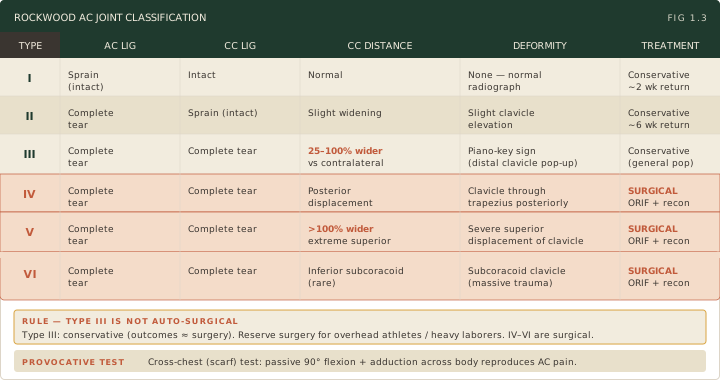
AC injuries are classified by the Rockwood system into six types. Type I: AC ligament sprain, CC intact, normal radiographs. Type II: complete AC tear, CC sprained but intact, slight clavicle elevation. Type III: both AC and CC completely torn, CC distance widens 25-100% versus contralateral, distal clavicle pops up (“piano-key” sign). Bilateral stress views with weights distinguish Type II from III. Type IV: posterior displacement of clavicle through trapezius. Type V: extreme superior displacement with CC distance >100%. Type VI: rare inferior subcoracoid displacement requiring massive trauma.
Treatment: Types I and II are conservative (ice, NSAIDs, sling); return at ~2 weeks for I, ~6 weeks for II, once the joint is symptom-free with full range of motion. Type III is conservative for the general population (functional outcomes equivalent to surgery), with surgery reserved for overhead athletes/heavy laborers. Types IV-VI are surgical, requiring open reduction with ligament reconstruction. The provocative test is the cross-chest (scarf) test: passive 90° flexion with adduction across the body compresses the AC joint and reproduces pain localized over it.
Board Trap — “Type III is always surgical”
A vignette describes a Type III AC injury in an otherwise healthy thirty-five-year-old office worker and asks for the next best step. The trap is to choose surgical fixation because the Rockwood grade sounds severe. The board answer is conservative management for the general population: studies show no significant functional difference between operative and nonoperative treatment in Type III, and surgical reconstruction is reserved for high-demand overhead athletes and heavy laborers. Types IV, V, and VI remain surgical.
Distal clavicle osteolysis (weightlifter shoulder) is driven by repetitive microtrauma from heavy bench/overhead pressing, producing stress fractures and bone resorption. Radiographs show osteopenia and cystic changes of the distal clavicle. Treatment is activity modification and NSAIDs; refractory cases get a Mumford procedure (distal clavicle resection).
High Yield — Innervation and the AC joint
- Shoulder flexors dominated by C5 to C6: anterior deltoid (axillary), pec major clavicular (pectoral), biceps and coracobrachialis (musculocutaneous).
- The primary shoulder extensors all come off the posterior cord: posterior deltoid (axillary), latissimus (thoracodorsal), teres major (lower subscapular), long head triceps (radial); the sternocostal pectoralis major (pectoral nerves) is the lone exception.
- Abduction = pure C5 to C6: middle deltoid (axillary) + supraspinatus (suprascapular).
- AC joint stabilized horizontally by AC ligaments, vertically by coracoclavicular (CC) ligaments (conoid + trapezoid).
- Rockwood I and II conservative; III conservative for most; IV through VI surgical. CC distance: normal in I, slight in II, 25-100% in III, >100% in V, posterior in IV, subcoracoid in VI.
- Cross-chest (scarf) test is the AC joint provocative maneuver.
Section 3: Glenohumeral Instability — TUBS, AMBRI, and the Special Tests
Bottom line: glenohumeral instability is divided into traumatic unidirectional Bankart-driven instability (the TUBS phenotype), which is treated surgically in the young high-demand athlete because conservative recurrence approaches eighty-five to ninety percent in that group, and atraumatic multidirectional instability (the AMBRI phenotype) from generalized capsular laxity, which is treated with rehabilitation and only with inferior capsular shift if rehab fails; the apprehension and relocation tests confirm anterior instability, the jerk test confirms posterior instability, the sulcus sign confirms inferior laxity, and the West Point and Stryker notch radiographic views detect Bankart and Hill-Sachs lesions respectively.
Glenohumeral instability spans laxity → subluxation → dislocation. Laxity is capsular looseness, often asymptomatic. Instability is symptomatic laxity (pain, apprehension, functional limitation). Subluxation is partial transient separation; dislocation is complete separation requiring reduction.
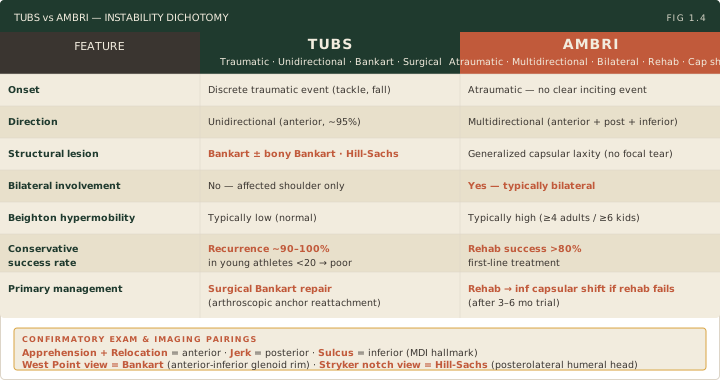
Two mnemonics anchor the board approach. TUBS = Traumatic, Unidirectional, Bankart lesion, Surgical. The classic TUBS patient is a young athlete (quarterback, rugby player) with a discrete traumatic anterior dislocation tearing the labrum (Bankart lesion); recurrence after conservative management is driven by age: roughly two-thirds of patients under 30, approaching 85-90% in those under 20 and in young males in contact or overhead sports, and well under a third after 30 (Robinson 2006; Wasserstein 2016); it approaches 100% only with repeated dislocations. For the young high-demand athlete, early arthroscopic Bankart repair is the standard (Kirkley 2005; Hurley 2020); for the older or lower-demand first-time dislocator without bone loss or apprehension, sling and rehabilitation come first, with surgery reserved for recurrence. AMBRI = Atraumatic, Multidirectional, Bilateral, Rehabilitation, Inferior capsular shift if surgery needed. The AMBRI patient is typically a young swimmer/gymnast with generalized laxity, no traumatic event, bilateral involvement; rehabilitation succeeds in >80%, with inferior capsular shift reserved for failure after 3-6 months. The testable kernel: TUBS is from trauma and you fix it; AMBRI is born loose and you rehab it.
Anterior instability accounts for ~95% of dislocations. Mechanism: forced abduction + external rotation (late cocking, reaching into the back seat). The head levers against the IGHL and anterior labrum; if they fail, the head exits anteriorly. In throwers, recurrent transient anterior subluxation that produces a sudden loss of arm control during late cocking is the dead arm syndrome. Two characteristic lesions: - Bankart lesion: tear of the anterior-inferior labrum off the glenoid rim. A bony Bankart adds a fracture of the glenoid rim, removing bone stock and increasing recurrence risk. - Hill-Sachs lesion: compression fracture of the posterolateral humeral head from impact against the sharp anterior glenoid rim. An “engaging” Hill-Sachs is large enough to catch on the rim during external rotation, locking the joint dislocated. A defect involving more than about 30% of the articular surface can itself cause instability, a useful anchor because roughly 30% is the share of the head the glenoid contacts in any one position.
Posterior instability is uncommon (~2-4%) and frequently missed; the arm may appear normal, held close to the body, adducted and internally rotated, with posterior fullness and a block to external rotation. Buzzword mechanism: seizure or electrocution, in which internal rotators overpower external rotators during tonic-clonic contraction; the other classic mechanism is a fall onto a forward-flexed, adducted arm. A post-ictal patient who cannot externally rotate should raise immediate suspicion. Associated lesions: reverse Bankart (posterior labral tear) and reverse Hill-Sachs (anterior humeral head). Multidirectional instability (AMBRI phenotype) is generalized capsular laxity with instability in multiple directions, often bilateral; these patients frequently have high Beighton scores and compete in flexibility sports. Patients must avoid voluntary subluxation, which further stretches the capsule.
The Beighton hypermobility score is a nine-point scale. By the 2017 hypermobile Ehlers-Danlos criteria, generalized joint hypermobility is a score ≥5 from puberty to age 50 (≥6 before puberty, ≥4 after 50); the older Brighton criteria used ≥4 in adults, which is why two numbers circulate. Generalized hypermobility overlaps with hypermobile Ehlers-Danlos syndrome (EDS).
The axillary nerve must be assessed after any anterior dislocation; it wraps around the surgical neck of the humerus and is stretched when the head dislocates anteriorly. Test sensation over the lateral deltoid (regimental badge area); numbness indicates axillary neuropraxia. Document before and after every reduction; most recover spontaneously.
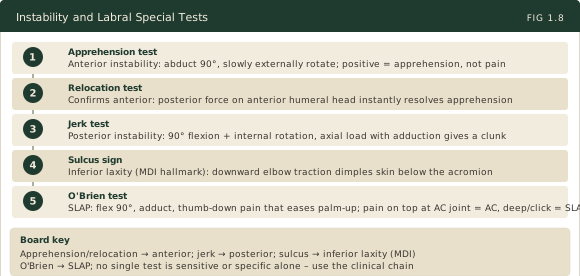
Special tests for instability: - Apprehension test (anterior instability): supine, arm abducted 90°, slowly external rotate; positive = visceral apprehension, not pain (patient grimaces, arches, grabs examiner). - Relocation test: immediately after positive apprehension, posteriorly directed force on anterior humeral head; instant resolution of apprehension confirms anterior translation. - Jerk test (posterior): seated, arm at 90° flexion + internal rotation; axial load through elbow with horizontal adduction produces palpable clunk as head subluxes posteriorly. - Sulcus sign (inferior, hallmark of multidirectional instability): inferior traction on elbow produces visible dimple beneath the acromion. - Load-and-shift test (anterior and posterior laxity): the humeral head is first loaded into the glenoid, then translated anteriorly and posteriorly; excess translation compared with the other side is positive, and the amount of translation grades the laxity. Think of it as a modified anterior drawer for the shoulder.
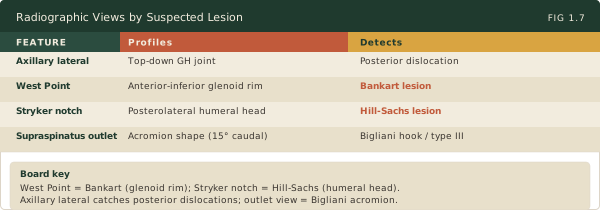
Radiographic views: standard trauma series is AP, scapular-Y, and axillary lateral (most important for instability; top-down view detects posterior dislocations other views miss). West Point view profiles the anterior-inferior glenoid rim and detects Bankart lesions. Stryker notch view profiles the posterolateral humeral head and detects Hill-Sachs lesions. Pairing to memorize: West Point = Bankart, Stryker = Hill-Sachs.
A SLAP lesion (Superior Labrum Anterior to Posterior) runs along the top of the labrum where the long head of biceps anchors. Mechanism: repetitive traction from biceps during deceleration phase of throwing (baseball pitchers), or acute compression (FOOSH with arm overhead). Patients have deep pain, clicking, instability during cocking. MR arthrography is the gold standard (standard MRI misses small tears). The O’Brien active compression test: arm forward flexed 90°, adducted 10-15°, internally rotated (thumb-down) while examiner pushes down; then supinated (palm-up) and pushed again. Positive O’Brien = pain thumb-down that eases palm-up; pain felt on top at the AC joint points to AC pathology, while deep pain or a click inside the joint points to SLAP.
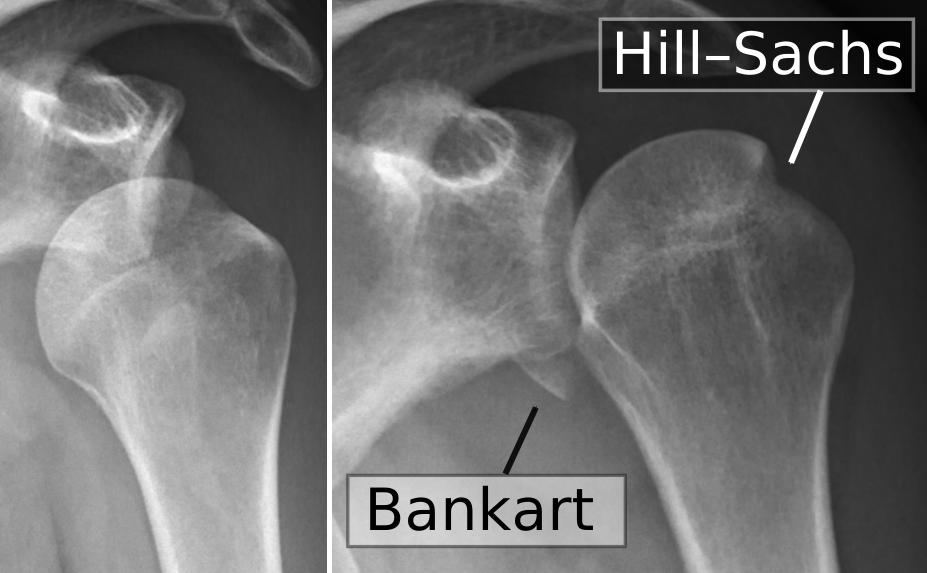
Source: Mikael Häggström, MD, “Shoulder dislocation with Bankart and Hill-Sachs lesion, before and after reduction”, via Wikimedia Commons, CC0 1.0 (Public Domain Dedication). https://commons.wikimedia.org/wiki/File:Shoulder_dislocation_with_Bankart_and_Hill-Sachs_lesion,_before_and_after_reduction.svg
Mnemonic — “TUBS fixes, AMBRI rehabs”
Traumatic, Unidirectional, Bankart, Surgical. Atraumatic, Multidirectional, Bilateral, Rehabilitation, Inferior capsular shift. The first letter of the second mnemonic also signals “atraumatic, avoid the OR first.”
Think of it like swinging a car door open too fast and denting it against a concrete pillar. That violent impact causes a distinct compression fracture on the posterior superior aspect of the humeral head.
— MSK-01 podcast, ~31:57 (the board term for that surface is posterolateral; the podcast’s “posterior superior” names the same posterosuperolateral corner of the head)
During a violent tonic-clonic contraction, the brain loses all regulatory control. Every single muscle in the shoulder fires at absolute maximum capacity simultaneously.
— MSK-01 podcast, ~17:12
Section 4: Impingement Syndrome — Neer Stages and Bigliani Acromion Morphology
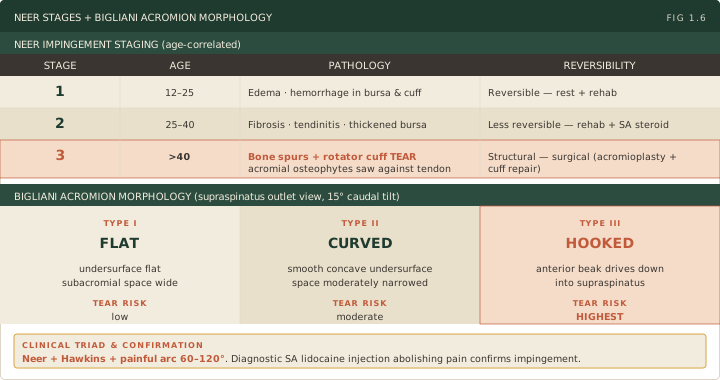
Bottom line: subacromial impingement is the most common cause of shoulder pain in outpatient practice and is fundamentally a space problem in which the subacromial bursa, long head biceps, and supraspinatus tendon are compressed between the acromion above and the humeral head below; Neer described three stages tied to age (edema 12 to 25, fibrosis 25 to 40, bone spurs and rotator cuff tear over 40); Bigliani described three acromion morphologies (Type I flat, Type II curved, Type III hooked) with the Type III hooked acromion carrying the highest rotator cuff tear risk; and the clinical triad is a positive Neer sign, positive Hawkins sign, and a painful arc between sixty and one hundred twenty degrees.
Subacromial impingement is the most common cause of outpatient shoulder pain. Fundamentally a space problem: the subacromial space between acromion (above) and humeral head (below) narrows, compressing its three contents (subacromial bursa, long head biceps tendon, supraspinatus tendon). The disease pattern is age-driven, progressing from reversible inflammation to structural failure.
Neer staging correlates with age and tissue damage: - Stage 1 (12-25): edema/hemorrhage in bursa and cuff tendon; reversible with rest and rehabilitation. Often a young athlete with increased overhead volume. - Stage 2 (25-40): fibrosis and tendinitis; bursa thickened from chronic irritation. Less reversible but still manageable conservatively (rehab + selective subacromial corticosteroid injection). - Stage 3 (>40): bone spurs and rotator cuff tear. Acromial osteophytes act as a saw against the tendon, producing partial or full-thickness tear. Management is still rehabilitation first; surgery (acromioplasty with cuff repair) is reserved for acute traumatic full-thickness tears and for tears that fail conservative care.
The supraspinatus is the most commonly torn cuff tendon because of the critical zone of hypovascularity, a watershed region ~1 cm proximal to the greater tuberosity insertion where osseous and muscular blood supplies barely overlap. Chronically poor perfusion prevents microdamage healing, and degenerative changes accumulate over decades until the tendon fails.
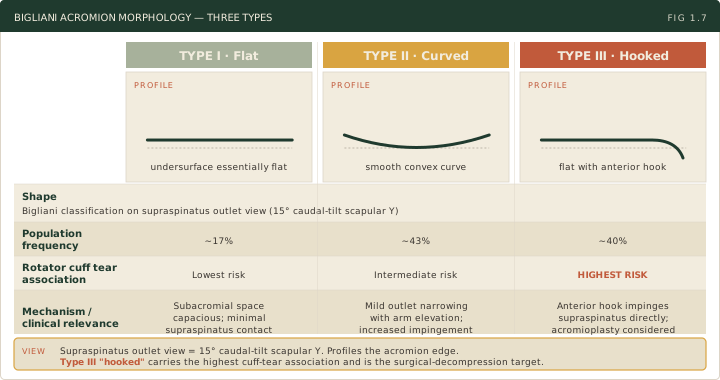
Bigliani acromion morphology is classified on lateral radiograph or supraspinatus outlet view: Type I flat (lowest tear risk), Type II curved (moderate), Type III hooked (anterior beak driving into supraspinatus, highest tear risk). Surgical acromioplasty shaves the hook to convert Type III to Type I during cuff repair.
The supraspinatus outlet view is taken with a 15° caudal tilt to profile acromion shape for Bigliani classification.
Three impingement tests: - Neer sign: passive forward flexion past 90° with scapula stabilized drives greater tuberosity into acromion; positive = anterior/lateral pain. - Hawkins-Kennedy sign: passive 90° forward flexion + internal rotation rolls supraspinatus under coracoacromial ligament; positive = pain. - Painful arc: active abduction painful between 60-120° (narrowest part of subacromial space); below 60° the supraspinatus has not entered the space, above 120° the tuberosity has passed beyond.
The clinical triad is positive Neer + Hawkins + painful arc 60-120°. Diagnostic Neer test injection (lidocaine into subacromial space) confirms the diagnosis if it abolishes pain on repeat maneuvers, distinguishing impingement from GH arthritis or cervical radiculopathy. Scapular dyskinesia (scapula fails to rotate upward) contributes by preventing acromial elevation; a patient who shrugs early in abduction demonstrates broken rhythm.
High Yield — Impingement, Neer, and Bigliani
- Subacromial impingement is the most common cause of outpatient shoulder pain; subacromial space contents = subacromial bursa + long head biceps + supraspinatus tendon.
- Neer Stage 1 (age 12-25): edema/hemorrhage, reversible. Stage 2 (25-40): fibrosis/tendinitis. Stage 3 (>40): bone spurs + rotator cuff tear.
- Critical zone of supraspinatus = ~1 cm proximal to the greater tuberosity insertion; watershed hypovascularity drives the most common tear site.
- Bigliani Type I flat / Type II curved / Type III hooked; Type III carries the highest rotator cuff tear risk.
- Supraspinatus outlet view = 15° caudal tilt; profiles acromion morphology.
- Clinical triad: Neer sign + Hawkins sign + painful arc 60-120°.
- Neer test injection: lidocaine into subacromial space abolishing pain confirms the diagnosis.
Board Trap — “Pain only above 120° still equals impingement”
A vignette describes pain only above one hundred twenty degrees of abduction and asks whether the diagnosis is impingement. The trap is to call it impingement because the patient has shoulder pain on abduction. The painful arc of impingement is between sixty and one hundred twenty degrees, the narrowest part of the subacromial space; pain only above one hundred twenty degrees is more consistent with AC joint pathology, where the cross-chest test, not the painful arc, is the relevant maneuver.
This critical zone is a physiological vascular watershed area. It is exactly the point where the blood supply traveling down from the muscle belly and the blood supply traveling up from the bony tuberosity barely overlap.
— MSK-01 podcast, ~46:41
Section 5: Putting It Together — Clinical Reasoning at the Shoulder
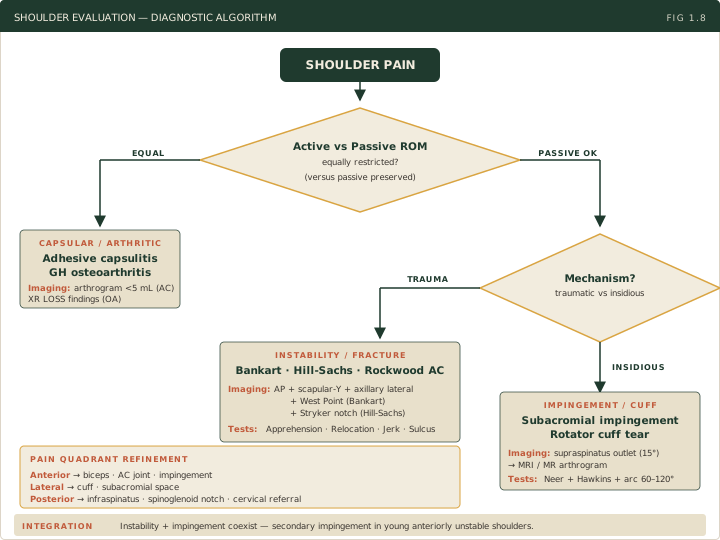
Bottom line: shoulder evaluation on the boards proceeds in a fixed sequence. Establish range of motion (active versus passive); identify whether the problem is structural (instability, labral tear, rotator cuff tear), inflammatory (bursitis, tendinitis), or compressive (impingement, nerve entrapment); choose the right radiographic view for the suspected lesion (axillary lateral for posterior dislocation, West Point for Bankart, Stryker notch for Hill-Sachs, supraspinatus outlet for acromion morphology); and confirm the diagnosis with the maneuver that reproduces the pathology in question.
A disciplined approach integrates everything in this chapter. Step 1: ROM assessment. Equally restricted active and passive ROM points to capsular pathology (adhesive capsulitis, GH arthritis); preserved passive with limited active points to cuff tendinopathy/tear. Step 2: pain quadrant. Anterior → biceps, AC joint, impingement; lateral → cuff and subacromial space; posterior → infraspinatus, spinoglenoid notch, cervical referral. Step 3: mechanism. Traumatic → acute structural injury (Bankart, Hill-Sachs, AC sprain, fracture); insidious → degenerative/overuse (impingement, cuff tear, calcific tendinitis, adhesive capsulitis).
Radiographic algorithm by suspected lesion: dislocation/instability → AP + scapular-Y + axillary lateral; suspected Bankart → add West Point; suspected Hill-Sachs → add Stryker notch; AC injury → bilateral stress views with weights (II vs III); impingement → supraspinatus outlet (15° caudal tilt) for Bigliani. MRI for soft-tissue visualization; MR arthrography for labral or partial articular-side cuff tears.
Match maneuver to suspected diagnosis: apprehension/relocation → anterior instability; load-and-shift → graded anterior or posterior laxity; jerk → posterior; sulcus → inferior; cross-chest → AC joint; Neer/Hawkins/painful arc → impingement; O’Brien → SLAP. None is sensitive/specific in isolation, which is why the boards test the clinical chain (history + mechanism + age + exam + selective imaging) rather than any single test.
A final integration point: instability and impingement coexist. A young athlete with subtle anterior instability may present with secondary impingement because the unstable head migrates anteriorly and superiorly under load. The clue is that conservative impingement management fails while end-range slipping persists. Recognizing underlying instability is the difference between failed subacromial decompression and successful Bankart-plus-stabilization.
Beyond the Boards
The references below go deeper than the ABPMR Part One requires. Use them after the exam to build clinical depth on the shoulder evaluation that anchors every later MSK chapter.
- ACR Appropriateness Criteria — Shoulder Pain: evidence-based imaging selection algorithms for atraumatic and post-traumatic shoulder pain, including instability and impingement work-ups (https://acsearch.acr.org).
- AAOS Clinical Practice Guideline — Rotator Cuff: society-endorsed recommendations on diagnosis and management that frame the impingement-to-tear continuum (https://www.aaos.org/quality/quality-programs/upper-extremity-programs/).
- StatPearls — Shoulder Impingement Syndrome: free peer-reviewed overview covering the Neer and Hawkins-Kennedy maneuvers and the three-stage impingement framework (https://www.ncbi.nlm.nih.gov/books/NBK554518/).
- Cuccurullo, Physical Medicine and Rehabilitation Board Review, 4th ed., MSK chapters — the core board-distilled reference for shoulder anatomy, instability classifications, and impingement; pair with this companion chapter for high-yield drilling before the exam.
- Neer CS, “Anterior acromioplasty for the chronic impingement syndrome in the shoulder,” J Bone Joint Surg Am 1972 — the original description of the three-stage impingement framework that still anchors every modern board question.
Retrieval Check — MSK-01
Cover the right column. Answer aloud or in writing before looking.
| Question | Answer |
|---|---|
| What percentage of the humeral head articulates with the glenoid fossa, and by how much does the labrum increase contact area? | About 30% of the head articulates; the labrum increases contact area by ~70% |
| State the scapulohumeral rhythm ratio and the math for full abduction. | 2:1 ratio; 120° glenohumeral + 60° scapulothoracic = 180° total abduction |
| Which glenohumeral ligament is the primary anterior stabilizer above 90° of abduction? | Inferior glenohumeral ligament (IGHL), the bottom band of the Z; this is the dislocating position |
| Name the four rotator cuff muscles in the SITS mnemonic. | Supraspinatus, Infraspinatus, Teres minor, Subscapularis |
| What is the common cord of the brachial plexus for every primary shoulder extensor? | Posterior cord (axillary, thoracodorsal, lower subscapular, radial nerves); the sternocostal pectoralis major (pectoral nerves) is the lone exception |
| In Rockwood AC joint classification, which types are conservative and which are surgical? | Types I and II conservative; Type III conservative for general population (controversial); Types IV through VI surgical |
| Decode the TUBS mnemonic. | Traumatic, Unidirectional, Bankart lesion, Surgical management |
| Decode the AMBRI mnemonic. | Atraumatic, Multidirectional, Bilateral, Rehabilitation, Inferior capsular shift if needed |
| Which mechanism classically causes posterior shoulder dislocation? | Seizure or electrocution; internal rotators overpower external rotators during tonic-clonic contraction |
| Match the radiographic view to the lesion: West Point versus Stryker notch. | West Point view = Bankart (anterior-inferior glenoid rim); Stryker notch view = Hill-Sachs (posterolateral humeral head) |
| What is the clinical triad of subacromial impingement? | Positive Neer sign + Hawkins sign + painful arc 60 to 120° |
| What is the painful arc range, and why? | 60 to 120°, the narrowest portion of the subacromial space, where the supraspinatus is maximally compressed |
| Bigliani Type III acromion shape and clinical significance? | Hooked acromion; highest risk of rotator cuff tear because the hook drives into the supraspinatus during arm elevation |
| State the Neer impingement stages and age associations. | Stage 1 (12-25, edema/hemorrhage, reversible); Stage 2 (25-40, fibrosis/tendinitis); Stage 3 (>40, bone spurs + rotator cuff tear) |
| Which test confirms anterior instability after a positive apprehension test, and what is the positive finding? | Relocation test; posteriorly directed force on the anterior humeral head while the arm is held in 90° abduction and external rotation; instant resolution of apprehension is positive |
5 Things to Know Cold
1. The labrum increases glenoid contact area by approximately seventy percent, and the inferior glenohumeral ligament (IGHL) is the primary anterior stabilizer above ninety degrees of abduction. The glenoid fossa articulates with only about thirty percent of the humeral head, so the soft-tissue stabilizers do most of the work. Above ninety degrees the IGHL takes over as the dominant restraint, which is exactly why anterior dislocations occur in late cocking with the arm abducted and externally rotated. The Z-pattern of glenohumeral ligaments (superior, middle, and inferior) provides position-specific stability across the full arc of motion.
2. Scapulohumeral rhythm is two to one: one hundred twenty degrees of glenohumeral motion plus sixty degrees of scapulothoracic motion equals one hundred eighty degrees of abduction. A frozen glenohumeral joint still allows about sixty degrees of abduction through scapular rotation alone, and a pinned scapula caps abduction at roughly one hundred twenty degrees. Scapular dyskinesia narrows the subacromial space prematurely and is a major contributor to impingement.
3. Every primary shoulder extensor is innervated by the posterior cord of the brachial plexus. Posterior deltoid (axillary), latissimus dorsi (thoracodorsal), teres major (lower subscapular), and long head of triceps (radial) all come off the posterior cord; the sternocostal pectoralis major, extending a flexed arm back to neutral through the pectoral nerves, is the lone exception. Shoulder flexion and abduction are dominated by C5 to C6, and a C5 to C6 radiculopathy devastates both motions. Internal rotators are larger and more powerful than external rotators, which is why seizures and electrocution drive posterior dislocations.
4. Rockwood AC joint Types I and II are conservative; Type III is conservative for the general population (controversial in overhead athletes); Types IV through VI are surgical. The acromioclavicular ligaments provide horizontal stability and the coracoclavicular ligaments provide vertical stability. The CC distance widens twenty-five to one hundred percent in Type III and greater than one hundred percent in Type V. The cross-chest test is the AC joint provocative maneuver.
5. TUBS is fixed surgically; AMBRI is rehabbed. TUBS (Traumatic, Unidirectional, Bankart lesion, Surgical management) describes the young athlete with a discrete labral tear and a recurrence rate approaching eighty-five to ninety percent in patients under twenty without surgery. AMBRI (Atraumatic, Multidirectional, Bilateral, Rehabilitation, Inferior capsular shift) describes generalized capsular laxity with greater-than-eighty-percent success from rehabilitation alone. West Point view detects the Bankart on the glenoid rim; Stryker notch view detects the Hill-Sachs on the humeral head; the apprehension and relocation tests are the bedside confirmation.
Vignette Answer
The patient has a traumatic anterior glenohumeral dislocation with a bony Bankart and a Hill-Sachs lesion: the textbook TUBS phenotype. The mechanism (90° abduction + maximal external rotation, late cocking) levered the head anteriorly against the IGHL and anterior labrum, both of which failed. The bony fragment on the West Point view confirms a bony Bankart (labral tear plus fracture of the anterior-inferior glenoid rim). The Hill-Sachs lesion on the Stryker notch view is the compression fracture of the posterolateral humeral head from impact against the sharp anterior glenoid rim during dislocation. Intact regimental-badge sensation argues against axillary injury, but documentation before and after reduction is mandatory.
The picture matches the TUBS mnemonic (Traumatic, Unidirectional, Bankart, Surgical), and the two confirmatory tests are the apprehension test (positive: grimacing, arching, grabbing examiner) and the relocation test (positive: instant resolution of apprehension when posteriorly directed force is applied to the anterior humeral head).
Natural history: in young athletes under 20 managed conservatively after a first dislocation, recurrence approaches 85-90% (roughly two-thirds across all patients under 30). Arthroscopic Bankart repair (anchor reattachment of labrum to glenoid rim) reduces recurrence dramatically. The board answer for this high-demand athlete is surgical Bankart repair plus cuff and scapular stabilizer rehabilitation. Contrast with AMBRI (atraumatic, multidirectional, bilateral, rehab-first) is the dichotomy the boards constantly drill.
When the humeral head rides too high because the capsule is loose, it secondarily crushes the subacromial contents into the acromion roof. So the impingement symptoms they feel are very real, but they are entirely secondary to the hidden primary instability.
— MSK-01 podcast, ~57:08
References
78 sources
- Ackland DC, Pak P, Richardson M, Pandy MG. Moment Arms of the Muscles Crossing the Anatomical Shoulder. J Anat. 2008. doi:10.1111/j.1469-7580.2008.00965.x PMID: 18691376
- Beighton P, Solomon L, Soskolne CL. Articular Mobility in an African Population. Ann Rheum Dis. 1973. doi:10.1136/ard.32.5.413 PMID: 4751776
- Benzon HT, Provenzano DA, Nagpal A, et al. Use and Safety of Corticosteroid Injections in Joints and Musculoskeletal Soft Tissue: Guidelines From the American Society of Regional Anesthesia and Pain Medicine, the American Academy of Pain Medicine, the American Society of Interventional Pain Physicians, and the International Pain and Spine Intervention Society. Reg Anesth Pain Med. 2025. doi:10.1136/rapm-2024-105656 PMID: 40015722
- Burkart AC, Debski RE. Anatomy and Function of the Glenohumeral Ligaments in Anterior Shoulder Instability. Clin Orthop Relat Res. 2002. doi:10.1097/00003086-200207000-00005 PMID: 12072743
- Chansky HA, Iannotti JP. The Vascularity of the Rotator Cuff. Clin Sports Med. 1991. PMID: 1934098
- Chiou-Tan FY. Musculoskeletal mimics of cervical radiculopathy. Muscle Nerve. 2022. doi:10.1002/mus.27553 PMID: 35466429
- Chronopoulos E, Kim TK, Park HB, Ashenbrenner D, McFarland EG. Diagnostic Value of Physical Tests for Isolated Chronic Acromioclavicular Lesions. Am J Sports Med. 2004. doi:10.1177/0363546503261723 PMID: 15090381
- Cieminski CJ, Kelly SM, Nawrocki TJ, et al. Comparison of Shoulder Internal Rotation Passive Range of Motion in Various Positions in Nonathletic Persons and the Establishment of Normative Values for the Sidelying Position. J Shoulder Elbow Surg. 2016. doi:10.1016/j.jse.2016.01.007 PMID: 27038564
- Colachis SC Jr, Strohm BR, Brechner VL. Effects of Axillary Nerve Block on Muscle Force in the Upper Extremity. Arch Phys Med Rehabil. 1969. PMID: 5360326
- Colachis SC Jr, Strohm BR. Effect of Suprascauular and Axillary Nerve Blocks on Muscle Force in Upper Extremity. Arch Phys Med Rehabil. 1971. PMID: 5555506
- Danzig LA, Greenway G, Resnick D. The Hill-Sachs Lesion. An Experimental Study. Am J Sports Med. 1980. doi:10.1177/036354658000800506 PMID: 7416350
- Dillingham TR, Annaswamy TM, Plastaras CT. Evaluation of persons with suspected lumbosacral and cervical radiculopathy: Electrodiagnostic assessment and implications for treatment and outcomes ( Part I). Muscle Nerve. 2020. doi:10.1002/mus.26997 PMID: 32557709
- Duralde XA, Gauntt SJ. Troubleshooting the Supraspinatus Outlet View. J Shoulder Elbow Surg. 1999. doi:10.1016/s1058-2746(99)90152-0 PMID: 10472002
- Engebretsen L, Craig EV. Radiologic Features of Shoulder Instability. Clin Orthop Relat Res. 1993. PMID: 8504609
- Eschler A, Rösler K, Rotter R, et al. Acromioclavicular Joint Dislocations: Radiological Correlation Between Rockwood Classification System and Injury Patterns in Human Cadaver Species. Arch Orthop Trauma Surg. 2014. doi:10.1007/s00402-014-2045-1 PMID: 24993589
- Farber AJ, Castillo R, Clough M, Bahk M, McFarland EG. Clinical Assessment of Three Common Tests for Traumatic Anterior Shoulder Instability. J Bone Joint Surg Am. 2006. doi:10.2106/jbjs.e.00594 PMID: 16818971
- Garríguez-Pérez D, Lopiz Y, Domínguez-Jiménez L, García-Fernández C, Marco F. Establishing Reference Values for Shoulder Mobility and Abduction Strength in Healthy Adults. J Biomech. 2025. doi:10.1016/j.jbiomech.2025.112959 PMID: 40946398
- Gerber C, Blumenthal S, Curt A, Werner CM. Effect of Selective Experimental Suprascapular Nerve Block on Abduction and External Rotation Strength of the Shoulder. J Shoulder Elbow Surg. 2007. doi:10.1016/j.jse.2007.02.120 PMID: 17931906
- Grahame R, Bird HA, Child A. The Revised (Brighton 1998) Criteria for the Diagnosis of Benign Joint Hypermobility Syndrome (BJHS). J Rheumatol. 2000. PMID: 10914867
- Hanchard NC, Lenza M, Handoll HH, Takwoingi Y. Physical Tests for Shoulder Impingements and Local Lesions of Bursa, Tendon or Labrum That May Accompany Impingement. Cochrane Database Syst Rev. 2013. doi:10.1002/14651858.cd007427.pub2 PMID: 23633343
- Handoll HH, Almaiyah MA, Rangan A. Surgical Versus Non-Surgical Treatment for Acute Anterior Shoulder Dislocation. Cochrane Database Syst Rev. 2004. doi:10.1002/14651858.cd004325.pub2 PMID: 14974064
- Hawkins RJ, Kennedy JC. Impingement Syndrome in Athletes. Am J Sports Med. 1980. doi:10.1177/036354658000800302 PMID: 7377445
- Hohmann E, Glatt V, Tetsworth K. Subacromial Decompression in Patients With Shoulder Impingement With an Intact Rotator Cuff: An Expert Consensus Statement Using the Modified Delphi Technique Comparing North American to European Shoulder Surgeons. Arthroscopy. 2022. doi:10.1016/j.arthro.2021.09.031 PMID: 34655764
- Hovelius L, Augustini BG, Fredin H, et al. Primary Anterior Dislocation of the Shoulder in Young Patients. A Ten-Year Prospective Study. J Bone Joint Surg Am. 1996. doi:10.2106/00004623-199611000-00006 PMID: 8934481
- Hu B, Hong J, Zhu H, et al. Arthroscopic Bankart Repair Versus Conservative Treatment for First-Time Traumatic Anterior Shoulder Dislocation: A Systematic Review and Meta-Analysis. Eur J Med Res. 2023. doi:10.1186/s40001-023-01160-0 PMID: 37501089
- Humphries A, Cirovic S, Bull AM, Hearnden A, Shaheen AF. Assessment of the Glenohumeral Joint’s Active and Passive Axial Rotational Range. J Shoulder Elbow Surg. 2015. doi:10.1016/j.jse.2015.07.007 PMID: 26410346
- Itoi E, Motzkin NE, Morrey BF, An KN. Bulk Effect of Rotator Cuff on Inferior Glenohumeral Stability as Function of Scapular Inclination Angle: A Cadaver Study. Tohoku J Exp Med. 1993. doi:10.1620/tjem.171.267 PMID: 8184401
- Juul-Kristensen B, Schmedling K, Rombaut L, et al. Measurement Properties of Clinical Assessment Methods for Classifying Generalized Joint Hypermobility-a Systematic Review. Am J Med Genet C Semin Med Genet. 2017. doi:10.1002/ajmg.c.31540 PMID: 28306223
- Karjalainen TV, Jain NB, Page CM, et al. Subacromial Decompression Surgery for Rotator Cuff Disease. Cochrane Database Syst Rev. 2019. doi:10.1002/14651858.cd005619.pub3 PMID: 30707445
- Kavaja L, Lähdeoja T, Malmivaara A, Paavola M. Treatment After Traumatic Shoulder Dislocation: A Systematic Review With a Network Meta-Analysis. Br J Sports Med. 2018. doi:10.1136/bjsports-2017-098539 PMID: 29936432
- Kozono N, Okada T, Takeuchi N, et al. In Vivo Kinematic Analysis of the Glenohumeral Joint During Dynamic Full Axial Rotation and Scapular Plane Full Abduction in Healthy Shoulders. Knee Surg Sports Traumatol Arthrosc. 2017. doi:10.1007/s00167-016-4263-2 PMID: 27511218
- Lavoie-Gagne O, Farah G, Lu Y, et al. Physical Therapy Combined With Subacromial Cortisone Injection Is a First-Line Treatment Whereas Acromioplasty With Physical Therapy Is Best if Nonoperative Interventions Fail for the Management of Subacromial Impingement: A Systematic Review and Network Meta-Analysis. Arthroscopy. 2022. doi:10.1016/j.arthro.2022.02.008 PMID: 35189304
- Leschinger T, Wallraff C, Müller D, et al. Internal Impingement of the Shoulder: A Risk of False Positive Test Outcomes in External Impingement Tests?. Biomed Res Int. 2017. doi:10.1155/2017/2941238 PMID: 28904952
- Lewis J. The End of an Era?. J Orthop Sports Phys Ther. 2018. doi:10.2519/jospt.2018.0102 PMID: 29490599
- Liotard JP, Cochard P, Walch G. Critical Analysis of the Supraspinatus Outlet View: Rationale for a Standard Scapular Y-View. J Shoulder Elbow Surg. 1998. doi:10.1016/s1058-2746(98)90223-3 PMID: 9593091
- Lo IK, Nonweiler B, Woolfrey M, Litchfield R, Kirkley A. An Evaluation of the Apprehension, Relocation, and Surprise Tests for Anterior Shoulder Instability. Am J Sports Med. 2004. doi:10.1177/0095399703258690 PMID: 14977651
- Lohr JF, Uhthoff HK. The Microvascular Pattern of the Supraspinatus Tendon. Clin Orthop Relat Res. 1990. PMID: 2323147
- Murray IR, Ahmed I, White NJ, Robinson CM. Traumatic anterior shoulder instability in the athlete. Scand J Med Sci Sports. 2013. doi:10.1111/j.1600-0838.2012.01494.x PMID: 22738342
- O’Brien SJ, Neves MC, Arnoczky SP, et al. The Anatomy and Histology of the Inferior Glenohumeral Ligament Complex of the Shoulder. Am J Sports Med. 1990. doi:10.1177/036354659001800501 PMID: 2252083
- O’Brien SJ, Schwartz RS, Warren RF, Torzilli PA. Capsular Restraints to Anterior-Posterior Motion of the Abducted Shoulder: A Biomechanical Study. J Shoulder Elbow Surg. 1995. doi:10.1016/s1058-2746(05)80024-2 PMID: 8542374
- O’Connell PW, Nuber GW, Mileski RA, Lautenschlager E. The Contribution of the Glenohumeral Ligaments to Anterior Stability of the Shoulder Joint. Am J Sports Med. 1990. doi:10.1177/036354659001800604 PMID: 2285085
- Olds M, Ellis R, Donaldson K, et al. Risk Factors Which Predispose First-Time Traumatic Anterior Shoulder Dislocations to Recurrent Instability in Adults: A Systematic Review and Meta-Analysis. Br J Sports Med. 2015. doi:10.1136/bjsports-2014-094342 PMID: 25900943
- Ovesen J, Nielsen S. Stability of the Shoulder Joint. Cadaver Study of Stabilizing Structures. Acta Orthop Scand. 1985. doi:10.3109/17453678508994342 PMID: 4013704
- Ovesen J, Nielsen S. Anterior and Posterior Shoulder Instability. A Cadaver Study. Acta Orthop Scand. 1986. doi:10.3109/17453678608994402 PMID: 3788495
- Park TS, Park DW, Kim SI, Kweon TH. Roentgenographic Assessment of Acromial Morphology Using Supraspinatus Outlet Radiographs. Arthroscopy. 2001. doi:10.1053/jars.2001.23579 PMID: 11337716
- Pavlov H, Warren RF, Weiss CB, Dines DM. The Roentgenographic Evaluation of Anterior Shoulder Instability. Clin Orthop Relat Res. 1985. PMID: 3978907
- Poppen NK, Walker PS. Normal and Abnormal Motion of the Shoulder. J Bone Joint Surg Am. 1976. PMID: 1254624
- Putukian M, Leclere LE, Herring SA, et al. The Adolescent Athlete and the Team Physician: A Consensus Statement. 2025 Update. Med Sci Sports Exerc. 2026. doi:10.1249/mss.0000000000003863 PMID: 41529152
- Robinson CM, Jenkins PJ, White TO, et al. Primary Arthroscopic Stabilization for a First-Time Anterior Dislocation of the Shoulder. A Randomized, Double-Blind Trial. J Bone Joint Surg Am. 2008. doi:10.2106/jbjs.g.00679 PMID: 18381306
- Sahara W, Yamazaki T, Konda S, Sugamoto K, Yoshikawa H. Influence of Humeral Abduction Angle on Axial Rotation and Contact Area at the Glenohumeral Joint. J Shoulder Elbow Surg. 2019. doi:10.1016/j.jse.2018.08.023 PMID: 30573432
- Silver S, Ledford CC, Vogel KJ, Arnold JJ. Peripheral Nerve Entrapment and Injury in the Upper Extremity. Am Fam Physician. 2021. PMID: 33630556
- Simon LM, Nguyen V, Ezinwa NM. Acute Shoulder Injuries in Adults. Am Fam Physician. 2023. PMID: 37192075
- Steuri R, Sattelmayer M, Elsig S, et al. Effectiveness of Conservative Interventions Including Exercise, Manual Therapy and Medical Management in Adults With Shoulder Impingement: A Systematic Review and Meta-Analysis of RCTs. Br J Sports Med. 2017. doi:10.1136/bjsports-2016-096515 PMID: 28630217
- Talkhani IS, Kelly CP. Movement Analysis of Asymptomatic Normal Shoulders: A Preliminary Study. J Shoulder Elbow Surg. 2001. doi:10.1067/mse.2001.118481 PMID: 11743539
- Tofts L, Pacey V, Williams CM, et al. Generalized Joint Hypermobility in Adults: A Systematic Review With Meta-Analysis to Identify Data-Driven Cut-Offs Using the Beighton Score. Arthritis Care Res (Hoboken). 2026. doi:10.1002/acr.70017 PMID: 41399207
- Tokish JM, Kuhn JE, Ayers GD, et al. Decision Making in Treatment After a First-Time Anterior Glenohumeral Dislocation: A Delphi Approach by the Neer Circle of the American Shoulder and Elbow Surgeons. J Shoulder Elbow Surg. 2020. doi:10.1016/j.jse.2020.08.011 PMID: 32858192
- Tzannes A, Murrell GA. Clinical Examination of the Unstable Shoulder. Sports Med. 2002. doi:10.2165/00007256-200232070-00004 PMID: 12015806
- Urayama M, Itoi E, Hatakeyama Y, et al. Function of the 3 Portions of the Inferior Glenohumeral Ligament: A Cadaveric Study. J Shoulder Elbow Surg. 2001. doi:10.1067/mse.2001.119391 PMID: 11743541
- Valadie AL, Jobe CM, Pink MM, Ekman EF, Jobe FW. Anatomy of Provocative Tests for Impingement Syndrome of the Shoulder. J Shoulder Elbow Surg. 2000. doi:10.1016/s1058-2746(00)90008-9 PMID: 10717861
- van Riet RP, Bell SN. Clinical Evaluation of Acromioclavicular Joint Pathology: Sensitivity of a New Test. J Shoulder Elbow Surg. 2011. doi:10.1016/j.jse.2010.05.023 PMID: 20850994
- Van LINGE, Mulder JD. Function of the Supraspinatus Muscle and Its Relation to the Supraspinatus Syndrome. An Experimental Study in Man. J Bone Joint Surg Br. 1963. PMID: 14074328
- Watson L, Balster S, Lenssen R, Hoy G, Pizzari T. The Effects of a Conservative Rehabilitation Program for Multidirectional Instability of the Shoulder. J Shoulder Elbow Surg. 2018. doi:10.1016/j.jse.2017.07.002 PMID: 28947382
- Wattanaprakornkul D, Halaki M, Boettcher C, et al. A Comprehensive Analysis of Muscle Recruitment Patterns During Shoulder Flexion: An Electromyographic Study. Clin Anat. 2011. doi:10.1002/ca.21123 PMID: 21647962
- Yedlinsky NT, Peebles RL. Telemedicine Management of Musculoskeletal Issues. Am Fam Physician. 2021. PMID: 33507054
- Zaremski JL, Galloza J, Sepulveda F, et al. Recurrence and Return to Play After Shoulder Instability Events in Young and Adolescent Athletes: A Systematic Review and Meta-Analysis. Br J Sports Med. 2017. doi:10.1136/bjsports-2016-096895 PMID: 27834676
- Zheng X, Hu J, Xu J, et al. A Novel Method for Determining the X-Ray Beam Angulation of the Supraspinatus Outlet View. Acta Radiol. 2022. doi:10.1177/02841851211043835 PMID: 34609193
- Turkel SJ, Panio MW, Marshall JL, Girgis FG. Stabilizing mechanisms preventing anterior dislocation of the glenohumeral joint. J Bone Joint Surg Am. 1981. PMID: 7287791
- Warner JJ, Deng XH, Warren RF, Torzilli PA. Static capsuloligamentous restraints to superior-inferior translation of the glenohumeral joint. Am J Sports Med. 1992. PMID: 1456361
- Malfait F, Francomano C, Byers P, et al. The 2017 international classification of the Ehlers-Danlos syndromes. Am J Med Genet C Semin Med Genet. 2017. PMID: 28306229
- Robinson CM, Howes J, Murdoch H, Will E, Graham C. Functional outcome and risk of recurrent instability after primary traumatic anterior shoulder dislocation in young patients. J Bone Joint Surg Am. 2006. PMID: 17079387
- Wasserstein DN, Sheth U, Colbenson K, et al. The true recurrence rate and factors predicting recurrent instability after nonsurgical management of traumatic primary anterior shoulder dislocation: a systematic review. Arthroscopy. 2016. PMID: 27487737
- Hovelius L, Olofsson A, Sandström B, et al. Nonoperative treatment of primary anterior shoulder dislocation in patients forty years of age and younger: a prospective twenty-five-year follow-up. J Bone Joint Surg Am. 2008. PMID: 18451384
- Kirkley A, Werstine R, Ratjek A, Griffin S. Prospective randomized clinical trial comparing the effectiveness of immediate arthroscopic stabilization versus immobilization and rehabilitation in first traumatic anterior dislocations of the shoulder: long-term evaluation. Arthroscopy. 2005. PMID: 15650667
- Hurley ET, Manjunath AK, Bloom DA, et al. Arthroscopic Bankart repair versus conservative management for first-time traumatic anterior shoulder instability: a systematic review and meta-analysis. Arthroscopy. 2020. PMID: 32389771
- Howell SM, Imobersteg AM, Seger DH, Marone PJ. Clarification of the role of the supraspinatus muscle in shoulder function. J Bone Joint Surg Am. 1986. PMID: 3949834
- Hecker A, Aguirre J, Eichenberger U, et al. Deltoid muscle contribution to shoulder flexion and abduction strength: an experimental approach. J Shoulder Elbow Surg. 2021. PMID: 32540315
- Reed D, Cathers I, Halaki M, Ginn K. Does supraspinatus initiate shoulder abduction? J Electromyogr Kinesiol. 2013. PMID: 23265661
- Bertelli JA, Ghizoni MF. Abduction in internal rotation: a test for the diagnosis of axillary nerve palsy. J Hand Surg Am. 2011. PMID: 22051233
Educational Use Only
This chapter is companion material for PM&R board review and is intended for educational use only. Verify all clinical information — drug doses, contraindications, named trial details, and management recommendations — against current primary sources and society guidelines before applying any content to patient care. Report errors via the Corrections & Errata page.