Before You Listen
Episode Setup
- Topic in one line: the eight carpal bones in two rows with the scaphoid as the most commonly fractured (and most prone to avascular necrosis because of its retrograde blood supply), the wrist range of motion (80 / 70 / 20 / 30 for flexion / extension / radial / ulnar deviation), the six dorsal extensor compartments and the five flexor zones with zone II as no man’s land, the carpal tunnel anatomy and the carpal tunnel syndrome (CTS) provocative tests (Phalen, Tinel, Durkan compression, flick sign), and the de Quervain tenosynovitis pathology of the abductor pollicis longus (APL) and extensor pollicis brevis (EPB) in the first extensor compartment.
- Prerequisites: elbow median nerve compression sites from MSK-05-a, the median nerve sensory distribution from MSK-04, the principle that retrograde blood supply makes a proximal pole fracture an avascular necrosis risk, and basic familiarity with the LOAF muscles (lumbricals 1 and 2, opponens pollicis, abductor pollicis brevis, flexor pollicis brevis).
- Runtime: 1 hour 16 minutes.
Vignette. A 22-year-old college quarterback falls onto an outstretched right hand during a sack. He presents to the emergency department 4 hours later with deep pain and tenderness in the radial-dorsal wrist. On examination he has point tenderness in the anatomical snuffbox and additional pain with axial compression of the thumb metacarpal. Plain radiographs of the wrist (including a dedicated scaphoid view) are read as normal by the on-call radiologist. He is otherwise neurovascularly intact, his finger ranges are full, and his return-to-play coach is asking when he can practice.
What is the most likely diagnosis despite the negative radiograph, what immediate management is correct, what is the underlying anatomical reason a missed diagnosis here causes long-term morbidity, and what imaging modality would be the gold standard for definitive diagnosis within 24 hours of injury if early return-to-play decisions need to be made?
(Answer at the end of this chapter)
Section 1: Carpal Bone Architecture and Wrist Range of Motion
Bottom line: the wrist contains eight carpal bones in two rows of four read radial-to-ulnar; the proximal row (scaphoid, lunate, triquetrum, pisiform) articulates with the distal radius and the triangular fibrocartilage complex (TFCC) but not with the distal ulna directly, and the distal row (trapezium, trapezoid, capitate, hamate) articulates with the metacarpal bases; the mnemonic “Some Lovers Try Positions That They Can’t Handle” anchors the order; the capitate is the largest carpal bone, the pisiform is the only sesamoid, and the hamate’s hook of hamate forms the radial wall of Guyon canal where the ulnar nerve and artery travel; normal wrist range of motion is 80 degrees flexion, 70 degrees extension, 20 degrees radial deviation, and 30 degrees ulnar deviation, with the asymmetric values explained by the radial styloid extending more distally than the ulnar styloid and creating a bony block to radial deviation.
The wrist contains eight carpal bones in two rows, read radial-to-ulnar. The proximal row contains the scaphoid, lunate, triquetrum, and pisiform. The scaphoid sits beneath the anatomical snuffbox. The lunate articulates primarily with the distal radius. The pisiform is a sesamoid bone embedded within the flexor carpi ulnaris tendon on the palmar surface of the triquetrum and does not contribute to the radiocarpal articulation. The distal row contains the trapezium, trapezoid, capitate, and hamate. The trapezium articulates with the first metacarpal at the carpometacarpal joint tested by the grind test in osteoarthritis. The capitate is the largest of all eight carpal bones and serves as the keystone. The hamate has a distinctive hook of hamate on its palmar surface that is clinically significant in fractures and ulnar nerve pathology.
The mnemonic is Some Lovers Try Positions That They Can’t Handle: Scaphoid, Lunate, Triquetrum, Pisiform (proximal); Trapezium, Trapezoid, Capitate, Hamate (distal). A common board question asks which carpal bone is the largest (capitate) and which is a sesamoid (pisiform). The proximal row articulates with the radius and the triangular fibrocartilage complex (TFCC), not with the distal ulna directly. The TFCC bridges the gap between the ulna and the proximal carpal row, distributing load across the ulnar side of the wrist.
The four cardinal wrist ranges of motion are heavily tested: flexion 80, extension 70, radial deviation 20, ulnar deviation 30 degrees. The asymmetry is mechanical: the radial styloid extends more distally than the ulnar styloid, so during radial deviation the carpal bones abut the radial styloid, creating a bony block. The shorter ulna leaves more space for ulnar glide. Ulnar deviation is essential for swinging a hammer (the dart-throwing motion). Wrist extension of 70 degrees is critical for weight bearing through the hand (push-ups, transfers); a wrist drop from radial nerve palsy eliminates that capacity.
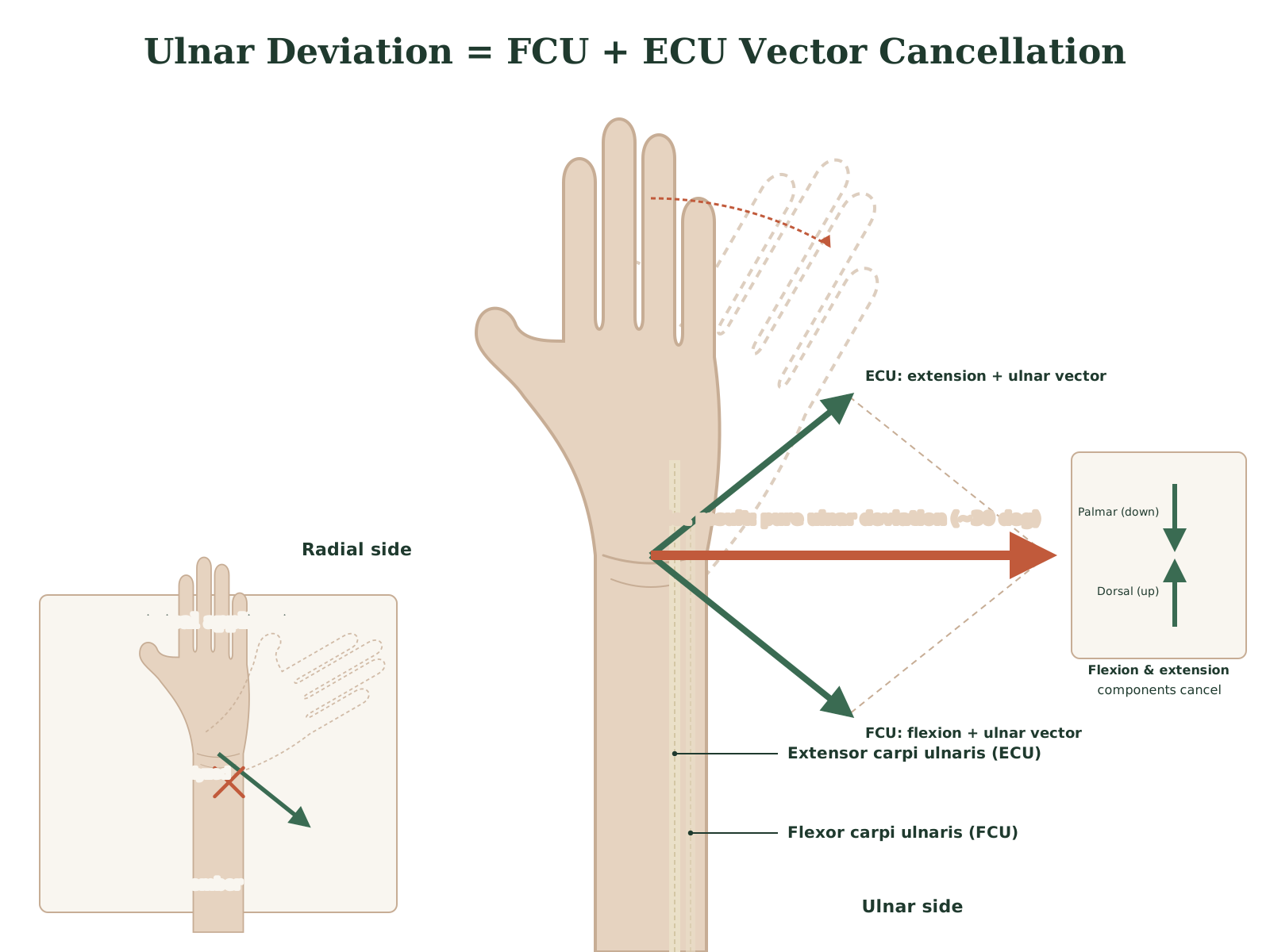
Ulnar deviation is produced by simultaneous contraction of flexor carpi ulnaris and extensor carpi ulnaris (flexion/extension cancel, leaving a pure ulnar vector). Radial deviation is produced by flexor carpi radialis and extensor carpi radialis longus. Paralysis of either pair member causes diagonal drift instead of clean deviation.
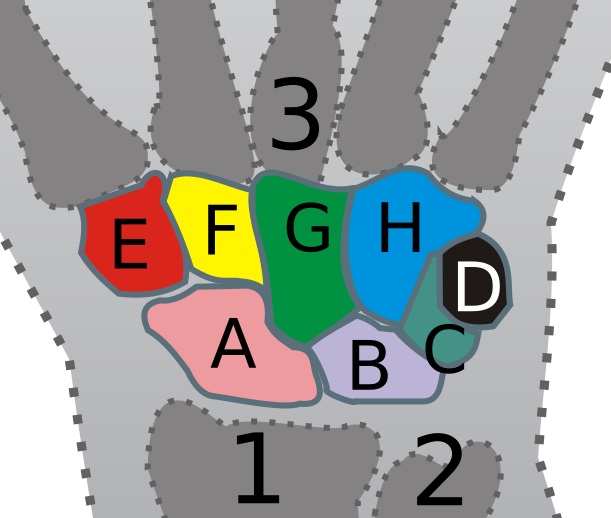
Source: Base diagram: Arcadian (original “Carpus”), vectorised by Mintz l, cropped by Was a bee, “Carpal bones”, via Wikimedia Commons, CC BY-SA 3.0 / GFDL. https://commons.wikimedia.org/wiki/File:Carpal_bones.svg Reflex added a letter/bone key panel and mnemonic bar; derivative shared under CC BY-SA 3.0. Anatomical diagram of the eight carpal bones arranged in two rows: proximal row (scaphoid, lunate, triquetrum, pisiform) and distal row (trapezium, trapezoid, capitate, hamate).
High Yield — Carpal bone architecture and wrist motion
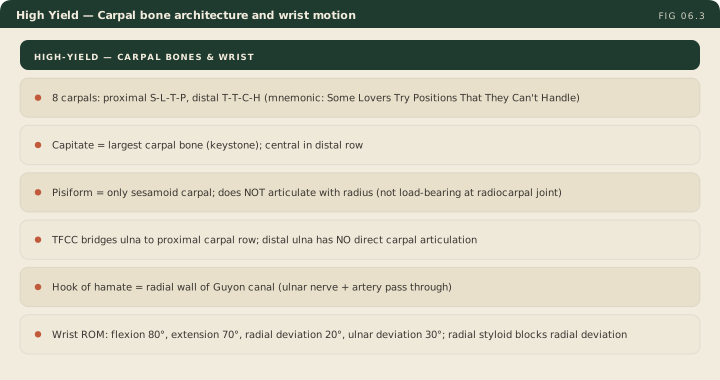
- Eight carpal bones in two rows, radial-to-ulnar order: proximal Scaphoid, Lunate, Triquetrum, Pisiform; distal Trapezium, Trapezoid, Capitate, Hamate.
- Mnemonic: Some Lovers Try Positions That They Can’t Handle.
- Capitate = largest carpal bone (keystone). Pisiform = only sesamoid (does not articulate with radius).
- TFCC bridges the ulna and proximal carpal row; the distal ulna does not articulate directly with any carpal bone.
- Hook of hamate forms the radial wall of Guyon canal (ulnar nerve + artery travel through the canal).
- Wrist range of motion: flexion 80 / extension 70 / radial deviation 20 / ulnar deviation 30. The radial styloid creates a bony block to radial deviation, explaining the asymmetry.
By embedding the pisiform inside that tendon, the body creates a physical bump, a bony pulley that pushes the tendon slightly farther away from the center of the wrist joint. And that tiny bit of extra distance significantly increases the muscle’s mechanical advantage, giving us a stronger, more forceful grip.
— MSK-06 podcast, ~6:50