Before You Listen
- Prerequisites: upper motor neuron exam patterns (pyramidal weakness distribution, pronator drift, circumductive gait), tremor classification (rest, postural, intention), and basic seizure semiology from NEURO-01 through NEURO-04.
- Runtime: 51 minutes.
- Topic in one line: functional neurologic disorder is a rule-IN diagnosis built on positive bedside signs of internal inconsistency (Hoover, tremor entrainment, drift without pronation), separated from malingering by unconscious symptom production, and treated with an explained diagnosis and multidisciplinary rehabilitation.
Vignette. A 38-year-old woman presents with 6 months of right leg weakness after a minor motor vehicle collision. She drags the leg in a straight line behind her with the hip internally rotated. On exam, hip extension against resistance is 1/5 on the right. When you place your hand under her right heel and ask her to flex the left hip against resistance, you feel strong involuntary downward pressure under the right heel. MRI of the brain and spine is normal. She is distressed, denies any history of mood disorder, and asks if she is making this up.
What is the diagnosis, the named sign you elicited, and how do you answer her question and discuss prognosis?
Section 1 — The Rule-IN Diagnosis: DSM-5 and the Paradigm Shift
Bottom line: functional neurologic disorder (FND) is diagnosed by positive bedside signs of internal inconsistency, not by exclusion of organic disease. DSM-5 criterion B requires demonstrated incompatibility with recognized disease, criterion D is satisfied by clinically significant distress or impairment OR a presentation warranting medical evaluation, and the DSM-IV requirement for an identifiable psychological stressor was dropped.
Functional neurologic disorder (FND) is the modern term for what older texts called conversion disorder, hysteria or psychogenic illness. The contemporary framing is a paradigm shift: FND is diagnosed affirmatively at the bedside, through positive examination signs that are clinically incompatible with recognized neurological or medical disease, rather than assigned as the residue once every organic possibility has been excluded. A normal MRI is not a diagnosis.
The DSM-5-TR criteria are four:
- A. One or more symptoms of altered voluntary motor or sensory function.
- B. Clinical findings providing evidence of incompatibility between the symptom and recognized neurological or medical conditions.
- C. The symptom is not better explained by another medical or mental disorder.
- D. The symptom causes clinically significant distress or impairment in social, occupational or other important areas of functioning, or warrants medical evaluation.
Criterion B is the pivot. Incompatibility has to be demonstrated, not assumed, and criterion D is met by either arm: a presentation that warrants medical evaluation qualifies even without documented distress or impairment. FND sits within somatic symptom and related disorders in DSM-5-TR, and that placement is a classification decision. It does not establish a psychological cause, does not make the symptoms voluntary, and does not decide which specialty should treat the patient.
The DSM-5 deliberately eliminated the DSM-IV requirement for an identifiable psychological stressor. When a stressor is present it is documented as a specifier; its absence does not preclude the diagnosis, and its presence does not establish one.
The terminology matters because it changes how the disease is explained to the patient. Functional signals that the nervous system is structurally intact but functioning abnormally: software, not hardware. That analogy is useful at the bedside, provided it is not heard as a claim that structural disease has been ruled out, since FND and organic disease coexist often. Psychogenic is increasingly disfavored because patients hear it as “imagined” or “fabricated.” FND symptoms are genuinely experienced and not under conscious control, which is the central distinction from feigning, malingering and factitious disorder. A positive sign demonstrates inconsistency, never deception.
| Condition | Conscious production? | Motivation | Examples |
|---|---|---|---|
| Functional neurologic disorder | No — symptom is genuinely experienced | None — patient is distressed | Functional weakness, functional seizures, functional tremor |
| Factitious disorder | Yes | Sick role (internal psychological need) | Munchausen syndrome |
| Malingering | Yes | External secondary gain (money, time off work, avoid prosecution) | Workers’ comp fraud, draft evasion |
| Feigning | Yes | Variable (overlaps with malingering) | Symptom exaggeration for any motive |
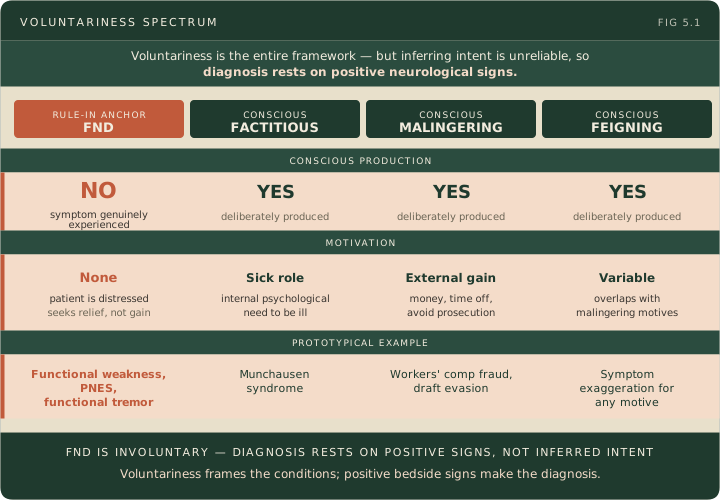
The voluntariness axis is the entire framework. FND patients cannot turn the symptom on or off; malingerers can. In practice this is hard to confirm with certainty, which is why the diagnostic standard rests on positive neurological signs rather than on inferring intent. The historical journey runs from the ancient Greek “wandering uterus” through Charcot’s late-nineteenth-century work at the Salpêtrière demonstrating hypnotic induction and abolition of symptoms, to Freud’s “conversion” framework, to today’s neuroscience-informed positive-sign diagnosis. The current term functional is borrowed from early neurologists who used it to mean abnormal nervous-system function without structural damage, exactly the modern meaning, restored after a century of “conversion” framing imported etiological assumptions that no longer hold.
Clinical Pearl — Per the Anki deck
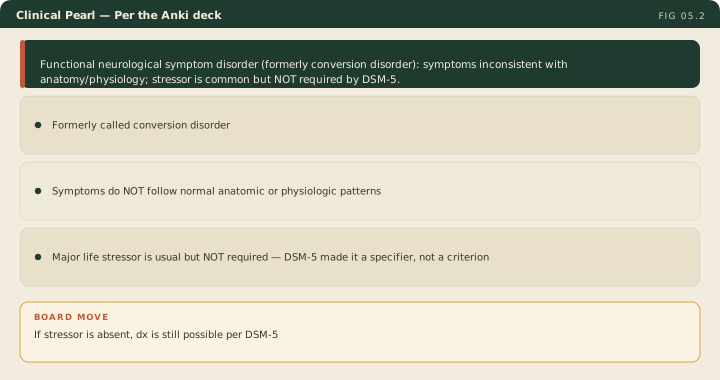
Functional neurological symptom disorder, previously known as conversion disorder, is characterized by signs and symptoms that are not consistent with normal anatomic or physiologic correlations. A major life stressor often accompanies it but is not required: DSM-5 made the stressor a specifier. Neither the stressor nor an otherwise normal workup establishes the diagnosis.
Board Trap — “Diagnosis of exclusion”
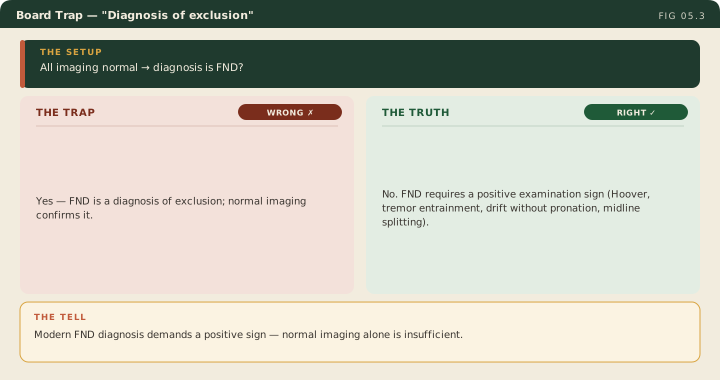
A vignette that says “all imaging is normal, therefore the diagnosis is FND” is testing the old framework. The modern answer requires a positive sign: Hoover, tremor entrainment, drift without pronation. Negative imaging alone is never sufficient. Sensory splitting is a weaker clue than the motor signs and cannot carry a diagnosis by itself. Investigate what the presentation actually calls for, including the possibility that structural disease coexists with the functional one.
High Yield — DSM-5 framework
- Rule-IN, not rule-out. Diagnosis requires positive signs of internal inconsistency.
- Criterion B is the pivot: clinical evidence of incompatibility with recognized disease.
- Criterion D is met by distress or impairment or by a presentation warranting medical evaluation.
- No stressor required. DSM-5 dropped the DSM-IV stressor requirement.
- Involuntary: symptoms are genuinely experienced, distinguishing FND from malingering and factitious disorder.
- “Software, not hardware” is the patient-facing analogy. It does not mean structural disease has been excluded.
Clinical evidence of incompatibility. You have to prove the software glitch exists, not just confirm the hardware is intact.
— NEURO-05 podcast, ~5:05