Before You Listen
- Prerequisites: the gait-cycle and energy-expenditure framework from PO-01 (especially the rule that more proximal amputation produces higher energy cost and that vascular etiology costs more than traumatic at the same level); basic vascular anatomy of the lower extremity (femoral, popliteal, posterior tibial, anterior tibial, peroneal arteries); the concept of perfusion assessment (ankle-brachial index [ABI], transcutaneous oxygen pressure [TcPO₂]); the major causes of peripheral arterial disease and their interaction with diabetes mellitus.
- Runtime: 48 minutes.
- Topic in one line: the US limb-loss epidemic (~5.6M with limb loss/difference, ~465K new amputations/year, projected +145% by 2060 from the diabetes epidemic); the four etiologies of the population living with limb loss (dysvascular ~54%, trauma, malignancy ~2%, congenital), which is a different denominator from the etiologies of the amputations performed each year; LE hierarchy from hemipelvectomy to toe (toe = most common; transtibial = most important major level, ~60-70% TT vs ~40-50% TF prosthetic ambulation at 1 year, and only ~47% TT vs ~15% TF ever fitted in geriatric vascular amputees); UE hierarchy with transradial as the most functional level and the thumb as the most important digit; the principle that knee preservation is the single most important factor for prosthetic walking success; the MESS (≥7 historically predicting amputation); and the Medicare K-level system (K0-K4) with matched foot categories.
Vignette. A 64-year-old man presents to the limb-preservation clinic with a non-healing right great-toe ulcer that has progressed to dry gangrene over the past three weeks. He has type 2 diabetes mellitus (HbA1c 9.4%), peripheral arterial disease (PAD), end-stage renal disease on hemodialysis, and a remote inferior myocardial infarction with preserved ejection fraction. He is independent in all activities of daily living, walks unlimited distances in his community without an assistive device, and works part-time as a security guard. On examination he has palpable femoral pulses bilaterally; the right popliteal pulse is diminished and the right posterior tibial and dorsalis pedis pulses are absent. The right ABI is 0.42; the right TcPO₂ at the proposed transmetatarsal level is 24 mmHg, and at the proposed transtibial level is 48 mmHg. He has full passive range of motion at both hips and knees with no contractures. He asks the surgeon, “If you have to take it, take it as low as possible, I want to walk.”
Identify the etiologic category and where this patient fits in US limb-loss epidemiology. Discuss the level-selection decision. Explain why transmetatarsal is unlikely to heal and why transtibial is the appropriate compromise. Assign a K-level and matched prosthetic foot category. Predict approximate energy cost for prosthetic ambulation.
(Answer at the end of this chapter)
Section 1: The US Limb-Loss Epidemic and the Four Etiologic Categories
Bottom line: ~5.6M Americans live with limb loss/difference (~2.3M acquired, ~3.4M congenital); ~465K new amputations/year; LE amputations are ~83%; toe amputation is the most common individual procedure; the typical amputee is an older adult with diabetes and PAD, not a young trauma victim; the Ziegler-Graham (2008) projection of 3.6M by 2050 has been revised to +145% by 2060 from the diabetes epidemic; among the ~2.3M living with acquired limb loss the four etiologies are dysvascular/diabetic (~54%), trauma, malignancy (~2%), and congenital, while on the incidence side 57.6% of new limb-loss events occur in people with a prior diabetes diagnosis and only 12.9% follow trauma.
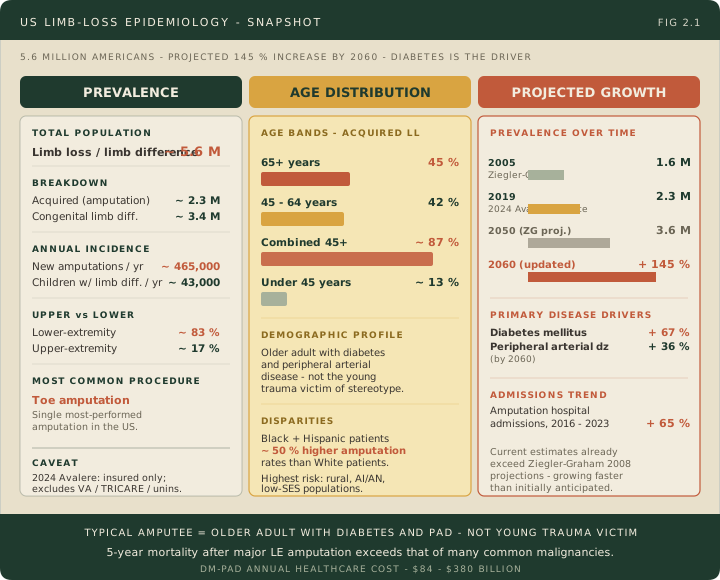
The US limb-loss population is large, growing, and demographically distinct from the popular image of the young trauma amputee. Current data (2024 Avalere Health analysis) estimate ~5.6 million Americans with limb loss/difference: ~2.3 million acquired and ~3.4 million congenital. ~465,000 new amputations per year; ~43,000 children born with limb differences annually. LE = ~83%; UE = ~17%. Toe amputation is the most common individual procedure. Age is heavily skewed toward older adults (~45% are ≥65, ~42% are 45-64). The typical amputee is an older adult with diabetes and PAD, not a young trauma victim; a board-tested concept that recurs throughout the P&O curriculum.
Ziegler-Graham (2008) established a baseline of ~1.6 million in 2005 and projected 3.6 million by 2050. The 2024 update revised the baseline to 2.3 million (2019) and projects a 145% increase by 2060. The primary driver is diabetes mellitus (+67% by 2060) paired with PAD (+36%). Current estimates already exceed Ziegler-Graham, indicating the problem is growing faster than expected. Amputation-related hospital admissions increased 65% between 2016-2023 in one large state-level dataset. Limitations: the 2024 study captured only insured populations (excluding VA, TRICARE, uninsured), so true prevalence is likely higher.
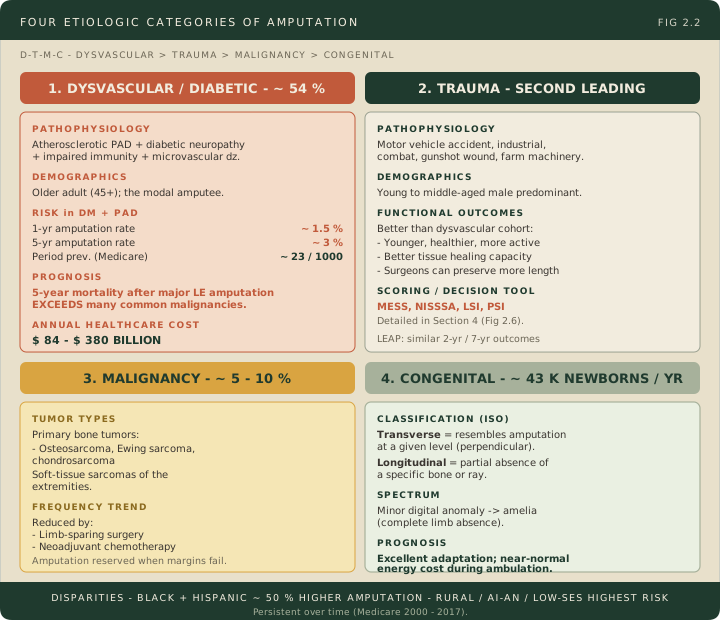
The four etiologic groups, ranked in the population living with limb loss: (1) Dysvascular/diabetic leads at ~54%. Attach the denominator or the number rots: ~54% is the dysvascular share of the ~2.3 million Americans living with acquired limb loss, not of the procedures performed in a year. On the incidence side, among the ~465,000 new limb-loss events per year in US insurance claims from 2016 to 2021, 57.6% occurred in people with a prior diabetes diagnosis, 39.3% had a vascular condition and only 12.9% followed trauma; the older 82% dysvascular figure is the share of US amputation hospital discharges from 1988 to 1996 (an average of ~133,735 discharges a year). Trauma ranks second only on the prevalence denominator, because traumatic amputees survive far longer. Pathophysiology: progressive atherosclerotic narrowing of distal arterial supply, compounded in diabetics by peripheral neuropathy, impaired immune function, and microvascular disease. Period prevalence of combined diabetes and PAD in Medicare beneficiaries is ~23 per 1,000; 1-year amputation rate ~1.5%; 5-year rate ~3%. Five-year mortality after major LE amputation exceeds many common malignancies: roughly 15-20% die early (mostly cardiac) and about 50% by 3-5 years; a sobering frame for goals of care. Reamputation is common too, with about 25% undergoing a further amputation within 1 year of a first dysvascular lower-limb amputation. Annual costs in this population are $84-$380 billion. (2) Trauma is second; typical patient is young-to-middle-aged male injured by MVA, industrial machinery, military combat, gunshot, or farm equipment. Traumatic amputees have better outcomes (younger, healthier, better healing). (3) Malignancy accounts for ~2% overall (higher, up to ~5-10%, in children), most commonly primary bone tumors (osteosarcoma, Ewing sarcoma, chondrosarcoma) and soft-tissue sarcomas. Limb-sparing surgery and neoadjuvant chemotherapy have reduced amputation frequency. (4) Congenital limb deficiency spans minor digital anomalies to complete limb absence (amelia); ~43,000 children born with limb differences yearly. Classified by ISO as transverse (resembling amputation at a level) or longitudinal (partial absence of a specific bone/ray). Children adapt exceptionally well.
Significant racial, ethnic, and socioeconomic disparities exist. Black and Hispanic patients have ~50% higher amputation rates than White patients. Rural populations, African Americans, Native Americans, and low-SES individuals carry the highest risk. Medicare data 2000-2017 show persistent disparities that have not narrowed.
High Yield, US epidemiology and etiology
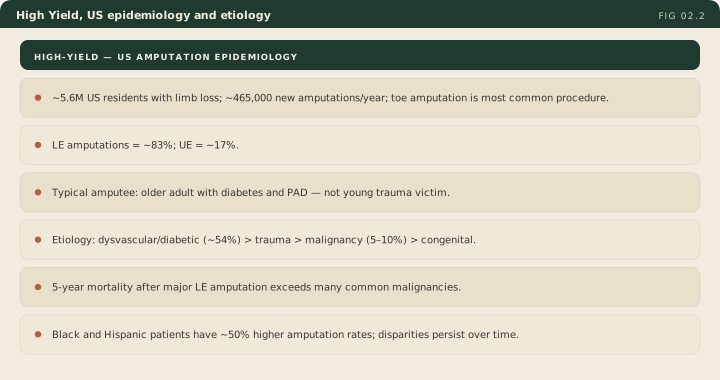
- ~5.6 million US residents with limb loss / limb difference (~2.3M acquired, ~3.4M congenital).
- ~465,000 new amputations per year in the US; toe amputation is the most common individual procedure.
- LE amputations = ~83%; UE amputations = ~17%.
- Typical amputee = older adult with diabetes and PAD, not young trauma victim.
- Ziegler-Graham (2008) baseline 1.6M in 2005, projected 3.6M by 2050; 2024 update projects +145% by 2060 driven by the diabetes epidemic.
- Four etiologies of the population living with limb loss: dysvascular/diabetic (~54%) > trauma > malignancy (~2%) > congenital. On the incidence denominator (new limb-loss events, US claims 2016-2021): 57.6% with prior diabetes, 39.3% vascular, 12.9% trauma; the historic 82% dysvascular figure counts US amputation discharges, 1988-1996.
- Five-year mortality after major LE amputation exceeds many common malignancies.
- Disparities: Black and Hispanic patients ~50% higher amputation rates; persistent over time.
Mnemonic, D-T-M-C (Dysvascular > Trauma > Malignancy > Congenital)
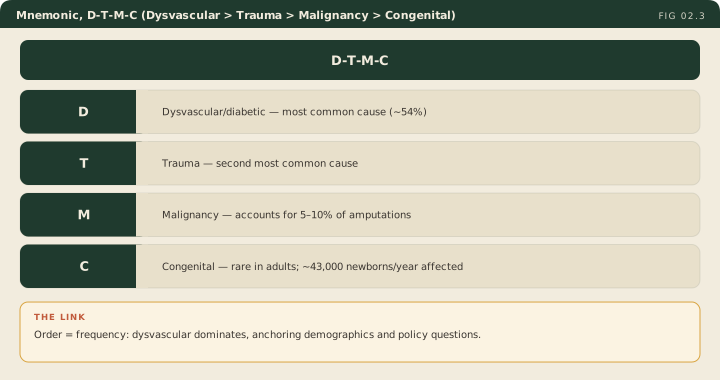
The four etiologic categories of amputation, ordered by frequency in the population living with limb loss in the United States, spell D-T-M-C: Dysvascular/diabetic (~54%), Trauma (second), Malignancy (~2%), Congenital (rare in adults; common as congenital limb difference in newborns at ~43,000/year). Knowing the order, and that dysvascular dominates, is enough to anchor every demographic, prognostic, and policy question on the boards.
Because the disease process attacks the most distal capillary beds first, the toes are the first to suffer irreversible ischemia.
— PO-02 podcast, ~3:50