Before You Listen
Before You Listen
- Prerequisites: the four-element prosthesis framework from Episodes 4 and 5 (socket, interface, suspension, distal componentry); upper-extremity gross anatomy from the glenohumeral joint to the carpus; the upper-limb amputation levels proximal to distal (forequarter, shoulder disarticulation, transhumeral, elbow disarticulation, transradial, wrist disarticulation, transcarpal, digital); body-driven cable basics (Bowden housing-within-housing); surface electromyography (EMG); and the surgical concept of targeted muscle reinnervation (TMR) from Episode 3.
- Topic in one line: the whole upper-limb decision tree — the three terminal device (TD) categories with voluntary opening (VO) as the default body-powered device and voluntary closing (VC) as the proportional-feedback alternative; the hooks-versus-hands trade-off; the single-control Bowden cable for transradial and the dual-control fair-lead cable for transhumeral with the elbow lock toggled by “down, back, out”; the figure-8, figure-9, and chest-strap harness systems; the wrist units; the transradial socket designs (split, Muenster, Northwestern University) and the self-suspension-versus-elbow-motion trade-off they all turn on; the transhumeral elbow unit choice (internal versus external, and the 4 cm rule); the four myoelectric control strategies with the Coapt COMPLETE CONTROL pattern-recognition platform; TMR as a dual-purpose surgical multiplier for control and phantom limb pain; the body-powered-versus-myoelectric showdown anchored on proprioceptive feedback through cable tension; multi-articulating hands from bebionic through the LUKE Arm; and the highest-level amputations with their highest rejection rates.
Vignette. A 32-year-old right-hand-dominant carpenter sustained a traumatic right transhumeral amputation in a workshop accident eight months ago. The residual limb is well-healed, ends approximately 6 cm proximal to the medial epicondyle, and is fully sensate. He underwent targeted muscle reinnervation (TMR) at the time of his definitive amputation. He presents to the prosthetic clinic motivated to return to skilled woodwork. He prefers a prosthesis that allows him to handle a hammer and chisel in a wet shop environment, and he wants to be able to fine-tune his grip force when handling delicate joinery without crushing thin wood. His wife, however, prefers that he have an option for a more cosmetic prosthesis when meeting clients in their showroom.
Which body-powered terminal device type provides the proportional grip force he needs for delicate joinery, which cable system and harness combination is required at his transhumeral level, what is the precise body-motion sequence required to operate the elbow lock, which transhumeral elbow unit is appropriate for his residual-limb length, which TMR-enabled control strategy would maximize his myoelectric prosthetic options, and how would a quick-disconnect wrist unit address his wife’s request without forcing him to give up his work prosthesis?
(Answer at the end of this chapter)
Section 1: Terminal Devices — Voluntary Opening, Voluntary Closing, Hooks, and Hands
Bottom line: the terminal device (TD) is the most distal prosthetic component and falls into three power-source categories: passive (cosmetic, lightest, no active grasp), body-powered (cable-actuated, with voluntary opening as the default and voluntary closing as the proportional-feedback alternative), and externally powered (myoelectric, battery-driven, controlled by surface EMG); hooks (open-frame, superior visual feedback for precision tasks) and prosthetic hands (three-jaw chuck pinch, cosmetic glove for natural appearance) trade visibility against cosmesis; many experienced users carry both and switch via a quick-disconnect wrist unit.
The terminal device (TD) is the most distal prosthetic component and the primary tool for prehension. TDs are classified by power source: passive (no active grasp), body-powered (mechanical cable), and externally powered (battery-driven motors controlled by surface electromyography, or EMG). Selection depends on functional goals, vocational demands, cosmetic priorities, and the environment in which the patient will use the prosthesis. Newer does not mean better. The control interface, training intensity, and patient motivation matter more than TD sophistication, and a well-trained user with a simple hook routinely outperforms a poorly-trained user with a robotic hand.
Passive terminal devices provide cosmetic restoration without active prehension and are the lightest TD category. The passive cosmetic hand is a realistic prosthetic hand covered with a silicone or polyvinyl chloride (PVC) glove matched to the patient’s skin tone; the fingers are positioned manually with the contralateral sound hand and can stabilize a lightweight object against the torso. The passive mitt is a padded device for sports and recreation. Specialty passive devices are activity-specific adapters for cycling handlebars, weightlifting bars, fishing rods, guitar picks, or swimming paddles. None of these devices use cables, harnesses, or batteries, and they are essentially maintenance-free. The board-testable indications are patients who decline complex fittings because of weight or harness intolerance, patients who prioritize cosmetic restoration above all other factors, and patients who only intend to use the prosthesis intermittently for a specific hobby.
Body-powered terminal devices use a steel cable actuated by glenohumeral flexion and biscapular abduction. The two operating mechanisms are voluntary opening (VO) and voluntary closing (VC), and the distinction is the single highest-yield concept in the body-powered decision tree. The voluntary opening (VO) terminal device is the most commonly prescribed body-powered TD and the default board answer. Rubber bands or internal springs hold the device closed at rest; cable pull opens it against the bands; releasing tension allows the bands to close the device around the object. Pinch force is set by the number of rubber bands, with each standard band contributing approximately 1 pound of prehensile pinch. A mechanic who needs a 5-pound pinch to grip heavy wrenches gets five bands; a patient handling light paperwork gets two or three. More bands raise pinch but also raise opening effort, an inverse biomechanical relationship that boards love to test. Sustained grasp is effortless because the bands hold the device closed, so a VO user can carry a briefcase for an entire commute without continuous shoulder activation. Commercial examples to memorize cold are the Hosmer Model 5 (stainless steel), the Hosmer Model 5XA (aluminum, lighter), and the Hosmer Model 555 (aluminum with nitrile-rubber-lined tines for friction).
The voluntary closing (VC) terminal device is the functional inverse: open at rest with no passive holding force, closed by cable pull. Prehensile force tracks patient cable pull force (proportionally, through the device’s leverage and cable friction), so the harder the patient pulls, the stronger the grip. The patient directly feels grip force through cable tension, a concept called extended physiological proprioception (EPP). A gentle biscapular abduction produces a gentle closure around a foam cup; an aggressive glenohumeral flexion crushes a steel bar. Sustained grasp requires continuous, unbroken cable tension and is fatiguing; if concentration lapses, the cable goes slack and the object falls. Examples are the TRS Grip and the APRL VC hook (Army Prosthetics Research Laboratory). Board distinction: VO for effortless sustained grasp, VC when the stem emphasizes graded force modulation or delicate object handling.
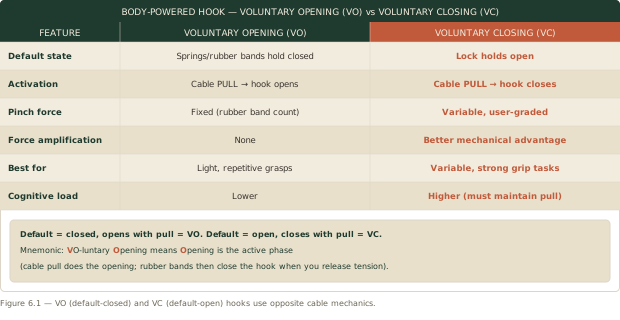
TDs also differ in form. Hook TDs feature two curved metal fingers (stainless steel for durability or aluminum for reduced weight) providing lateral or tip pinch. The open-frame design gives unobstructed visual feedback for precision tasks (picking up screws, positioning small parts, threading wire) because the synthetic fingers do not block the line of sight. Hooks are lighter, more durable, lower maintenance, and substantially cheaper than hands. Body-powered prosthetic hands use a three-jaw chuck pattern in which the thumb opposes the index and middle fingers; the ring and small fingers are cosmetically present but mechanically inert. A cosmetic PVC or silicone glove improves appearance but reduces visibility, fights the internal mechanism with friction, stains permanently from newsprint ink, and is a consumable that requires replacement. Many experienced users carry both a hook for functional tasks and a cosmetic hand for social settings, switching with an interchangeable quick-disconnect wrist unit.
Externally powered (myoelectric) TDs use battery-driven motors controlled by surface EMG electrodes; no cable is needed for TD operation, although socket suspension may still require a basic harness. Standard myoelectric hands provide a single-degree-of-freedom three-jaw chuck grasp with grip force of 25 to 30 pounds, compared with only 5 to 8 pounds for a typical VO hook. Electrically powered hooks (electric split hooks or “greifers”) retain the open-frame visibility advantage with motorized grip force, a clinical compromise for the patient who values hook visibility but lacks the shoulder excursion to operate a cable. Multi-articulating hands with individually powered digits are the most advanced TD technology and are covered in Section 5.
High Yield — Terminal devices
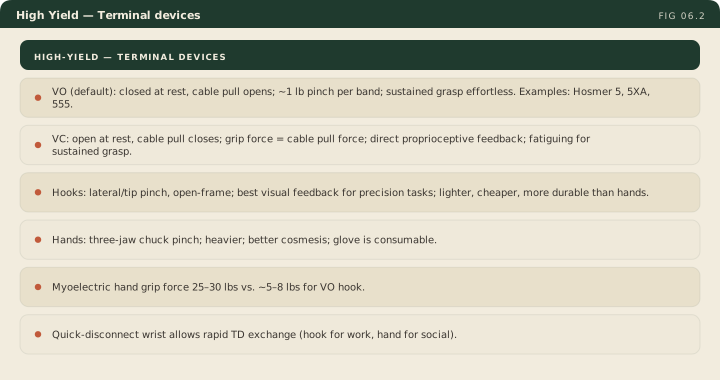
- Three TD categories: passive (cosmetic), body-powered (cable), externally powered (myoelectric/EMG).
- Voluntary opening (VO) is the default body-powered TD: closed at rest by rubber bands, cable pull opens it, ~1 lb pinch per band, sustained grasp is effortless. Examples: Hosmer 5, 5XA, 555.
- Voluntary closing (VC) is open at rest, cable pull closes it, grip force = patient cable pull force, direct proprioceptive feedback (“extended physiological proprioception”), fatiguing for sustained grasp. Examples: TRS Grip, APRL VC hook.
- Hooks: lateral or tip pinch; open-frame; best visual feedback for precision tasks; lighter, more durable, cheaper.
- Hands: three-jaw chuck pinch (thumb opposes index and middle); cosmetic glove; heavier; better cosmesis; consumable glove.
- Quick-disconnect wrist allows rapid TD exchange (hook for work, hand for social).
- Standard myoelectric hand grip force = 25 to 30 lbs vs. ~5 to 8 lbs for a VO hook.
Mnemonic — VO holds, VC feels
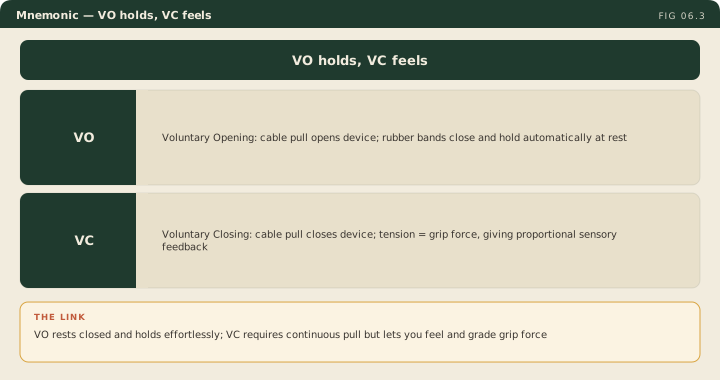
Voluntary Opening = Opens with cable pull, then automatically holds (the rubber bands close the device when you release the cable). Effortless sustained grasp. Carry the briefcase. Voluntary Closing = Closes with cable pull, then you Continuously feel the force you are applying (cable tension equals grip force). Proportional feedback. Pick up the egg without crushing it. The two devices are functional inverses: VO holds, VC feels.
The prosthesis essentially becomes a sensory extension of their body. Because of the cable tension pulling back against their harness, they know exactly how hard they are gripping an object.
— PO-06 podcast, ~13:25
A well-trained, highly motivated user operating a simple, standard split hook will vastly outperform a poorly trained user with an expensive robotic hand.
— PO-06 podcast, ~4:42