Before You Listen
Episode Setup
- Topic in one line: the wheelchair prescription pipeline anchored by the comprehensive pre-prescription assessment, the four critical seat measurements (width = hip width, depth = posterior buttock to popliteal fossa minus 1-2 inches, height = feet flat with thighs parallel to ground, back height below the inferior angle of the scapula for active manual self-propellers), the hammocking effect of sling seats producing posterior pelvic tilt and sacral sitting, the four cushion categories (foam, gel, ROHO air flotation, honeycomb/elastomeric) with ROHO providing the best pressure redistribution at the cost of daily inflation maintenance, the manual versus power wheelchair indications, the tilt-in-space versus recline biomechanical distinction with tilt preserving the seat-to-back angle and avoiding sliding shear while recline opens the hip angle for catheterization but creates sacral shear, and the role of pressure mapping in objective cushion selection.
- Prerequisites: familiarity with pressure injury staging from REHAB-07, the spinal cord injury motor levels (C5 deltoid/biceps, C6 wrist extensors, C7 triceps, T1 hand intrinsics), and basic biomechanics of the seated pelvis (anterior, neutral, and posterior pelvic tilt).
- Runtime: 22 minutes.
Vignette. A 38-year-old man with C7 American Spinal Injury Association Impairment Scale grade A (AIS A) tetraplegia returns to your seating clinic 3 months after discharge from inpatient rehabilitation in a folding-frame standard manual wheelchair with a sling seat, sling back, and a generic 2-inch foam cushion provided by his durable medical equipment supplier. He reports posterior buttock soreness and was just diagnosed by his primary care physician with a stage 2 sacral pressure injury. On observation he sits with apparent posterior pelvic tilt, the ischial tuberosities lower than the greater trochanters, and visible thoracic kyphosis. He performs intermittent catheterization four times daily at his apartment and has good upper extremity strength.
What named biomechanical phenomenon explains his posture, what specific seating modifications would you prescribe to correct it, what cushion type provides the best pressure redistribution and what is its critical maintenance requirement, what is the difference between tilt-in-space and recline for pressure relief, and which feature should he have for catheterization access?
(Answer at the end of this chapter)
Section 1: Pre-Prescription Assessment and Manual versus Power Decision
Bottom line: wheelchair prescription begins with a comprehensive multidimensional assessment covering medical diagnosis, range of motion (ROM), strength, sensation, sitting balance, cognition, transfer method, and home and community environment, with each domain influencing specific equipment decisions; the manual versus power decision rests on whether the patient has the upper extremity strength and endurance to propel safely without progressive joint damage, with manual chairs preserving cardiovascular fitness and independence at the cost of long-term shoulder pathology and power chairs preserving upper extremity integrity at the cost of weight, complexity, and transport difficulty; and the seating team is multidisciplinary with the physiatrist, therapist with seating expertise, rehabilitation technology supplier, and patient and family contributing essential perspectives.
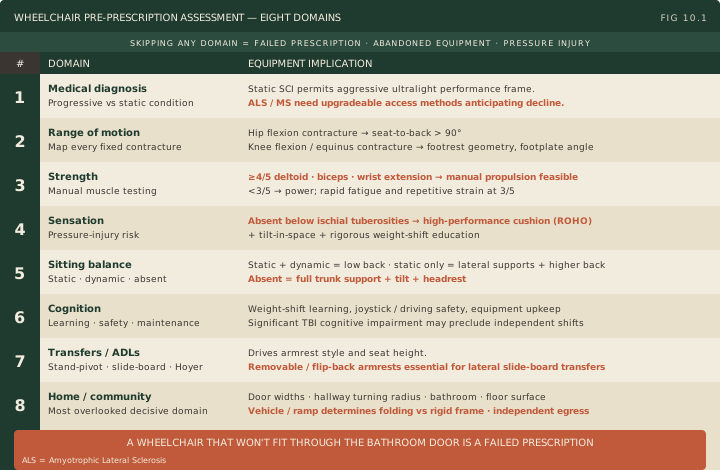
The comprehensive pre-prescription assessment is the foundation of every wheelchair decision; skipping it produces failed prescriptions, abandoned equipment, and pressure injuries. The assessment covers eight domains.
Medical diagnosis drives the prescription philosophy. A patient with multiple sclerosis (a progressive condition) needs equipment that anticipates future decline; a complete thoracic spinal cord injury (a static deficit) may use an aggressive ultralight performance chair; a patient with amyotrophic lateral sclerosis needs a system that can be modified as motor and respiratory function deteriorate; a recent stroke patient may need temporary equipment.
Range of motion (ROM) identifies fixed deformities the seating geometry must accommodate. Limited hip flexion (for example, only 70 degrees available) means the seat-to-back angle must open beyond 90 degrees or the patient will compensate with sacral sitting; a hip flexion contracture, which is a loss of extension, is accommodated by sitting itself. Knee flexion contractures dictate footrest geometry; ankle plantarflexion contractures (equinus) drive footplate angle. Every fixed deformity must be mapped before configuration.
Strength determines whether manual propulsion is feasible. Manual muscle testing of the deltoids, biceps, triceps, wrist extensors, and grip muscles indicates upper extremity propulsion capacity. Trunk strength governs sitting balance. Patients with 4/5 or greater strength bilaterally in shoulder and elbow musculature can propel a manual wheelchair on level surfaces; 3/5 produces rapid fatigue and repetitive strain injury risk.
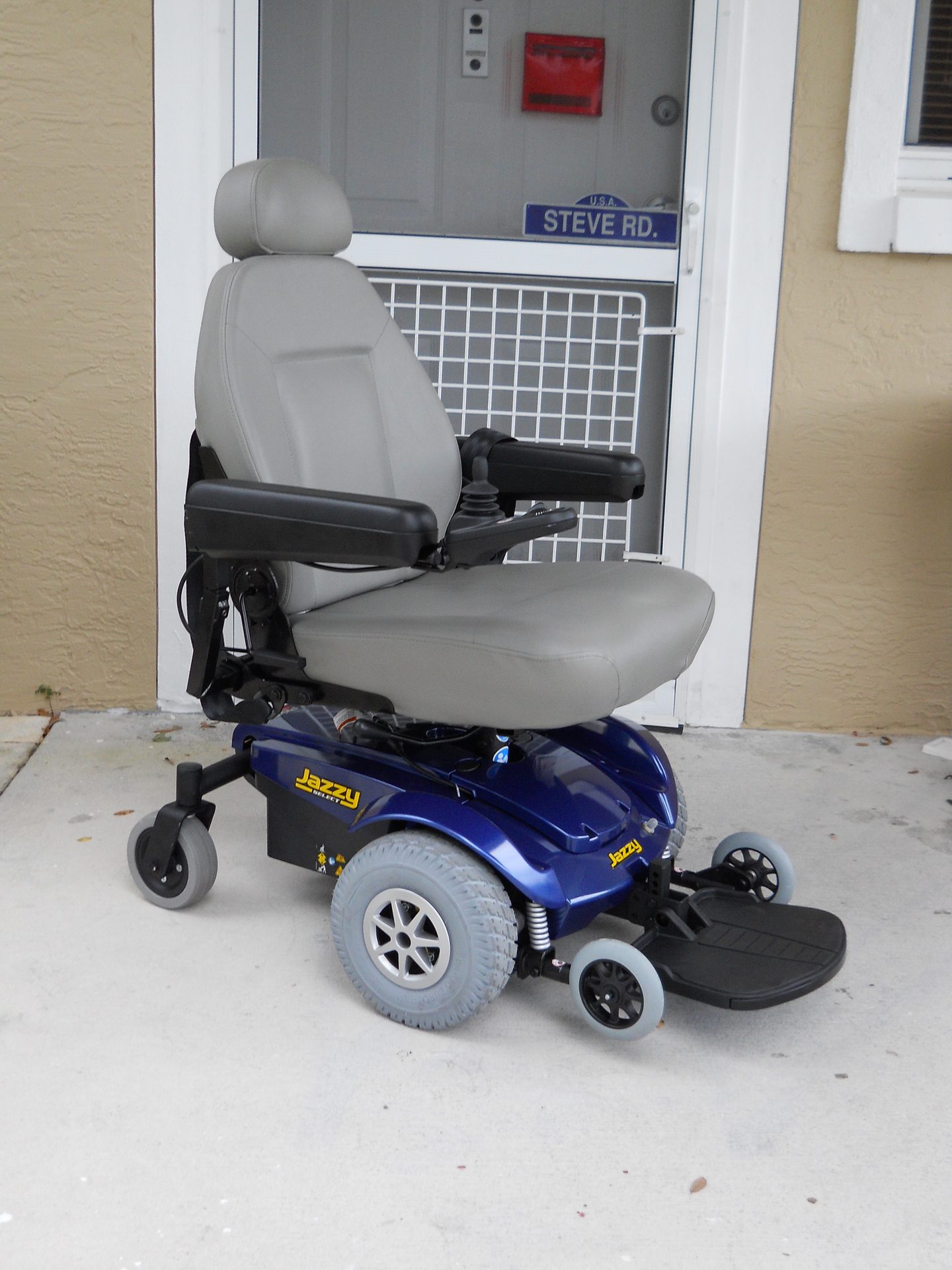
Source: Stephen B. Calvert (Clariosophic), Wikimedia Commons, CC BY-SA 3.0

Sensation drives pressure-injury risk stratification. A patient with absent sensation over the ischial tuberosities, sacrum, and greater trochanters cannot feel early tissue ischemia and requires a high-performance pressure-redistributing cushion and rigorous weight-shift education, with tilt-in-space added when the patient cannot perform effective independent pressure relief. Intact sensation permits simpler cushion selection.
Sitting balance is static, dynamic, or absent. Static balance = sits unsupported on a level surface. Dynamic balance = recovers from perturbation. A patient with both can use a lower seatback and minimal trunk support. Static-only patients need lateral trunk supports and a higher back. Absent balance requires full trunk support, high seatback with headrest, and typically a tilt-in-space system.
Cognition governs the ability to learn pressure relief, operate controls safely, and maintain equipment. Significant cognitive impairment after traumatic brain injury may preclude independent weight shifts and influences control type.
Activities of daily living (ADLs) and transfers determine equipment configuration. Stand-pivot, squat-pivot, slide board, and dependent (mechanical lift / Hoyer) transfers each require different armrest styles and seat heights. Removable or flip-back armrests are essential for lateral slide-board transfers; full-length arms (about 14 inches) give more support, and desk-length arms (about 10 inches) let the chair pull under a table.
The home and community environment is the most frequently overlooked decisive component. Door widths cap wheelchair width; bathroom dimensions govern toilet and shower access; floor surfaces dictate wheel selection; vehicle type decides folding versus rigid frame; ramp availability governs independent egress. A wheelchair that does not fit through the patient’s bathroom door is a failed prescription.
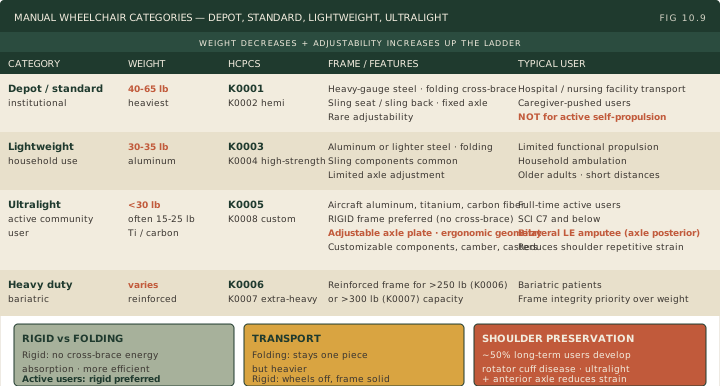
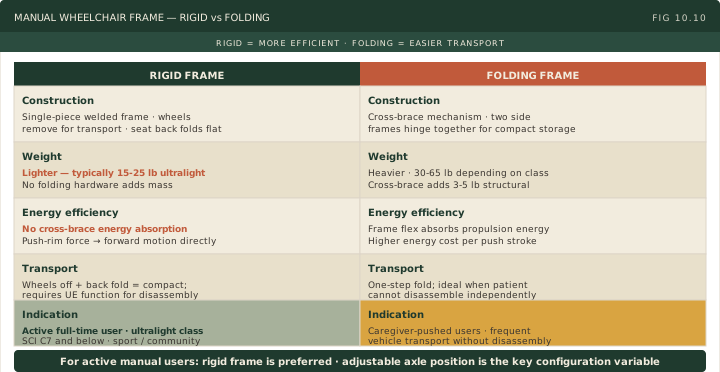
The manual versus power decision is high-yield and frequently tested. Manual wheelchairs offer lower cost, lower maintenance, easier transport, lighter weight, and the cardiovascular and musculoskeletal benefits of self-propulsion. The cost is shoulder pathology: the repetitive long handrim stroke of propulsion, with the hand recovering below the rim thousands of times a day, places enormous stress on the rotator cuff, and long-term manual wheelchair users have extremely high rates of rotator cuff tears (approaching 50 percent), impingement syndrome, carpal tunnel syndrome, and lateral epicondylitis. Preservation of upper extremity integrity is a lifelong concern for any full-time manual user.
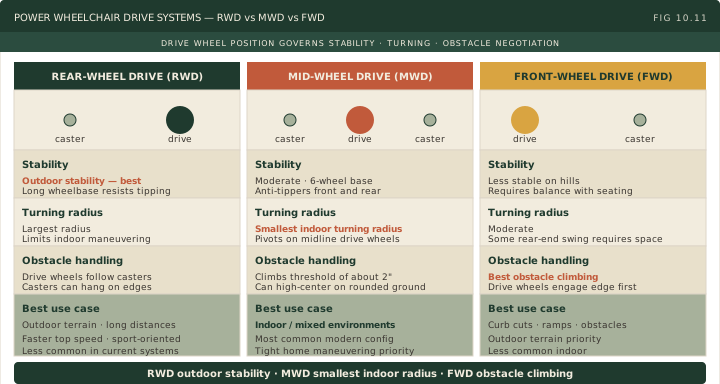
Power wheelchairs are indicated for insufficient upper extremity strength, rapid fatigue limiting community access, progressive conditions, the need to preserve upper extremity joints, obesity precluding manual propulsion, severe spasticity, and cardiopulmonary disease that cannot tolerate propulsion demands. A C5 SCI patient (biceps and deltoids but no triceps, wrist extension, or hand function) typically requires a power wheelchair; biceps alone cannot generate sustained propulsion force and absent triceps prevents the full push-stroke. Power drive configurations include rear-wheel drive (RWD) for outdoor stability, mid-wheel drive (MWD) for the smallest indoor turning radius, and front-wheel drive (FWD) for obstacle climbing. Power-mobility features include power tilt, power recline, power elevating leg rests, and standing. The standing wheelchair provides bone density preservation, contracture management, psychological benefit, and improved gastrointestinal and genitourinary function.
High Yield — Pre-prescription assessment and manual vs power
- Eight assessment domains: diagnosis, ROM, strength, sensation, sitting balance, cognition, transfers, environment.
- ≥4/5 deltoid/biceps/wrist extension supports manual propulsion; <3/5 indicates power.
- Long-term manual wheelchair use carries 50 percent rate of rotator cuff pathology; preserve upper extremity for transfers and ADLs.
- C5 SCI typically requires power chair (no triceps for full push-stroke); C7 with triceps unlocks ultralight manual.
- Power drive configurations: RWD outdoor stability, MWD smallest indoor turning radius, FWD obstacle climbing.
- Power features: tilt, recline, elevating leg rests, standing.
He’s 24 with a traumatic C6 tetraplegia. Okay, with C6 function, he has wrist extensors, but no triceps. He’s a manual chair candidate, but only with real caveats because of that missing triceps push stroke.
— REHAB-10 podcast, ~19:16
Half of your long-term manual users are pushing around with a torn rotator cuff.
— REHAB-10 podcast, ~8:17
If they can’t remember to do manual weight shifts, you might need to automate it with power tilt, even if their arm strength is fine.
— REHAB-10 podcast, ~6:03
They compensate by sliding their pelvis forward on the seat, which rotates the pelvis backward into a posterior pelvic tilt. And boom, they slide right into sacral sitting.
— REHAB-10 podcast, ~4:42