Before You Listen
- Prerequisites: the Episode 1 cross-sectional anatomy of gray matter and the lateral corticospinal/spinothalamic tracts; the Episode 3 ISNCSCI worksheet and ASIA Impairment Scale (AIS), particularly the meaning of complete (AIS A) and incomplete (AIS B–E); and a clinical understanding of the Glasgow Coma Scale (GCS) and the Medical Research Council (MRC) muscle scale.
- Runtime: 1 hour 17 minutes.
- Topic in one line: five mechanisms of primary injury (compression, contusion, distraction, laceration, shear) with compression as the most common mechanism and contusion as the most common pathologic finding; the secondary injury cascade (vascular, biochemical, inflammatory, apoptotic) over five temporal phases; the Ditunno four-phase model of spinal shock with variable reflex recovery, with the delayed plantar response often early and the bulbocavernosus reflex (BCR) sometimes present early; neurogenic shock as a hemodynamic entity (hypotension + bradycardia + warm dry skin) distinct from spinal shock; succinylcholine contraindicated >48 hours post-injury; the 2013 AANS/CNS guidelines recommending against routine methylprednisolone (historical NASCIS protocol retained for review); the Surgical Timing in Acute Spinal Cord Injury Study (STASCIS) finding approximately 2.8× adjusted odds of ≥2-grade AIS improvement at six months with decompression within 24 hours; the Denis three-column model; Levine-Edwards Hangman fracture types; and the cervical orthosis hierarchy with the sternal-occipital-mandibular immobilizer (SOMI) showing classic flexion emphasis (Johnson1977 C1–C7:93% flexion/42% extension restriction).
Vignette. A 35-year-old man arrives in the emergency department 3 hours after a diving accident. He is awake but cannot move his arms or legs. Blood pressure is 78/45 mmHg with a heart rate of 48. His skin below the level of injury is warm and pink. Trauma ultrasound and abdominal computed tomography (CT) are negative for intra-abdominal hemorrhage. The trauma team has also assessed other bleeding, chest and cardiac causes of shock without finding an alternative source, and continues reassessment. CT of the cervical spine shows a C5 burst fracture with retropulsed bone fragments narrowing the canal. On exam he has 0/5 strength in all extremities, intact light touch and pinprick at C5 and all rostral key sensory points bilaterally, an otherwise normal rostral examination, no voluntary non-key motor function more than three segments below either motor level, present perianal sensation, present deep anal pressure (DAP), and absent voluntary anal contraction (VAC). On rectal exam, tugging the indwelling Foley catheter produces a brisk reflex sphincter contraction.
What is the AIS grade, what type of shock is the patient in and what are its three classic features, what reflex does the Foley maneuver elicit and what can it establish, what is the current evidence-based recommendation about methylprednisolone, and what is the timing target for surgical decompression based on the STASCIS trial?
Section 1: Primary Injury and the Secondary Cascade
Bottom line: five primary injury mechanisms (compression, contusion, distraction, laceration, shear) with compression the most common mechanism and contusion the most common pathologic finding; true anatomic transection is rare even in clinically complete injuries; secondary injury extends damage over hours to weeks via vascular failure, glutamate excitotoxicity with calcium influx, free-radical lipid peroxidation, neutrophil and macrophage infiltration, oligodendrocyte apoptosis, and glial scar formation.
Primary injury is the immediate mechanical damage that occurs at the moment of impact. It is irreversible and initiates everything downstream. Five principal mechanisms are testable. Compression is the most common mechanism: bone fragments, disc material, or ligamentous structures are displaced into the canal and compress the cord. Compression may be transient (hyperextension pinches the cord between hypertrophied ligamentum flavum and osteophytic ridges) or sustained (a burst fracture with retropulsed bone occupying the canal). Contusion is the most common pathologic finding. The cord sustains a bruise-type injury producing central hemorrhagic necrosis of the gray matter, which has higher metabolic demand and richer vascular supply than white matter. Peripheral white matter is relatively preserved in less severe injuries. Compression is the mechanism; contusion is the finding.
Distraction is longitudinal stretching of the cord beyond its elastic tolerance, characteristic of flexion-distraction (Chance) fractures and possible without fracture in children, patients with Down syndrome, or patients with rheumatoid arthritis. Distraction also damages perfusing vessels and produces ischemia. Laceration and transection involve direct tearing by penetrating objects (knives, bullets, bone fragments). Complete anatomic transection is rare even in clinically complete injuries; most clinically complete injuries represent severe contusion with hemorrhagic necrosis. The persistent intact though dysfunctional tissue is the substrate for neuroprotective interventions. Shear involves rotational or translational forces that tear neural tissue at the gray-white matter interface, commonly accompanying fracture-dislocations.
Secondary injury is the progressive cascade of cellular, molecular, and biochemical events that extend neural damage beyond the initial mechanical insult. It begins within minutes and continues for months. The cascade is the primary therapeutic target for neuroprotective interventions, and its timeline is heavily tested.
The vascular phase comes first. Mechanical disruption of intramedullary vasculature produces petechial hemorrhages in the central gray matter within minutes; hemorrhages coalesce and progress to hemorrhagic necrosis over the ensuing hours; extent and timing vary by injury. Traumatic vasospasm of the anterior spinal artery and sulcal arteries combined with microvascular thrombosis produces ischemia in watershed zones. Autoregulation is impaired after SCI, increasing vulnerability to systemic hypotension. Traditional teaching used 85–90 mmHg for about the first week; the 2013 recommendation specified seven days. Section 3 carries the current MAP target. Reperfusion injury layers on top: when blood flow returns to ischemic tissue, reintroduced oxygen generates reactive oxygen species (ROS) that paradoxically worsen damage.
This traumatic vascular phase is arterial and microvascular disruption — worth contrasting with the Batson (vertebral venous) plexus, the valveless venous network running the length of the spine. Its valveless connections permit pressure-dependent bidirectional flow and provide a route for tumor spread to the spine without first traversing the heart and lungs. Prostate and breast tumors are the classic examples. It is one route to the spine, not the only one. Keep traumatic arterial injury physiology distinct from venous metastatic spread.
The biochemical phase is dominated by excitotoxicity. Mechanical disruption and ischemia release massive glutamate from damaged neurons and glia. Glutamate rises within minutes of injury and peaks early, at about 10 minutes in the rat compression model, then declines; magnitude and time course vary by model, location and measurement. Excess glutamate activates the NMDA, AMPA and kainate receptor families, causing ionic dysregulation and intracellular calcium overload; direct calcium permeability varies with receptor composition. Intracellular calcium overload activates calpains (proteases that degrade cytoskeletal proteins), phospholipases (which break down cell membranes), and nitric oxide synthase. It causes mitochondrial dysfunction and uncoupling of oxidative phosphorylation. Reactive oxygen species including superoxide anion, hydroxyl radical, and hydrogen peroxide overwhelm endogenous antioxidant defenses (superoxide dismutase, catalase, glutathione peroxidase), causing lipid peroxidation of cell membranes, protein oxidation, and DNA damage. The arachidonic acid cascade compounds the damage: phospholipase A2 releases arachidonic acid, cyclooxygenase produces prostaglandins and thromboxanes, and lipoxygenase produces leukotrienes, all of which generate additional free radicals and inflammatory mediators.
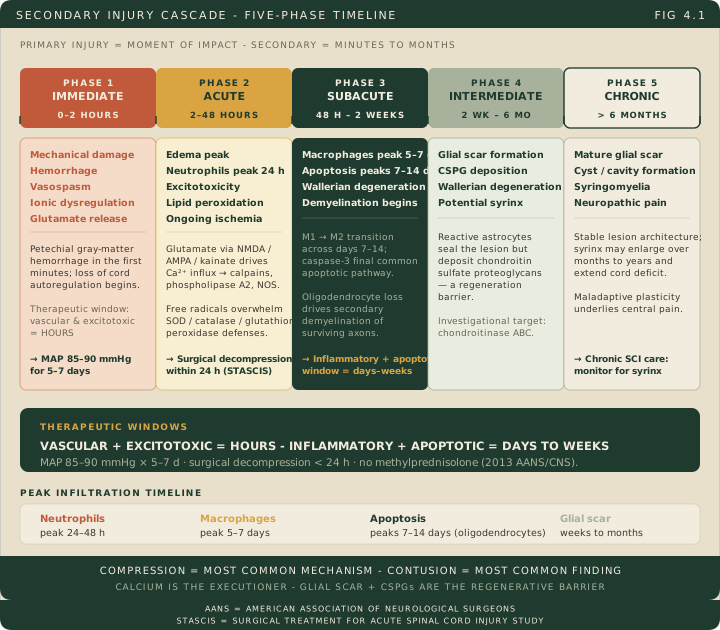
The inflammatory phase is double-edged. Within minutes to hours, resident microglia activate and secrete pro-inflammatory cytokines (tumor necrosis factor alpha [TNF-α], interleukin-1 beta [IL-1β], interleukin-6 [IL-6]). Neutrophils arrive first. In the human postmortem series they extravasate at 3 to 4 hours and are heaviest at 1 to 3 days, releasing proteases, ROS and myeloperoxidase that damage surrounding tissue. Microglia and macrophages follow. Human microglial activation and monocyte entry appear at 1 to 3 days, and phagocytic cells persist for months. Rat contusion gives the cleanest peaks: neutrophils around day 1, macrophages and microglia around day 7, with later increases as well. Learn the order rather than the clock, because those peaks are species- and assay-specific measurements and are not human treatment deadlines. Macrophage responses mix inflammatory and reparative phenotypes that overlap in time, and experimental contusion sustains the inflammatory phenotype rather than switching cleanly from M1 to M2. Over weeks to months, reactive astrocytes form a glial scar and deposit CSPGs. The scar limits inflammatory spread, while parts of the lesion environment, including CSPGs, inhibit regeneration. Scar-forming astrocytes can also support axon growth in experimental models, where the growth still requires an applied stimulus.
Apoptosis begins within hours and continues for weeks. In rat contusion, apoptotic cells are seen from 6 hours through 3 weeks, and the delayed wave of oligodendrocyte death in remote degenerating white-matter tracts is maximal at 7 to 8 days, with fewer labelled glia by 14 days. In human postmortem cords, apoptotic markers and caspase-3 are present in the lesion epicenter from 2 weeks through 3.5 months. The number to carry is the classic one-week delayed oligodendrocyte loss, the experimental peak measured in degenerating white-matter tracts. Loss of oligodendrocytes, the myelinating cells of the central nervous system, is particularly important. Loss of oligodendrocytes produces secondary demyelination of axons that survived the initial injury, contributing to functional deficits disproportionate to primary axonal damage. Both intrinsic (cytochrome c, caspase-9) and extrinsic (Fas ligand, caspase-8) pathways are activated; the final common pathway converges on caspase-3, the executioner caspase.
High Yield — Primary mechanisms and secondary cascade
- Compression = most common mechanism (transient hyperextension pinch or sustained burst-fracture wedge).
- Contusion = most common pathologic finding: central hemorrhagic necrosis of gray matter with relative peripheral white matter preservation.
- True anatomic transection is rare even in clinically complete injuries; preserved tissue is the substrate for neuroprotection.
- Secondary cascade timeline: vascular minutes; glutamate / calcium hours; neutrophils from 3–4 hours, heaviest 1–3 days; microglia/macrophages from 1–3 days, persisting for months (rat peak ~day 7); delayed oligodendrocyte apoptosis ~1 week → secondary demyelination; glial scar over weeks to months. The cell peaks come from experimental contusion models.
- Impaired cord autoregulation increases vulnerability to hypotension. 2024 weak guidance: MAP lower limit 75–80 mmHg; avoid active augmentation above 90–95 mmHg for 3–7 days (very-low-quality evidence).
- Glial scar barrier components = hypertrophied astrocytes + chondroitin sulfate proteoglycans (CSPGs).
A single oligodendrocyte might myelinate segments of dozens of different axons. When you lose an oligodendrocyte to apoptosis, you cause secondary demyelination of all the axons it was supporting.
— SCI-04 podcast, ~19:17
When a mechanical force violently compresses the cord, it physically shears and crushes those delicate micro vessels. So the tissue with the absolute highest demand for oxygen, the central gray matter, is suddenly starved.
— SCI-04 podcast, ~4:38