Before You Listen
- Prerequisites: primary versus secondary brain injury, the Monro-Kellie doctrine, coup-contrecoup mechanics, and the Glasgow Coma Scale (GCS) categories of mild (13-15), moderate (9-12), and severe (3-8) traumatic brain injury (TBI).
- Runtime: 1 hour 4 minutes.
- Topic in one line: validated computed tomography (CT) decision rules (Canadian CT Head Rule, New Orleans Criteria), the four hemorrhage geometries (epidural, subdural, subarachnoid, intraparenchymal), Hounsfield unit (HU) blood-density evolution and the isodense subdural pitfall, the Marshall and Rotterdam CT prognostic scores with the epidural paradox, the magnetic resonance imaging (MRI) sequences (fluid-attenuated inversion recovery [FLAIR], gradient recalled echo [GRE], susceptibility-weighted imaging [SWI], diffusion-weighted imaging [DWI], diffusion tensor imaging [DTI]) and Adams grading of diffuse axonal injury (DAI), and the advanced modalities including magnetic resonance spectroscopy (MRS) and functional MRI (fMRI) that detect cognitive motor dissociation in 15-20% of behaviorally unresponsive patients.
Vignette. A 28-year-old helmeted cyclist is struck by a car and arrives in the trauma bay with a GCS of 14, mild confusion, and a tender right temporal scalp hematoma. Initial non-contrast head CT shows a 12 mm biconvex hyperdense collection over the right temporal lobe with internal hypodense whorls, no midline shift, basal cisterns patent, and a thin linear right temporal bone fracture. He is awake and conversant, but two hours later he becomes drowsy and his right pupil is sluggishly reactive at 5 mm.
Name the hemorrhage and its arterial source, identify the worrisome internal sign on CT, explain the brief lucid interval, and state the expected Rotterdam CT score components for this scan.
(Answer at the end of this chapter)
Section 1: When to Image — The Canadian CT Head Rule and New Orleans Criteria
Bottom line: 92-95% of mild TBI patients (GCS 13-15) have a normal CT and fewer than 1% need neurosurgery; the Canadian CT Head Rule and the New Orleans Criteria both achieve 100% sensitivity for neurosurgical lesions, but the Canadian rule is roughly 50% specific versus 13% for New Orleans, cutting unnecessary scans in half.
The vast majority of patients who walk into the emergency department with a bumped head do not need imaging. Across the population of mild TBI defined by a Glasgow Coma Scale (GCS) score of 13 to 15, only 5-8% have any intracranial pathology on CT and fewer than 1% require neurosurgical intervention. Scanning everyone exposes a large population to ionizing radiation, raises long-term malignancy risk in younger patients, clogs scanner throughput for stroke and active hemorrhage cases, and fails to find anything actionable in 99 of every 100 patients. Two validated clinical decision rules act as filters at the door of the scanner: the Canadian CT Head Rule and the New Orleans Criteria.
The Canadian CT Head Rule was derived by Stiell and colleagues in a multicenter prospective study of 3,121 patients and validated in another 2,707. It applies to adults ≥16 years old who have suffered minor head injury, defined as a witnessed loss of consciousness, definite amnesia, or witnessed disorientation, with a current GCS of 13-15. The rule splits risk into two tiers. The high-risk tier is 100% sensitive for lesions requiring neurosurgical intervention and triggers an immediate scan when any of the following are present: GCS less than 15 at 2 hours after injury, suspected open or depressed skull fracture, any sign of basilar skull fracture (hemotympanum, raccoon eyes, cerebrospinal fluid [CSF] otorrhea or rhinorrhea, Battle sign), two or more episodes of vomiting, or age ≥65 years. The medium-risk tier is sensitive for clinically important brain injury and adds retrograde amnesia ≥30 minutes before impact and dangerous mechanism (pedestrian struck by motor vehicle, occupant ejected, fall from height >3 feet or 5 stairs). The two-vomit threshold was derived as a clinical predictor of neurosurgical intervention in the 3,121-patient cohort.
The New Orleans Criteria by Haydel and colleagues apply to a narrower population: GCS 15, normal neurological exam, and loss of consciousness after blunt head trauma. A CT is indicated if any one of seven criteria is present: headache, vomiting of any amount, age greater than 60, drug or alcohol intoxication, persistent short-term memory deficit, physical evidence of trauma above the clavicles, or seizure. The triggers cast a much wider net.
The performance comparison is the testable point. Both rules are 100% sensitive for surgical lesions, so neither will send a patient with a hidden bleed home to die. The divergence is in specificity: the Canadian rule is 50.6% specific for clinically important brain injury (76.3% for neurosurgical intervention) while the New Orleans Criteria sit at 12.7% and 12.1%. In practice the Canadian rule sends roughly 50% of patients home without scanning while still catching every neurosurgical emergency, whereas the New Orleans rule scans nearly everyone. Neither rule applies to penetrating injuries, anticoagulated patients, or obvious depressed skull fractures.
Beyond the formal decision rules, several scenarios mandate immediate imaging regardless of GCS: any moderate TBI (GCS 9-12), any severe TBI (GCS 3-8), any focal neurological deficit, new-onset post-traumatic seizure, anticoagulant use or antiplatelet therapy other than aspirin alone plus any head trauma (aspirin monotherapy is handled by the decision rules), worsening headache despite analgesia, coagulopathy of any cause, and the Cushing triad (hypertension, bradycardia, irregular respirations) that signals impending herniation. Any neurological worsening triggers an urgent repeat CT at once. A scheduled repeat at 6-8 hours is reasonable when the initial scan shows intracranial hemorrhage, particularly in anticoagulated patients where hemorrhage expansion is the dominant risk; a stable patient with a negative initial CT and a baseline examination is observed rather than rescanned.
Additionally, serum biomarkers can help determine if head CT is necessary. The Banyan Brain Trauma Indicator combines glial fibrillary acidic protein (GFAP) and ubiquitin C-terminal hydrolase L1 (UCH-L1). When sampled within 12 hours of injury, a negative result has a 99.6% negative predictive value (NPV) for ruling out acute intracranial lesions, which could spare about one-third of mild TBI patients a CT (34% tested negative) in patients presenting with mild TBI (GCS 13-15).
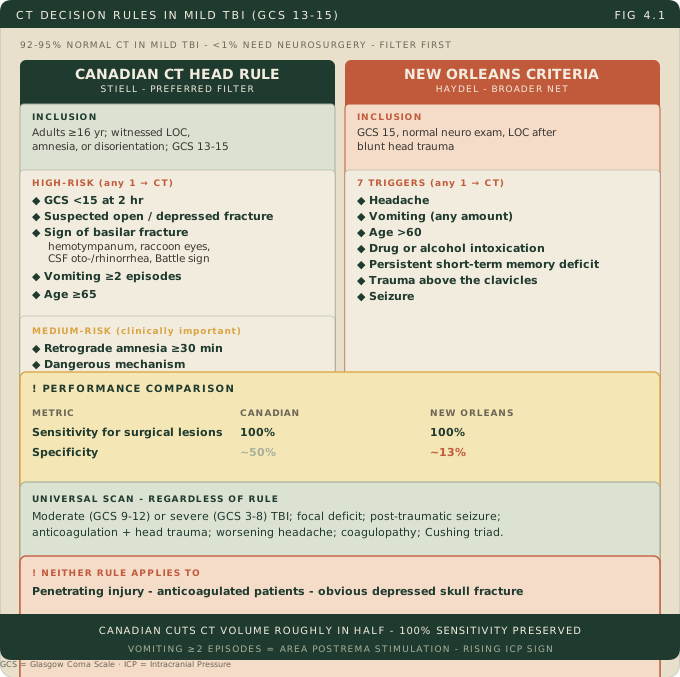
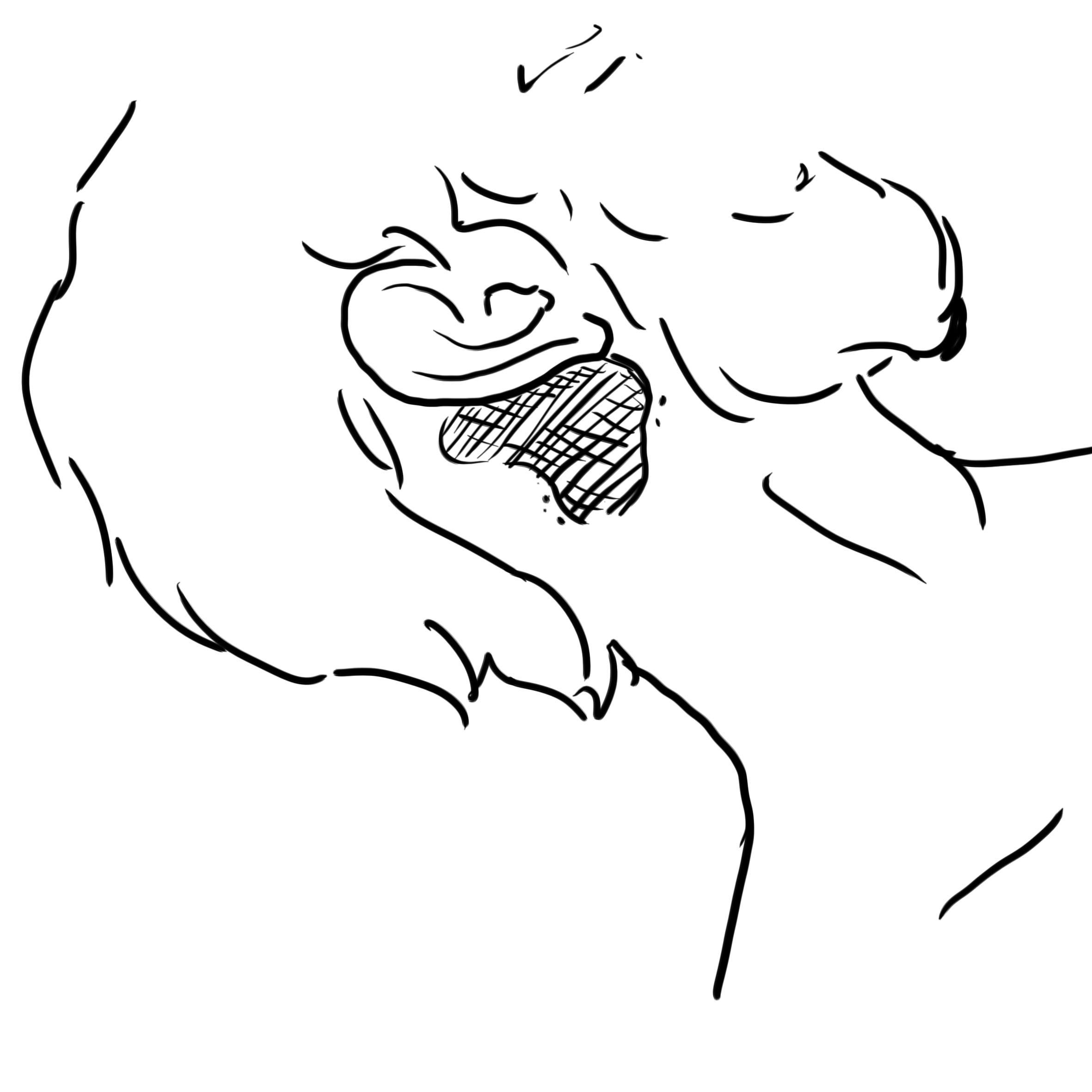
Source: Another-anon-artist-234, “Battle’s sign”, via Wikimedia Commons, CC0 1.0 Public Domain. https://commons.wikimedia.org/wiki/File:Battles-sign.jpg
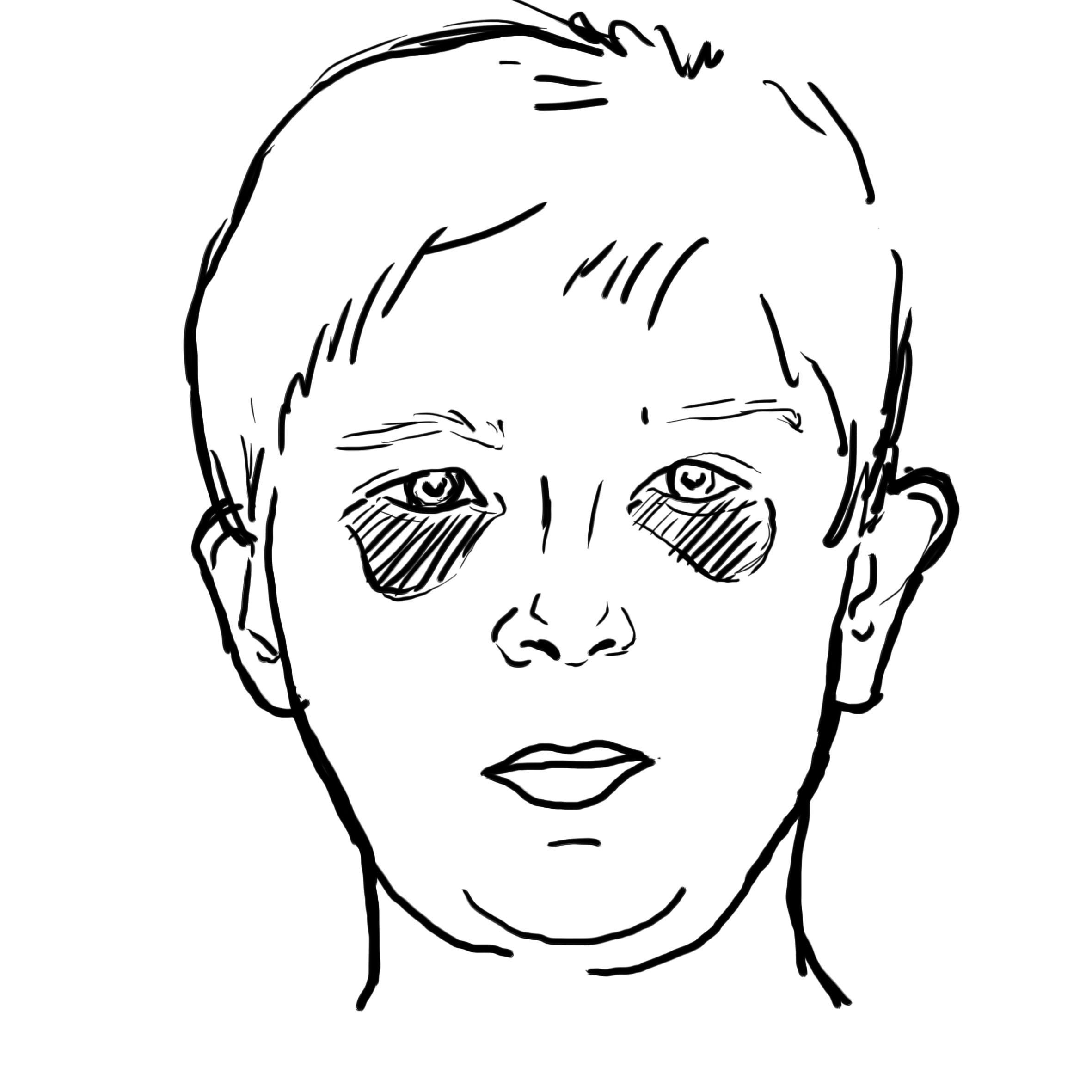
Source: Another-anon-artist-234, “Raccoon eyes”, via Wikimedia Commons, CC0 1.0 Public Domain. https://commons.wikimedia.org/wiki/File:Raccoon-eyes.jpg
High Yield — CT decision rules
- Mild TBI (GCS 13-15) = 92-95% normal CT, <1% needs surgery. Don’t reflexively scan.
- Canadian rule: 100% sensitive, ~50% specific; preferred filter.
- New Orleans: 100% sensitive, ~13% specific; broader triggers (headache, any vomiting, trauma above clavicles).
- High-risk Canadian triggers: GCS <15 at 2 h, suspected open/depressed/basilar fracture, vomiting ≥2, age ≥65.
- Vomiting ≥2 episodes was derived as a clinical predictor of neurosurgical intervention in the 3,121-patient cohort.
- Universal scan: any moderate or severe TBI, focal deficit, post-traumatic seizure, anticoagulation plus head trauma, worsening headache, Cushing triad.
Board Trap — Two rules, same sensitivity
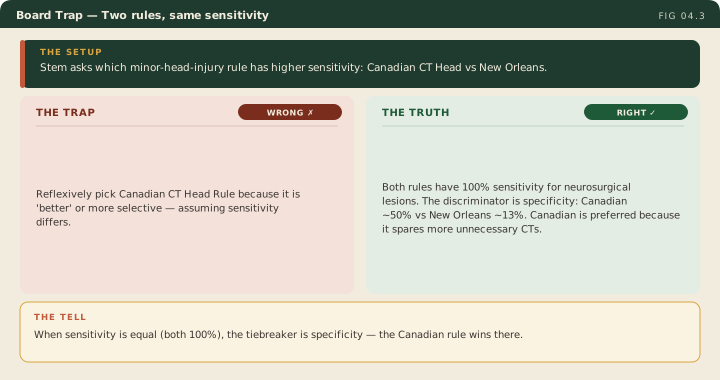
When the stem says “which rule has the higher sensitivity,” both have 100% sensitivity for neurosurgical lesions. The discriminator is specificity, not sensitivity. The Canadian rule wins on specificity (~50% vs ~13%), which is why it is the preferred filter even though both rules catch every surgical emergency.
Both the Canadian CT head rule and the New Orleans criteria are exactly 100% sensitive for surgical lesions. Neither of them misses a surgical emergency. The true discriminator between these two rules isn’t sensitivity at all. It’s specificity.
— TBI-04 podcast, ~7:39