Before You Listen
- Prerequisites: adult Glasgow Coma Scale (GCS) and severity bands; mechanism categories of traumatic brain injury (TBI) covered in TBI-01 and TBI-02; the Amsterdam concussion consensus (October 2022 meeting, statement published 2023) and return-to-play protocol from TBI-12; basic CT signs of subdural and epidural hematoma.
- Runtime: 41 minutes.
- Topic in one line: pediatric TBI epidemiology and the falls-to-motor-vehicle-crash transition at age 15, abusive head trauma (AHT) with the subdural-retinal-encephalopathy triad, the Pediatric Emergency Care Applied Research Network (PECARN) head CT decision rules, the pediatric Glasgow Coma Scale modifications, the Children’s Orientation and Amnesia Test (COAT), the growing-into-deficits phenomenon, return-to-learn protocols, the dominance of falls in geriatric TBI with subdural hematoma as the most common lesion, anticoagulation reversal pharmacology, polypharmacy and the Beers Criteria, falls prevention with the Otago program and the Centers for Disease Control and Prevention (CDC) STEADI framework, and apolipoprotein E4 (ApoE4) as the strongest genetic modifier of TBI outcomes.
Board answer vs. current evidence — The Amsterdam concussion consensus is dated by its October 2022 meeting — this is likely the board-tested answer, but more recent evidence (PMID 37316210) indicates the 6th International Conference on Concussion in Sport convened in Amsterdam in October 2022 and its consensus statement was published in June 2023. Answer the board-canonical version on the test.
Vignette. A 3-month-old male infant is brought to the emergency department by his father for “decreased feeding and increased sleepiness for two days.” On exam he is lethargic and irritable when handled, with a bulging anterior fontanelle and no external bruising. Non-contrast CT head shows bilateral subdural hematomas with mixed acute and subacute density. Indirect ophthalmoscopy with scleral depression reveals multilayered retinal hemorrhages extending to the ora serrata bilaterally. The skeletal survey shows a healing posterior rib fracture and a metaphyseal corner fracture of the left distal femur. The father reports the infant “rolled off the couch yesterday.”
What is the most likely diagnosis, what is the named diagnostic triad, what specific finding makes the retinal hemorrhages highly specific for the diagnosis, what feature of the bilateral subdural hematomas raises suspicion further, and what is the legal threshold for reporting this case to Child Protective Services?
(Answer at the end of this chapter)
Section 1: Pediatric Epidemiology and Mechanism Shifts
Bottom line: pediatric TBI is the leading cause of death and acquired disability in U.S. children; falls dominate from birth through age 14, then motor vehicle crashes overtake at age 15 and remain number one through 19; ages 0 to 4 carry the highest TBI-related emergency department (ED) visit rate of any age group.
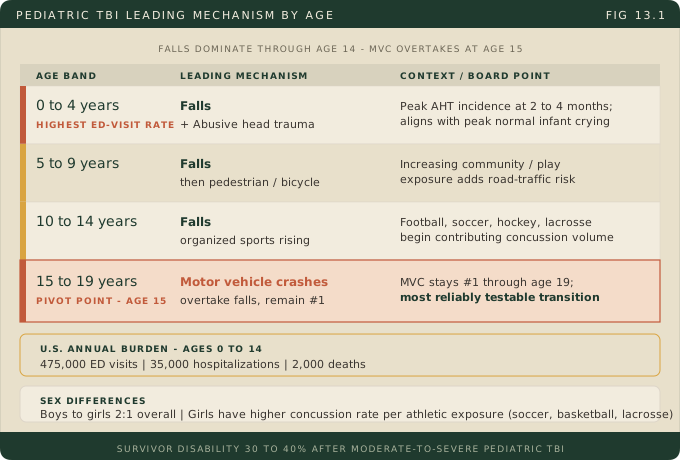
Pediatric TBI is the leading cause of death and acquired disability in children in the United States. Roughly 475,000 children aged 0 to 14 visit the ED for TBI annually, 35,000 are hospitalized, and 2,000 die. The age band with the highest TBI-related ED visit rate is 0 to 4, a heavily tested epidemiologic anchor. Mortality concentrates in infants with abusive head trauma (15 to 25%) and adolescents in motor vehicle crashes. Among survivors of moderate-to-severe pediatric TBI, 30 to 40% experience long-term cognitive, behavioral, or motor disability.
The mechanism of injury shifts in a stereotyped pattern. From birth through age 14, falls are the number one cause across every age band. In the 0 to 4 group, falls dominate alongside abusive head trauma. In the 5 to 9 range, falls remain on top followed by pedestrian and bicycle injuries. In the 10 to 14 range, falls are still number one, but organized contact sports (football, soccer, hockey, lacrosse) start contributing meaningful concussion volume. Then at age 15 the curve breaks. Motor vehicle crashes overtake falls as the leading mechanism and stay number one through age 19. That age-15 pivot is one of the most reliably testable epidemiologic transitions in the TBI blueprint.
Boys sustain TBI at roughly twice the rate of girls across all pediatric age groups, with the gap widening through adolescence. Football accounts for the highest absolute number of concussions due to participation volume and contact intensity. However, in sports played by both sexes under similar rules (soccer, basketball, lacrosse), girls demonstrate higher concussion rates per athletic exposure than males, attributed to lower cervical neck strength, hormonal effects on neuroinflammation, and higher symptom-reporting rates.
High Yield — Pediatric Epidemiology
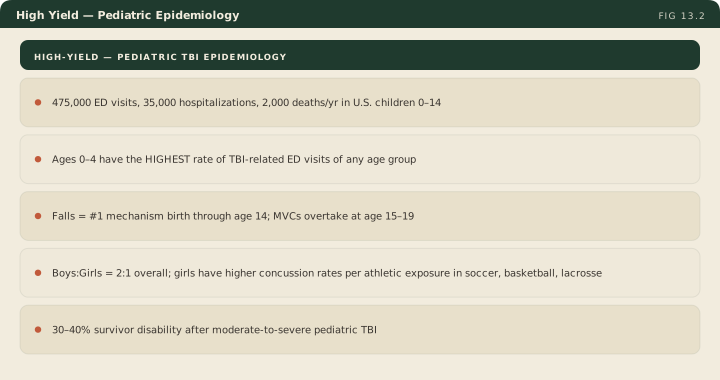
- 475,000 ED visits, 35,000 hospitalizations, 2,000 deaths per year in U.S. children aged 0 to 14.
- Ages 0 to 4 carry the highest rate of TBI-related ED visits of any age group.
- Falls are the number one mechanism birth through age 14.
- Motor vehicle crashes overtake falls at age 15 and remain number one through age 19.
- Boys to girls 2:1 overall; girls have higher concussion rates per athletic exposure in soccer, basketball, and lacrosse.
- Survivor disability 30 to 40% after moderate-to-severe pediatric TBI.